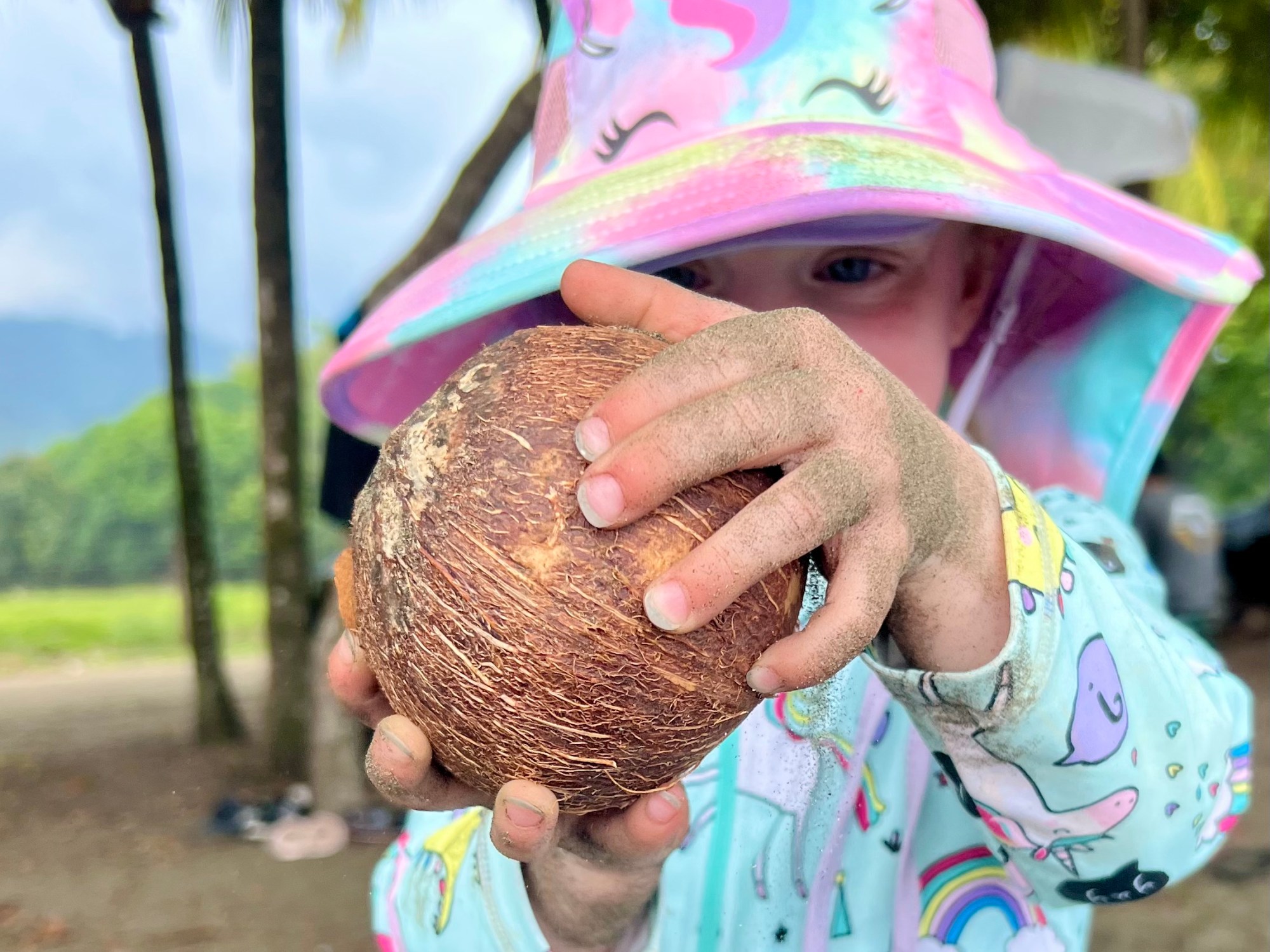
Travelling with kids can feel daunting, especially if you crave some adventure beyond your home country and beyond the safe predictability of a resort-type holiday. So many keen adventurers stop exploring altogether once they have kids but we really didn’t want to. The pandemic meant we didn’t get started as soon as we hoped but now our kids have been to several European countries, Mauritius and Costa Rica. We’re currently deep in the planning stages of our next trip to – Sri Lanka and the Maldives.
When we visited Costa Rica, the girls were aged 2.5 and 5.5. The research paid off: with the exception of one accommodation which was style over substance and the unavoidable issue of an erupting volcano, there’s nothing we’d have changed. Read on for details on our itinerary as well as all the practical information you’d need to visit with kids including tips for packing, accommodation, driving, money and health.
HOW WE TRAVEL
We’re keen to show that, with careful planning, it is possible to travel with kids in tow. We would class ourselves as mid-range, budget-conscious travellers. In terms of accommodation, that means comfortable and clean, a private bathroom, a kitchenette usually, and ideally a living space away from where the kids are sleeping – views, outside space and additional bedrooms are a bonus. With practice, we can now all share a room quite happily if we need to. After a bit of research, we tend to set a nightly accommodation budget early on and then try to stick to it by comparing across Airbnb, Booking.com and occasionally direct with the accommodation to find the best prices. That said, we spent more per night than we really wanted to on this trip but it’s quite an expensive country. Food-wise, we tend to do a mixture of self-catering and eating out (although nowhere fancy because… kids!) and make a lot of picnic lunches. For long-haul travel, we reverse-plan our destinations meaning that we scope out the cheapest flights we can find to any place on our long-list then build a holiday around it. Direct flights are our preference but for this trip it was much cheaper to fly via Toronto so that’s what we did and we survived! At some point, we’ll start using local buses and trains more but, so far, we’ve chosen car-based trips so that we can use car seats. When it comes to experiences, we research before we go so we know what to expect; we stay as flexible as possible by booking ahead only if necessary; and we identify a few unmissable, pricier things to do, balancing these out with cheaper, more low-key activities which we know we’ll all enjoy probably just as much.
ITINERARY
For us, this itinerary was spot on (except for the unavoidable frustration of Poas National Park being closed due to volcanic activity) because it had a great balance of rainforest, cloud forest, dry forest, beach and volcano. Our accommodations were such that we had several pools or gardens so were able to have some good downtime between hikes.
Day 1: fly to Toronto (YYZ) (16 hours layover)
Day 2: fly to Liberia (LIR) and travel to Rincon de la Vieja
Day 3: hike in Rincon de la Vieja National Park
Day 4: drive to Monteverde
Day 5: early morning Curi Cancha bird walk and local walk at accommodation
Day 6: guided walk at Santa Elena reserve and night hike
Day 7: daytime ranarium visit, hummingbird café and ranarium guided night walk
Day 8: drive to Manuel Antonio (via the Crocodile Bridge)
Day 9: hike in Manuel Antonio National Park
Day 10: drive to Dominical (via Playa Linda)
Day 11: pool morning and Playa Dominical
Day 12: Playa Dominicalito and pool afternoon
Day 13: pool morning then drive to Poas (via hummingbird café)
Day 14: La Paz Waterfall Gardens (original plan was to visit Poas National Park had it been open)
Day 15: drive to Sarapiqui (original plan was via La Paz Waterfall Gardens) and pool afternoon
Day 16: Sarapiqui River boat trip and pool afternoon
Day 17: Selva Verde guided hike and pool afternoon
Day 18: fly back to London (LHR)
If you wanted to cut it shorter, you could speed through Monteverde or Dominical faster. If you wanted to make it longer, these are also the places we’d have spent more time – Monteverde because there’s so much to do and Dominical because the accommodation was just so relaxing and we’d probably have explored some more beach options.
FLIGHTS
We flew from London (LHR) with Air Canada. In this case, we ended up with two daytime flights – 7 hours to Toronto (YYZ) and 5 hours to Liberia (LIR). Liberia isn’t the capital – that’s San Jose where many people fly to. Flying direct would always be preferable, even if it’s very long like our 12-hour flight to Mauritius, but that’s just not how it worked out this time. For our 16-hour layover in Toronto, we stayed at the Sandman Signature Mississauga Hotel because they had a shuttle to and from the airport included and – if you’d needed it, there’s a 24 hours Dennys onsite and McDonalds a few metres away. (We did have a 6am McDonalds breakfast in our room!)
We prepped the kids for flying before we went. Small was old enough to remember how to behave but, with Tiny, we discussed many times about how the plane would be noisy; we’d eat, sleep, watch TV and play games; and we must stay in our seats! And she did! I’m not saying everything was perfect (we split a cup of wine and a cup of orange juice and forgot to put a nappy on Tiny before she fell into a deep sleep…) but, on the whole, it was all fine. We view the flights as very worthwhile means to ends that we just have to survive and then probably won’t think about ever again!
ACCOMMODATION
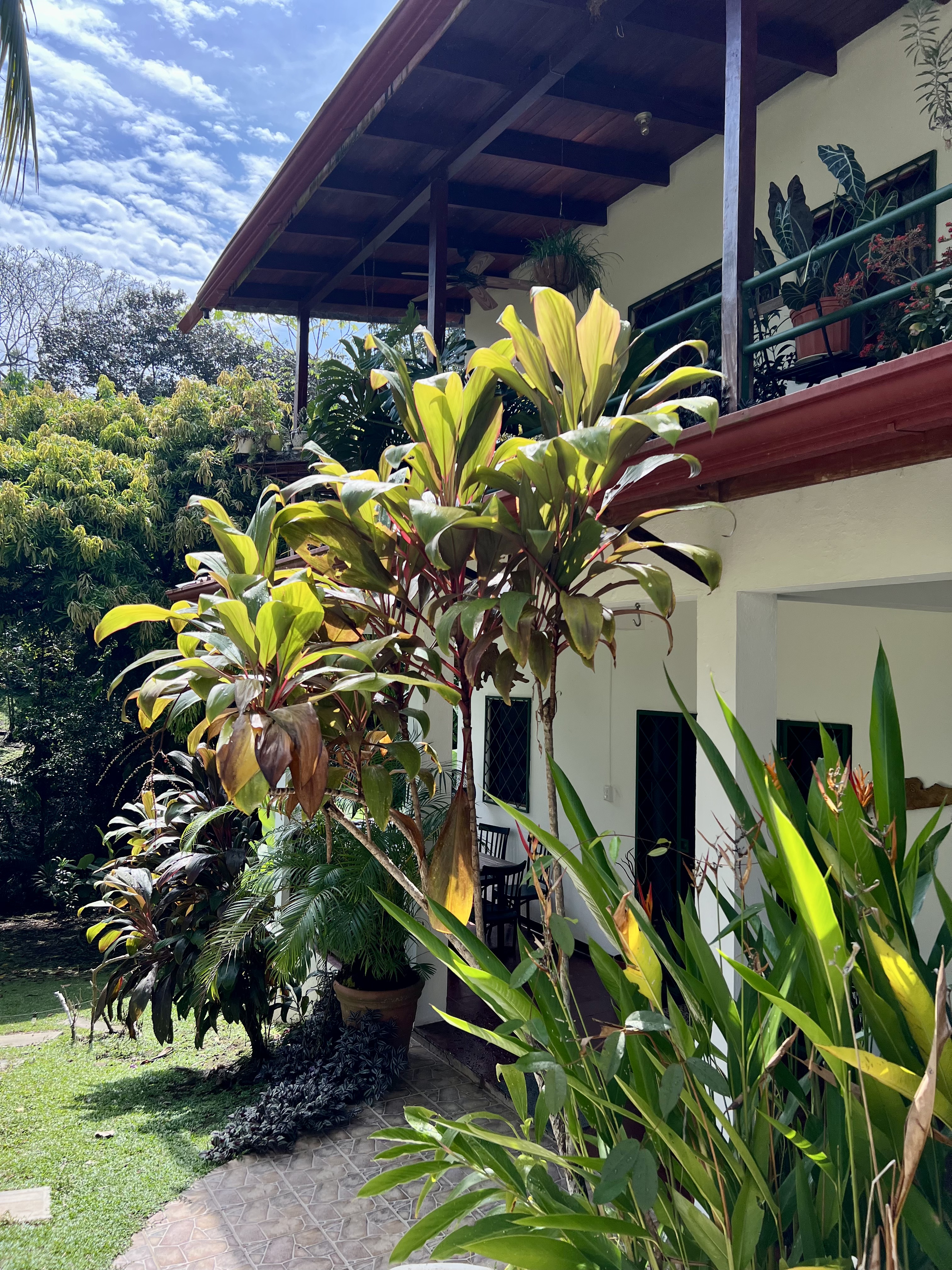
We stayed in six different locations on our trip, all booked through Airbnb or Booking.com. We ensured we had a few washing machines, a few pools and that most had some kind of kitchenette (at least a microwave and fridge). Because the children are young, we always had an apartment or one large room with multiple beds. We prefer the former so there’s more space for the kids to spread out and play. Not many places seemed to offer a cot so you could bring one as a free infant checked item. In the end, Tiny managed without and only fell out of bed once! A car or taxi would be required to get to most of these places (which is what we wanted as we prefer to be more rural).
Rincon – 1 night at Amazilia Guesthouse (approx. £80p/n). One large room with two double beds, one single bed; one en suite bathroom; access to the host’s outdoor kitchen/dining area; pool; great breakfast included; no clothes washing available; TV; aircon
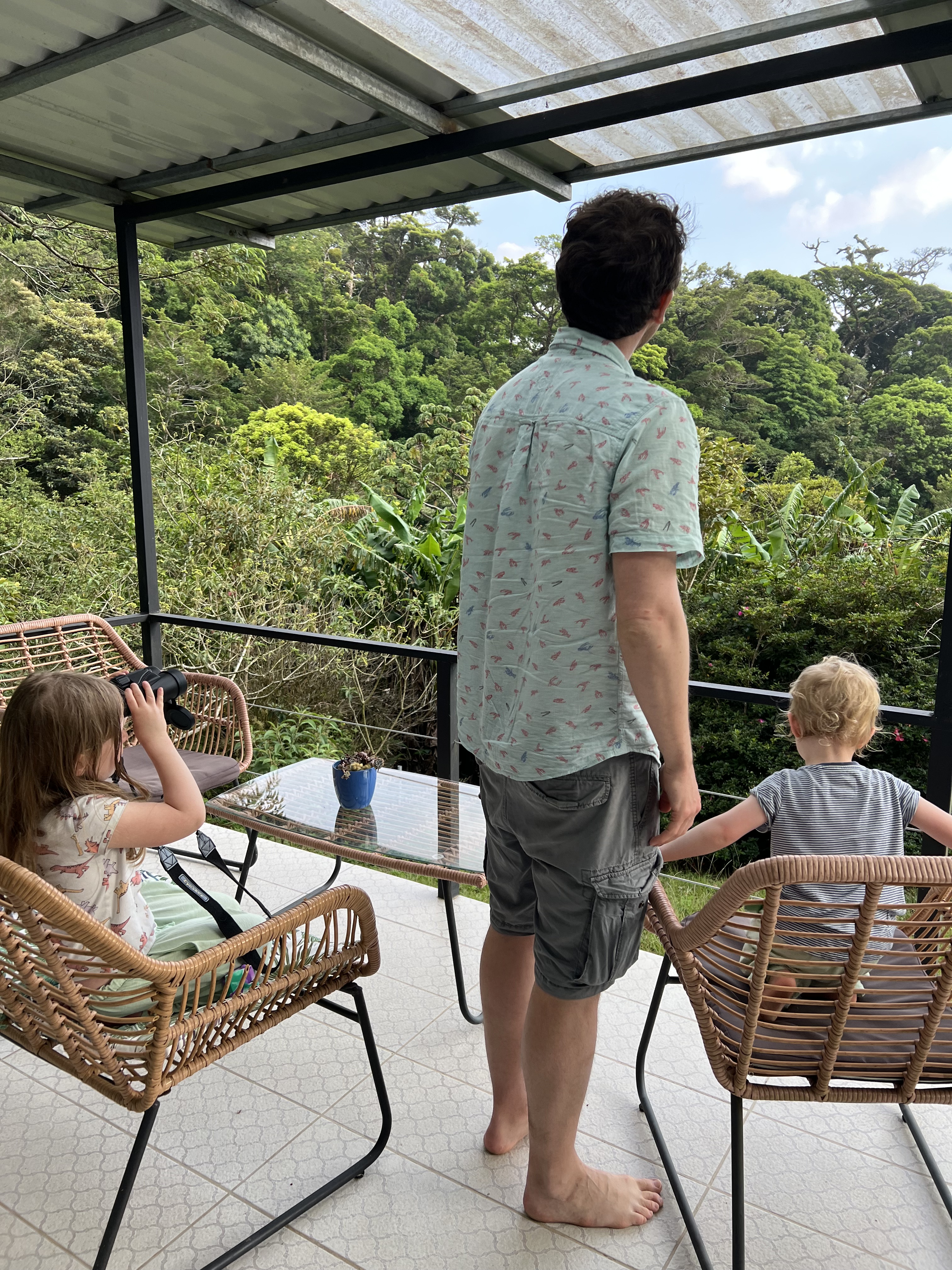
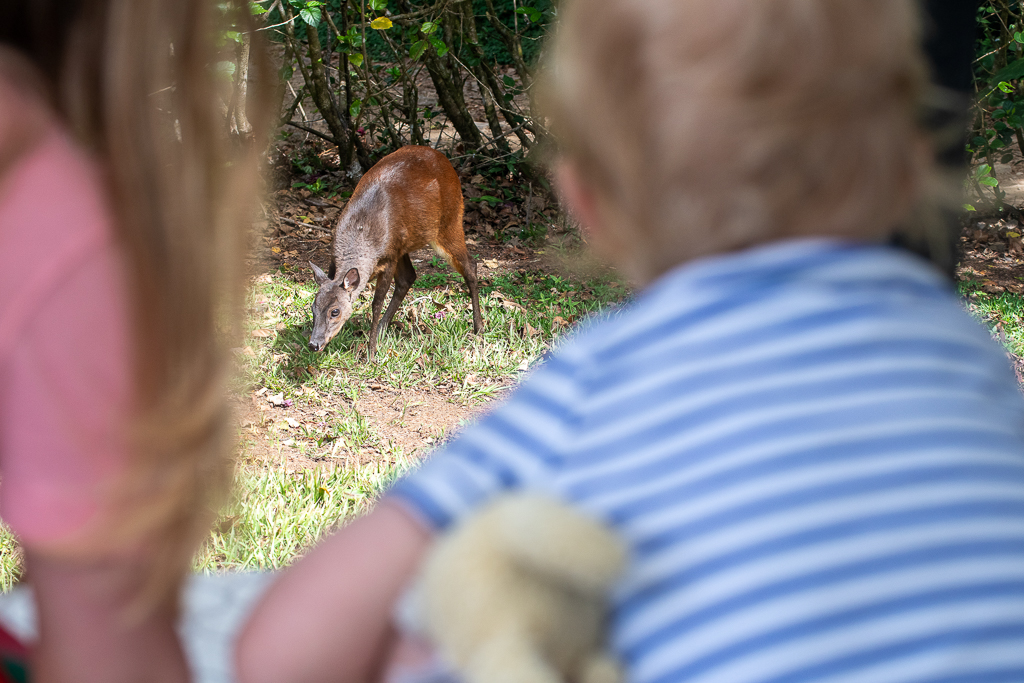
Monteverde – 4 nights at House in the Woods with Private Trails (Green Paradise Homes) (approx. £150p/n). A secluded house in the woods with two double bedrooms and one single bedroom; one bathroom; a large living/dining space; reasonably well-equipped kitchen (no microwave); garden and balcony with incredible wildlife watching; semi-automatic washing machine and dryer; TV; free-standing fans
Manuel Antonio – 2 nights at Marley’s House (approx. £95p/n). One of a few full houses in a private residence with two double bedrooms and a sofa bed in the living/dining space; one bathroom; well-equipped kitchen; outdoor dining/seating area; small pool (above ground) in large garden home to monkeys, toucans and agoutis; washing machine and dryer; cot; TV; ceiling fans
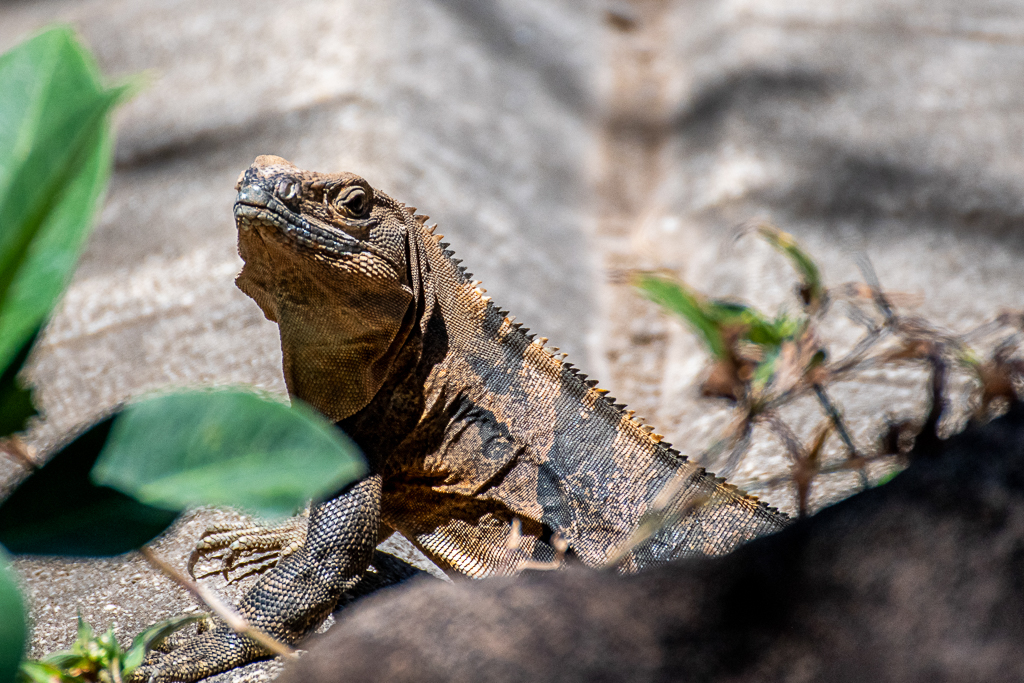
Dominical – 3 nights at Casa Piscina Playa Y Mar (approx. £167p/n). Beautiful ground floor apartment with one en suite double room and one twin room; one other bathroom; living/dining space; outdoor seating area; well-equipped kitchen; access to two lovely communal pools (towels provided) in grounds home to monkeys, toucans and iguanas; washing machine and dryer; TVs; aircon and fans. This was a bit more expensive than our usual budget but one of our favourite places we’ve ever stayed.
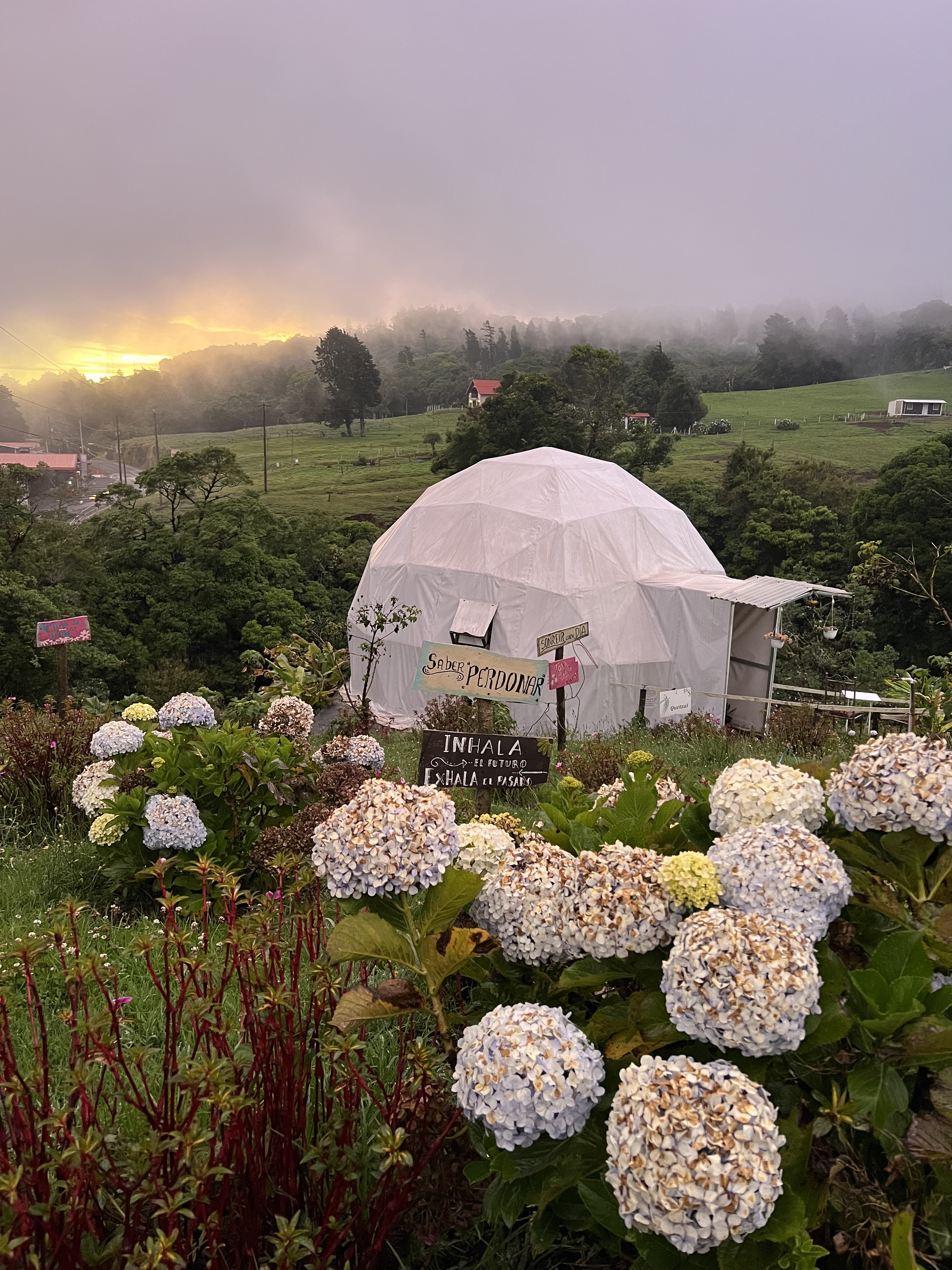
Poas – 2 nights at Poas Volcano Observatory Lodge (approx. £138p/n). Glamping dome tent with two double beds; one small en suite bathroom; small kitchenette with microwave and fridge but no kettle; laundry service; meals can be requested; TV; no air con or fans. This is the one place that didn’t live up to expectations and we wouldn’t necessarily recommend it. Check out our Poas post for more details.
Sarapiqui – 3 nights at Selva Verde Lodge (approx. £128p/n). Large room on stilts – part of a complex – with two double beds, one single sofa bed and a cot on request; en suite bathroom; balcony with bench and hammock; lovely communal pool area with monkeys, lizards and birds; laundry service; no in-room kitchen facilities but the restaurant provided the children with warm bedtime milk in their bottles; breakfast included and evening meals available on site; no TV; air con and fans; onsite guided tours and other excursions available.
CAR HIRE
Car hire in Costa Rica was expensive. We used Vamos and would definitely recommend them. It’s a reputable local company which, in our experience, is cheaper than a multinational one in most countries. We had a really positive experience: they met us outside arrivals and we were taken on a shuttle bus to their office where the handover process was easy and efficient (they spoke English too which was a bonus). Cars come with a free cold box. You get the first child car seat free but they seem to have a gap between their car seats for under 3s(ish) and booster seats for older children so (as we had a 2-year-old and a 5-year-old), we decided to hire one smaller seat and bring our own from home for our 5-year-old. (Top tip: car seats fly for free and aren’t weighed so you can shove extra items in the bag if you need to!)
DRIVING
We covered about 560 miles/900 km in total (just counting distances between accommodations). Many things you’ll read will tell you that the driving conditions are horrendous. We didn’t find them to be (although we’re happy to accept that we didn’t spend much time near San Jose or perhaps didn’t find the bumpiest roads). Drivers seemed mainly calm and courteous. Roads were usually paved, though sometimes potholed which is where the common advice to avoid driving at night really comes into play. There were some unsealed roads but never for too long so, if you drive carefully, the only hindrance is that they add to your journey time a little. We would advise a car with 4WD as we found this helpful in places and would be crucial in the wet season. One thing to note is that there is a road circling San Jose – route 39 – and it very nearly caught us out. To limit traffic, on Mondays, if your registration ends in a 1 or a 2, you will be fined for driving the road (or within it); Tuesdays are 3 and 4 and on it goes. Anyone can drive there on weekends. Unfortunately, our registration plate ended in 1 and the day we needed to take the route was Monday! But fortunately, we’d read about this and managed to weave ourselves in and out of the suburbs to avoid a hefty fine!
MONEY
Based on our research, we decided to take some dollars and colones in cash but honestly there was nowhere we needed it really and certainly not dollars. Colones were handy for tips or occasional street vendor purchases perhaps, but accommodations, restaurants, cafes, supermarkets and shops always took card. We use Halifax Clarity credit cards because there are no fees for exchange rates or on transactions. There are many good cards for travel nowadays but we mainly use these because they were one of the first to exist and we’ve been travelling with them for a loooong time! Credit cards aren’t so great for taking money out of cash machines though, so we use Nationwide Flex Plus cards for that.
LANGUAGE
Although not compulsory, some basic Spanish is helpful as many people don’t speak much English. We know enough to badly attempt most functional conversations and this felt appreciated, from the point of view that very few people voluntarily switched to English for our benefit. The girls saying ‘hola’ and ‘gracias’ melted a few hearts along the way and we taught Small several other basic phrases too. However, if all else fails, Google translate works wonders!
PUBLIC FACILITIES AND BABY CHANGING
Public bathrooms, no matter where they are, are always clean and have soap and toilet paper (with the exception of Manuel Antonio National Park where they were disgusting!). You occasionally have to pay when they’re run privately, like at a beach or something. However, we did note that changing tables are very rare. We didn’t spot any, although we didn’t need them so we weren’t consciously looking for them every time.
BOOKING ACTIVITIES
We chose to book ahead for the National Parks at Poas, Rincon and Manuel Antonio, the Santa Elena guided hike, and La Paz Waterfall Gardens. With hindsight, advance booking didn’t seem necessary anywhere except for Manuel Antonio National Park where tickets for the day were sold out – though it was peak Easter time. We can’t be sure about Poas National Park as it ended up being closed and we eventually managed to get a refund. National Park tickets can all be booked via the SINAC website; there are loads of websites offering to book the tickets, maybe plus a guide, for you which isn’t necessary unless that’s what you’re after. See prices for tickets on the individual posts.
SHOPPING AND EATING
Food is expensive in Costa Rica. For tourists and locals. You just have to accept it. There were many big supermarkets and smaller local shops everywhere we went and using these to buy ingredients for simple meals kept costs down a bit though it’s still by no means cheap. We always managed to get milk for the girls for bedtime and cereal. Whilst there aren’t many recognisable imported brands, you’ll find Costa Rican alternatives for a lot of what you need.
Typical Costa Rican food of rice, beans, meat and vegetables is served at little restaurants (often open air and roadside) called sodas. There is lots of opportunity for fresh fruits and therefore smoothies and juices. Bakeries, cafes and restaurants were everywhere we went. Prices were similar to back home. You can pick up fruit from roadside vendors – we tried the strawberries grown on Poas volcano! Being vegetarian is very doable and, if you do a little more research, so is being vegan. Monteverde and Dominical were probably the best spots for eating out choices out of the locations on our itinerary.
Nappies were widely available and larger supermarkets had a range of formulas, meal/fruit pouches and pots. Many are imported so are costly of course.
HEALTH
The UK government travel advice suggests all primary courses and boosters should be up to date as recommended for life in Britain and that diphtheria, hepatitis A, rabies and tetanus could be considered. Dean and I have all these and the kids have all except rabies. This did mean a visit to the nurse for the kids but we feel a few moments of discomfort are worthwhile to keep them safe. There are a few spots where malaria tablets are recommended but chose to avoid them.
Once there, common sense prevails. Keep the kids away from animals to avoid bites; stay away from any suspicious-looking water; you can drink all tap water and ice is usually safe but I drew the line at roadside iced drinks/ice creams; wash hands frequently; and treat wounds carefully.
SAFETY
Safety-wise, the thing that worried us most was animals. We prepped the kids A LOT before we went with the key messages: ‘keep to the paths; stay with mummy and daddy; and don’t touch the animals or plants!’ This worked quite well on the whole but that’s not to say there wasn’t a fair amount of anxiety when we needed to walk through longer grass or forest undergrowth!
For biting bugs and ticks, we recommend the items in our packing list below.
For scorpions (it’s nesting season in April so they want to come in and find somewhere warm and cosy), we’d already been very conscientious about checking shoes before putting them on and keeping our bags closed (it’s not our first rodeo!) but we hadn’t thought about checking beds. One morning, I was making a bed and a scorpion scuttled out from under Tiny’s pillow! We checked the beds again that evening and found two more – including one up a spiral staircase which I’m guessing must have come in through the roof or walls. So, we’d recommend checking but also it’s good to know that they’re not deadly in Costa Rica. Their sting hurts but can be treated with ice and you’ll be just fine. For locals, they’re an unavoidable annoyance, like a bee sting.
There are other much-discussed safety concerns which are very valid but best not to dwell upon or you’d never go anywhere! One such is ensuring you don’t leave your car unattended with your belongings in it. Hire cars are easily identifiable and so are easy targets. In many places, you can pay a small amount to park near an attendant who will ‘watch’ (or at least pretend to watch!) your car. By the same measure, it’s best not to take stuff to the beach with you that you don’t need or to have a dry bag that you can take into the sea with you. On public transport, always keep your belongings in sight and be aware of thieves trying to distract you. There are many other safety issues relating to crimes and natural disasters you may or may not want to read about but it’s probably best to be aware of them by reading this.
CLIMATE
This is almost impossible to summarise. Our itinerary (in April), included lows of 12C and highs of 33C. We also experienced high humidity and witnessed (but were thankfully not out in) some torrential rain since we were there just near the start of the rainy season! So, basically its best to research all your destinations and time of year before leaving!
PACKING
We took only two checked bags – a case and a backpack. We then had two Trunkis and two rucksacks that were at least 50% cameras/binoculars. Because we visited so many places, the varied temperatures made packing a bit complicated. We were also very conscious of the role clothing plays in bite protection. Clothes-wise, for kids, we’d recommend:
- 1 x warm jumper (cold evenings in Poas and the plane journeys)
- 2 x thin long-sleeved tops (bite protection on hot forest hikes)
- 2/3 x shorts and T-shirts or dresses (for beaches/pools)
- 2 x long light-weight trousers (bite protection on hot forest hikes – they will get muddy)
- 5 x underwear
- 5 x socks (closed shoes with socks are recommended for hikes)
- 1 x swimming costume
- 2 x pyjamas
- 1 x trainers/walking shoes
- 1 x crocs/water shoes (for beaches/pools/waterfalls)
- 1 x lightweight raincoat (some people take ponchos too/instead)
I’m not going to list out everything you need to pack but here are some things that came in handy:
- Factor 50 suncream
- Sun hats and sunglasses
- Bite repellent (we used a combination of this one for all of us, this one for just adults and some stickers for the kids)
- Bite relief (we used a combination of this one and tiger balm)
- Binoculars/long camera lens (also little cameras, binoculars and magnifying glasses for the kids!
- Tick removal device like this one
- Big shopping for transporting wet clothes if they’ve not had time to dry, and for shopping if you plan to eat in
- Electric handheld fans
- Travel washing line
- Plug adaptors
- Tupperware for picnics
- Freezer blocks – they don’t exist there!
- Ziplock bags – for wet clothes, rubbish, protecting documents, protecting valuables
- Wildlife field guide like this one
- Kids’ travel journal like this one
Other packing tips:
- You are not allowed to take spray aerosol deodorants on Air Canada in hand or checked luggage!
- Take a change of clothes in your hand luggage (maybe extras for young kids)
- We have a favourite little carry-on hack which is to take a large reusable shopping bag folded up in one of our carry-ons then, instead of having to dig out all the things we need just for the flight from various bags throughout the journey, we decant the things we need into the big bag (wipes, toys, tech, snacks, drinks, extra layers) and put everything else in the overhead lockers.
That’s it for now but we’re always happy to answer questions if you’re looking to book your own trip!
—
All information is correct at the time of posting. Follow us on Instagram @four_go_exploring for more independent family adventures.
 world wandering wonderings