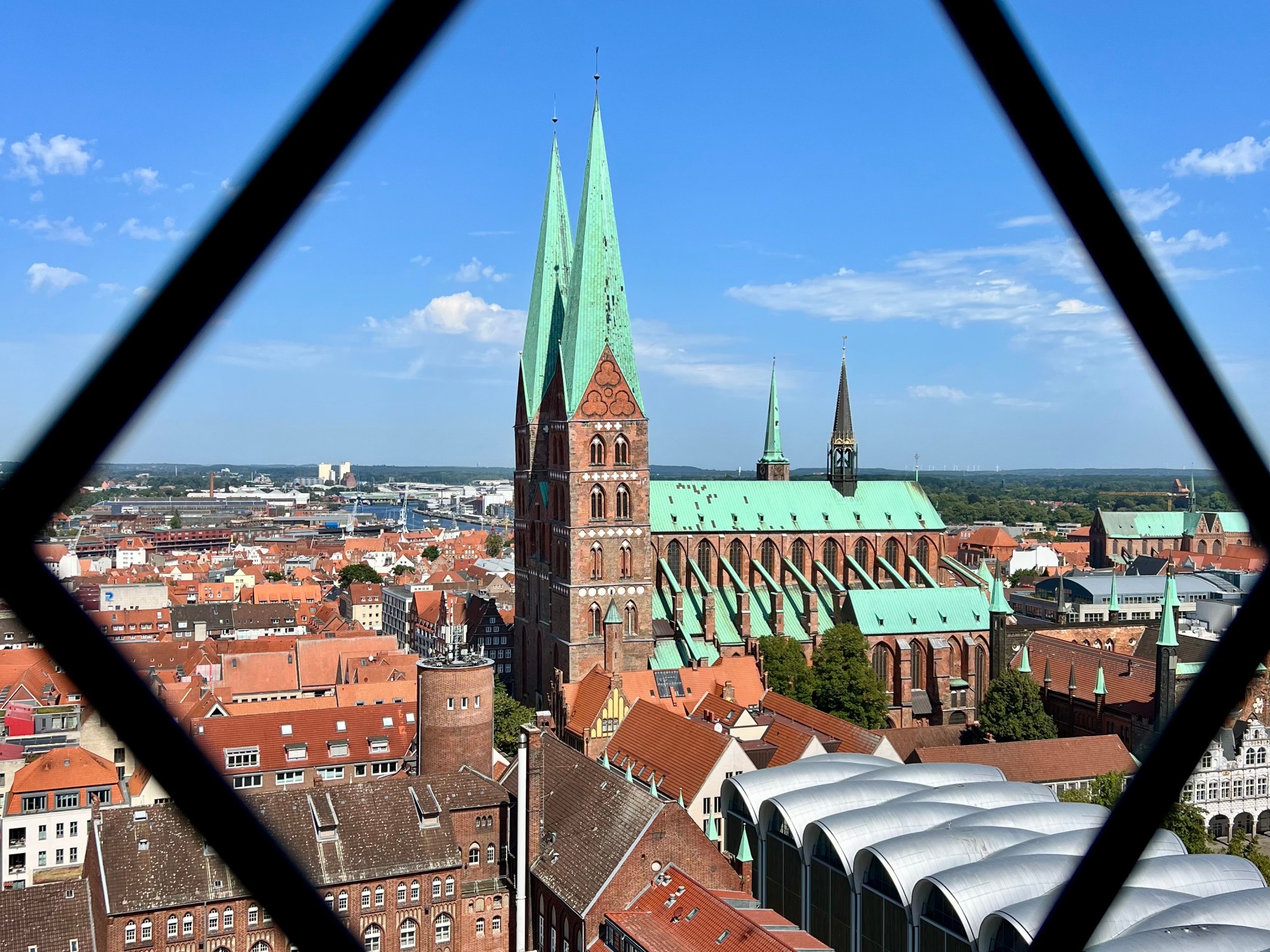
We loved Lübeck! It was a stop we had planned into our route driving from the UK to Copenhagen, from necessity. But it turned out to be a real unexpected highlight. For the full itinerary, scroll to the end, but for all the Lübeck must-sees, keep reading.
It’s a timeless fairytale town steeped in history. Its Old Town is a UNESCO World Heritage Site, full of Gothic spires, narrow lanes leading to tiny flower-filled courtyards, and ornate merchant houses that transport you back in time.
Founded in 1143, Lübeck was the first city on the Baltic coast to adopt German law, paving the way for its rise as the ‘Queen of the Hanseatic League’ – a powerful medieval trading network that shaped Northern Europe for centuries.
This was not a place where we had specifically sought out child-friendly activities but, nevertheless, the children (aged 2.5 and 5.5) were quite happy exploring these sites, all spread around the compact town centre.
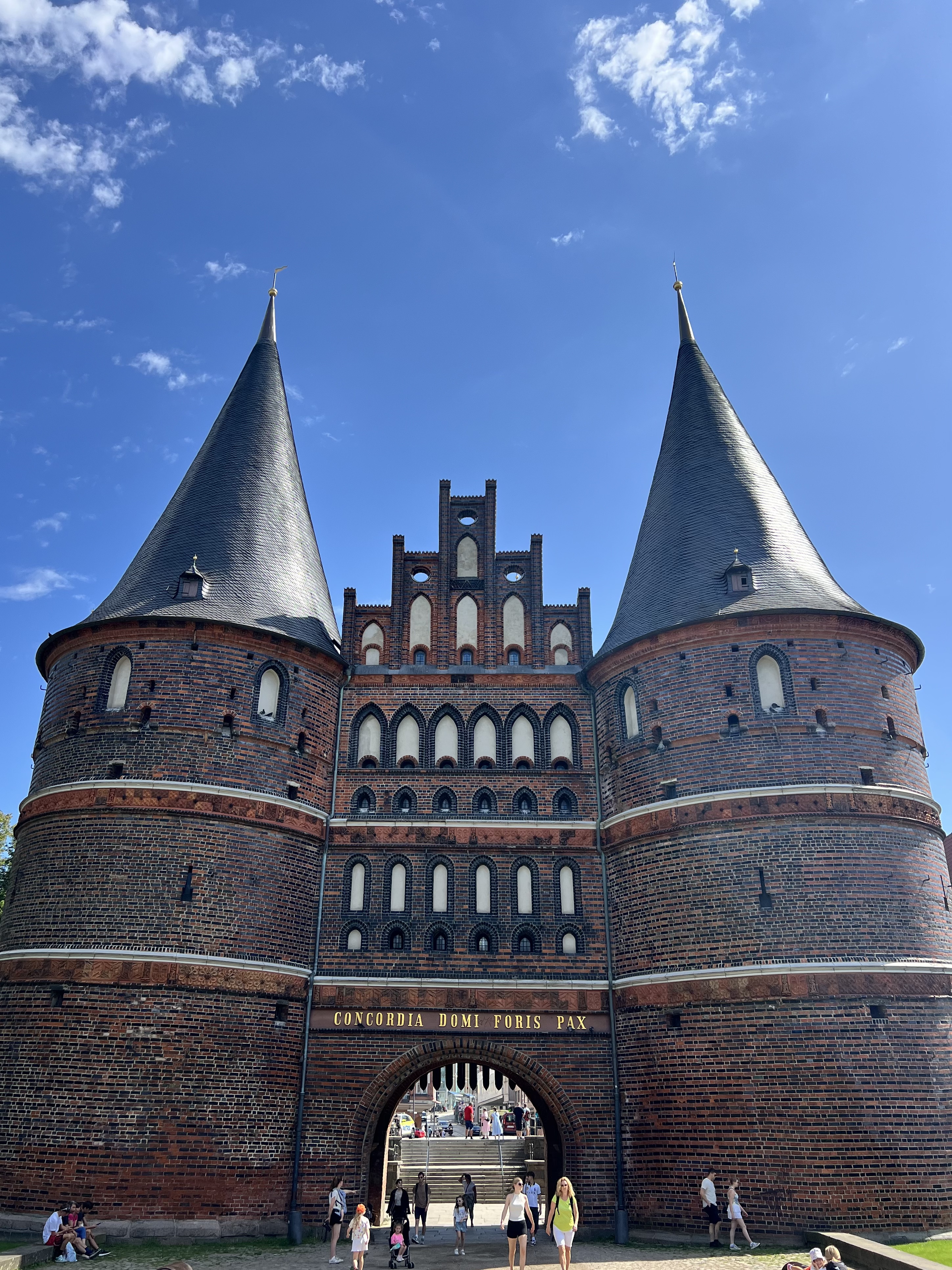
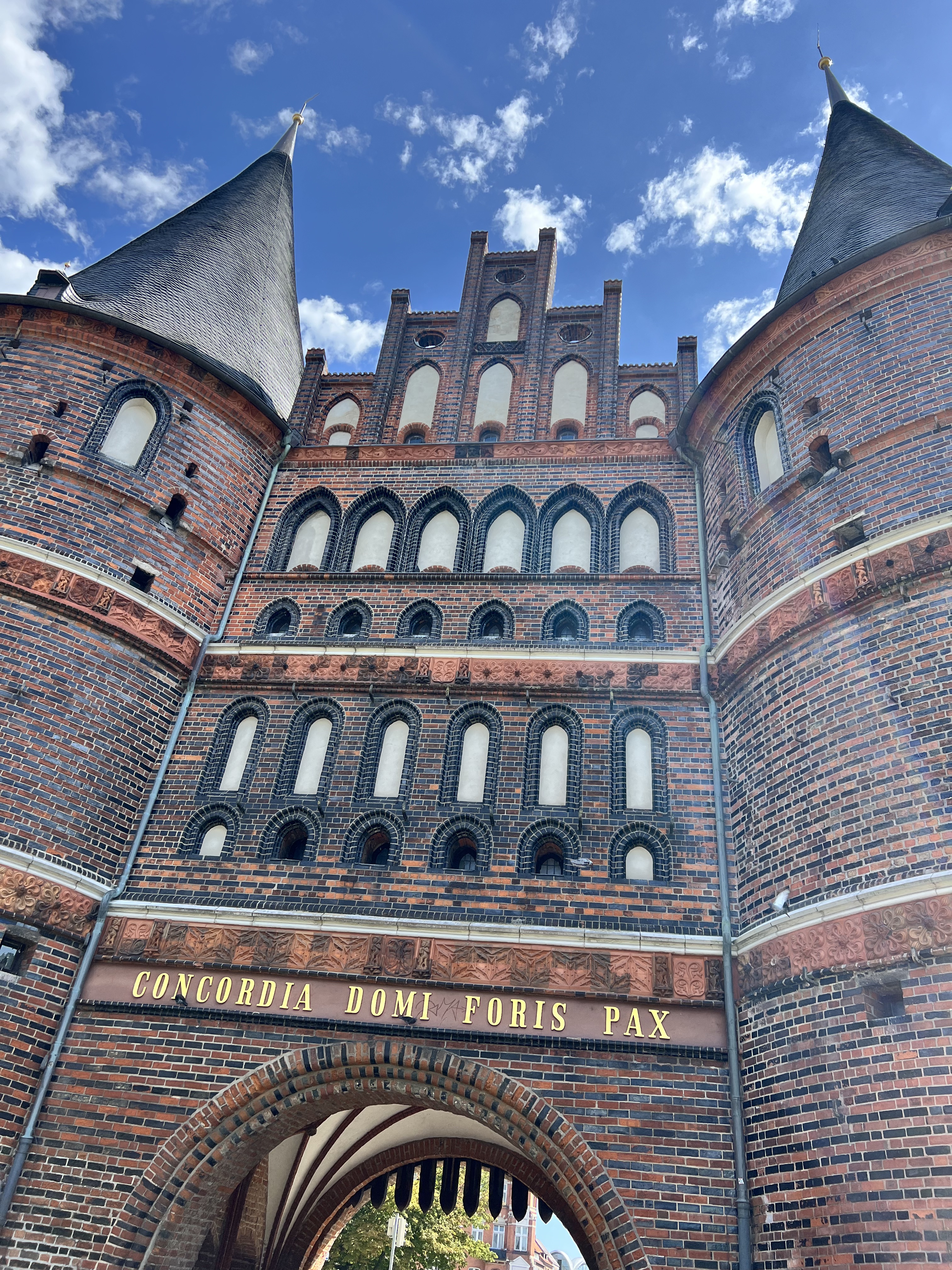
Admire the Holstentor
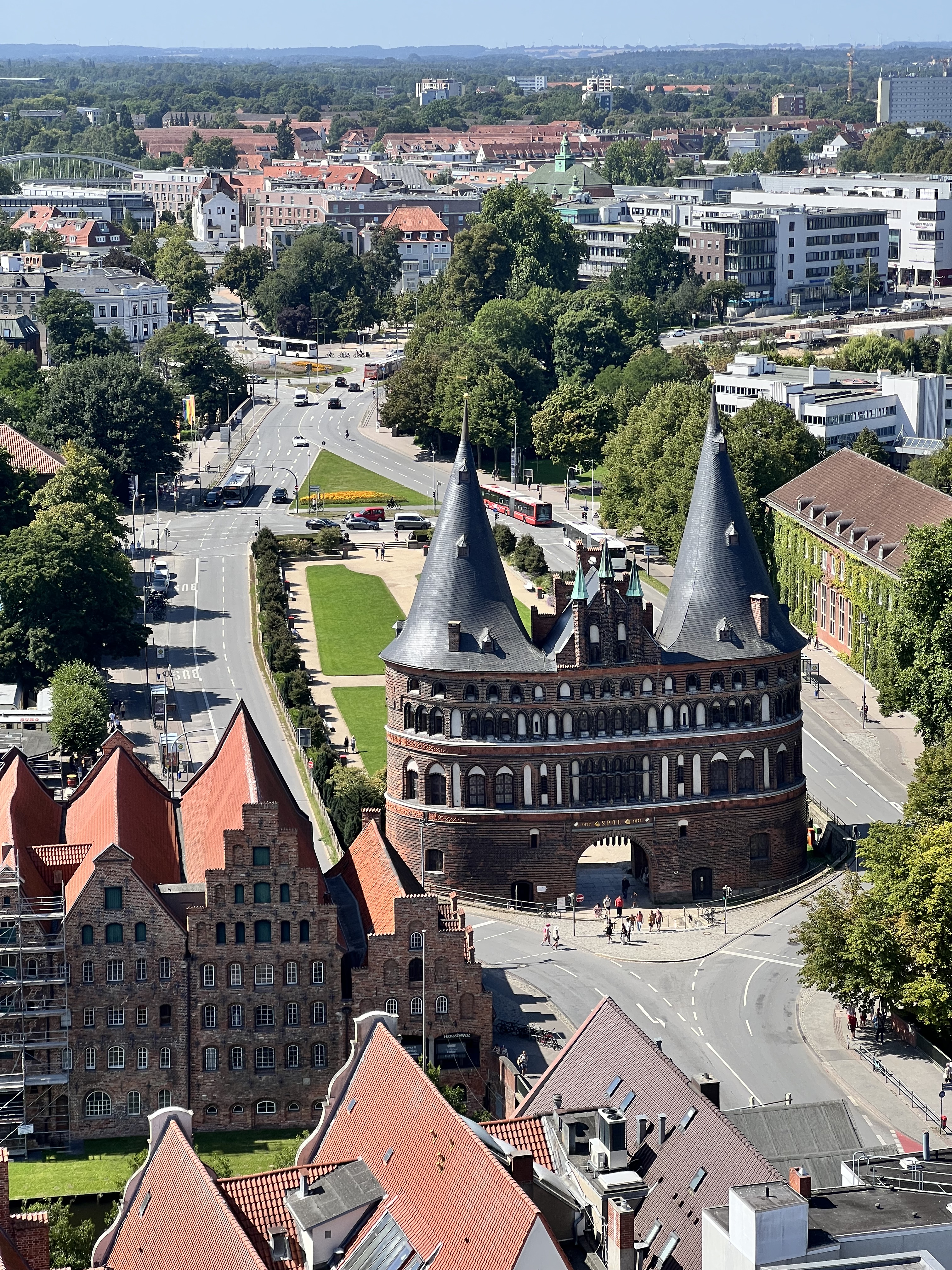
Our first landmark was the 1478 Holstentor, an iconic twin-towered gate which was once the symbol of strength and prosperity, now proudly guarding the entrance to history itself. It’s a popular selfie spot, but don’t let that spoil it for you. You could picnic on the grass in the surrounding public park. There’s a museum on medieval trade and local history inside but that wasn’t for us so we just admired it from outside.
Climb St. Peter’s Church Tower (St. Petri)
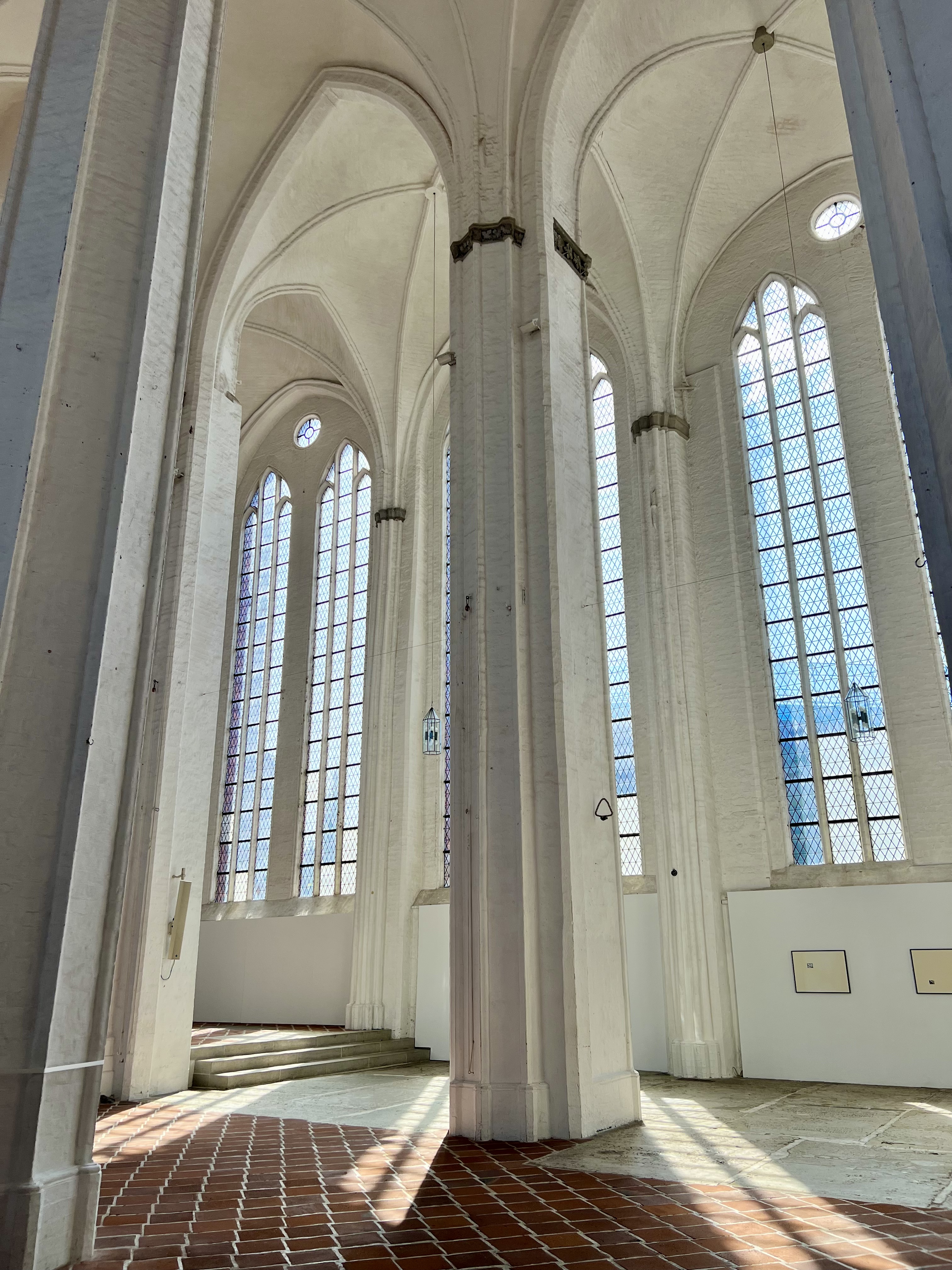
Lübeck is known as the City of Seven Towers due to the spires of its five Protestant churches. Two of the spires belong to this church, a Gothic gem, built in the 13th century. It was a proud landmark of the Hanseatic era when Lübeck was known as the ‘Queen of the Baltic’. Though heavily damaged during WWII, it was lovingly restored. It no longer has a regular congregation but now often hosts art exhibitions and concerts. The girls loved the vast, high-ceilinged white space!
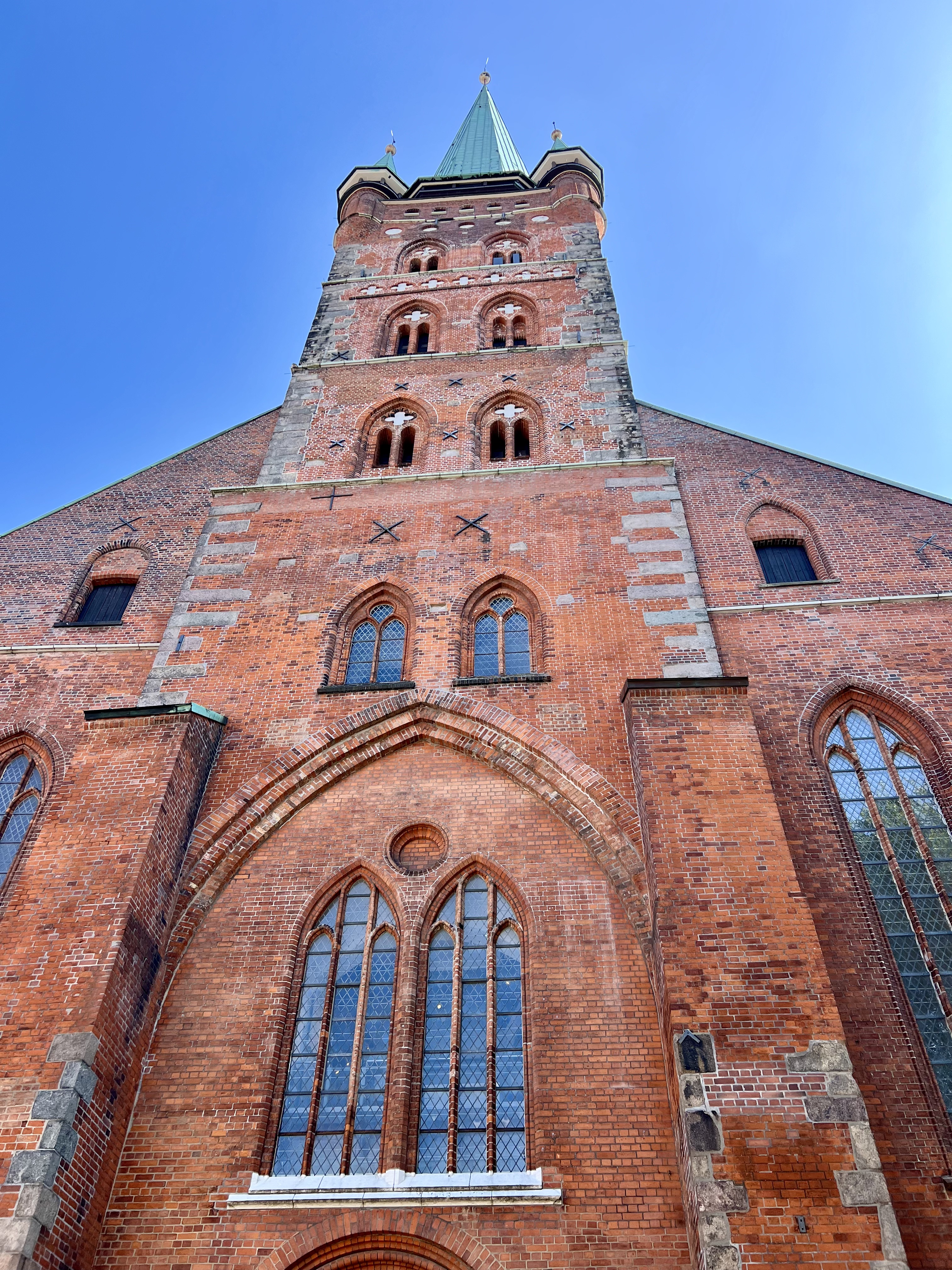
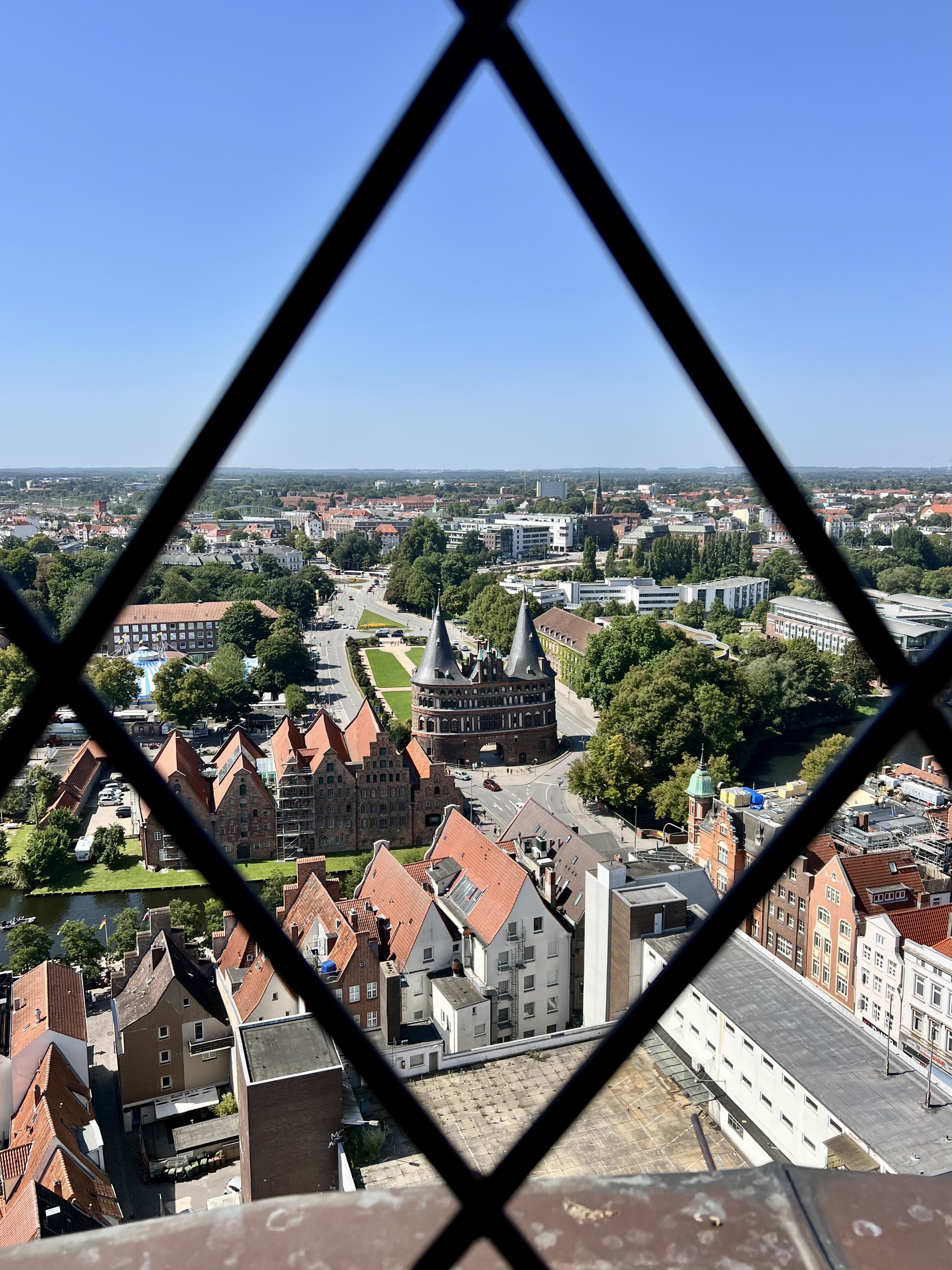
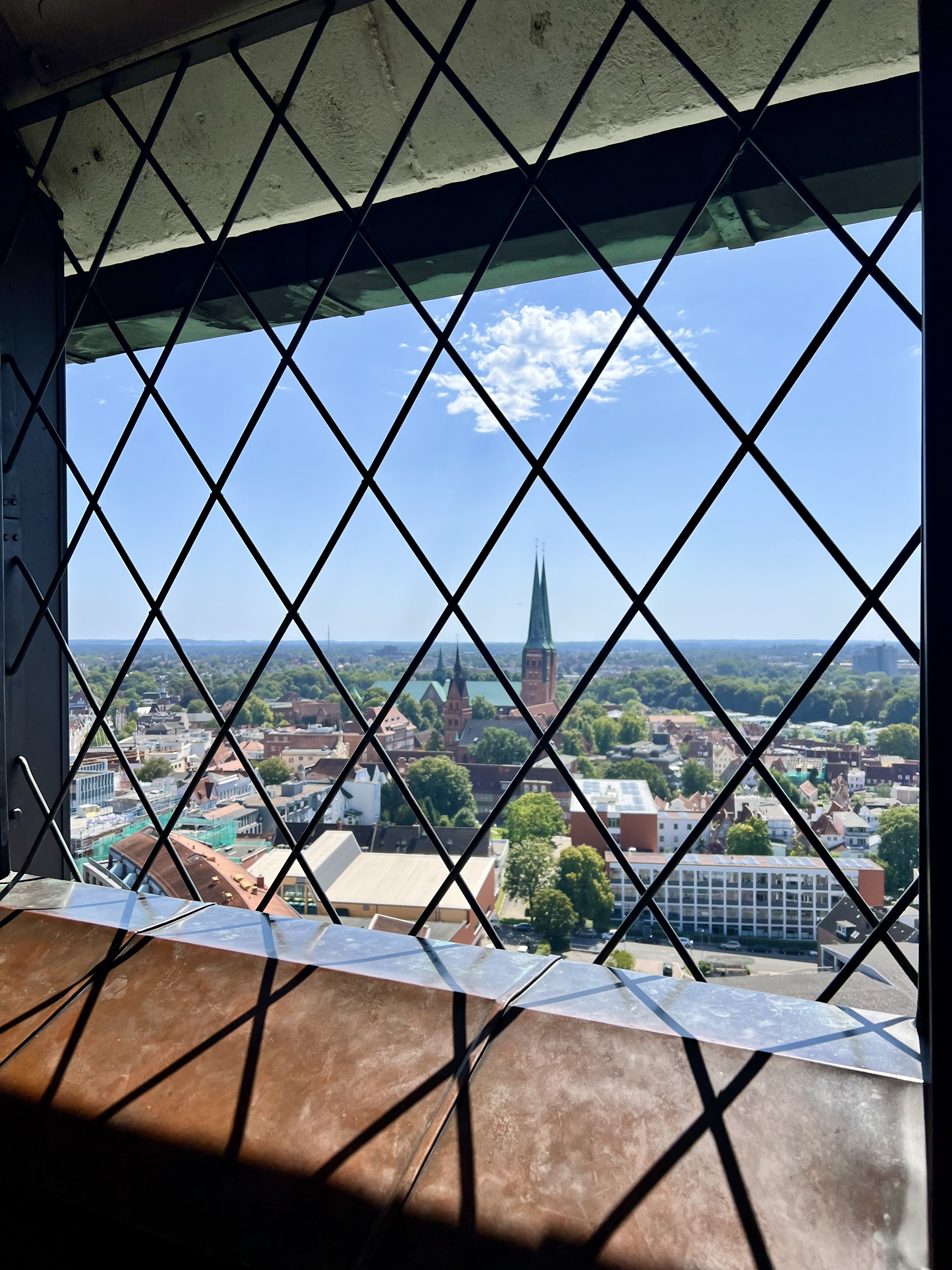
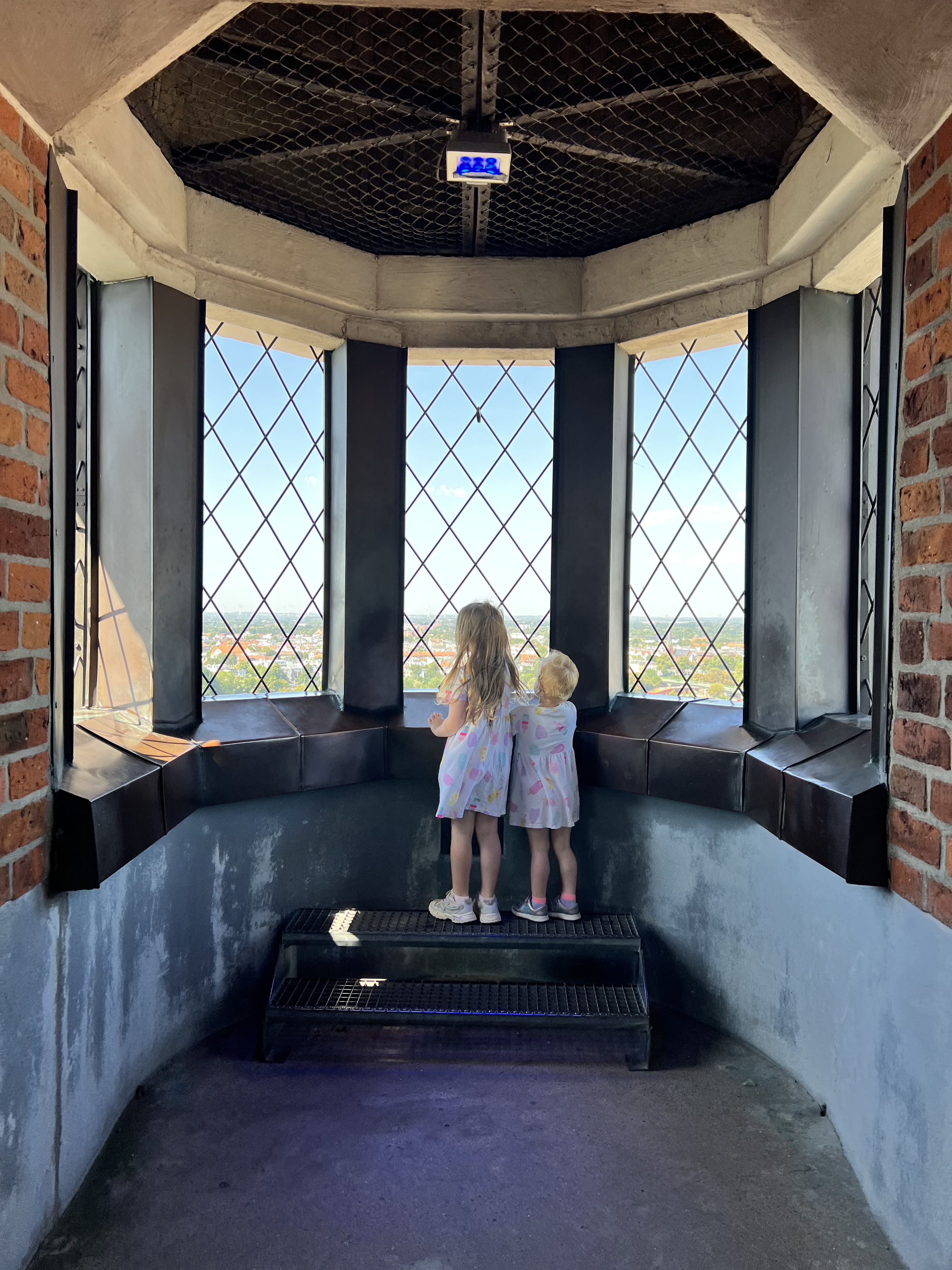
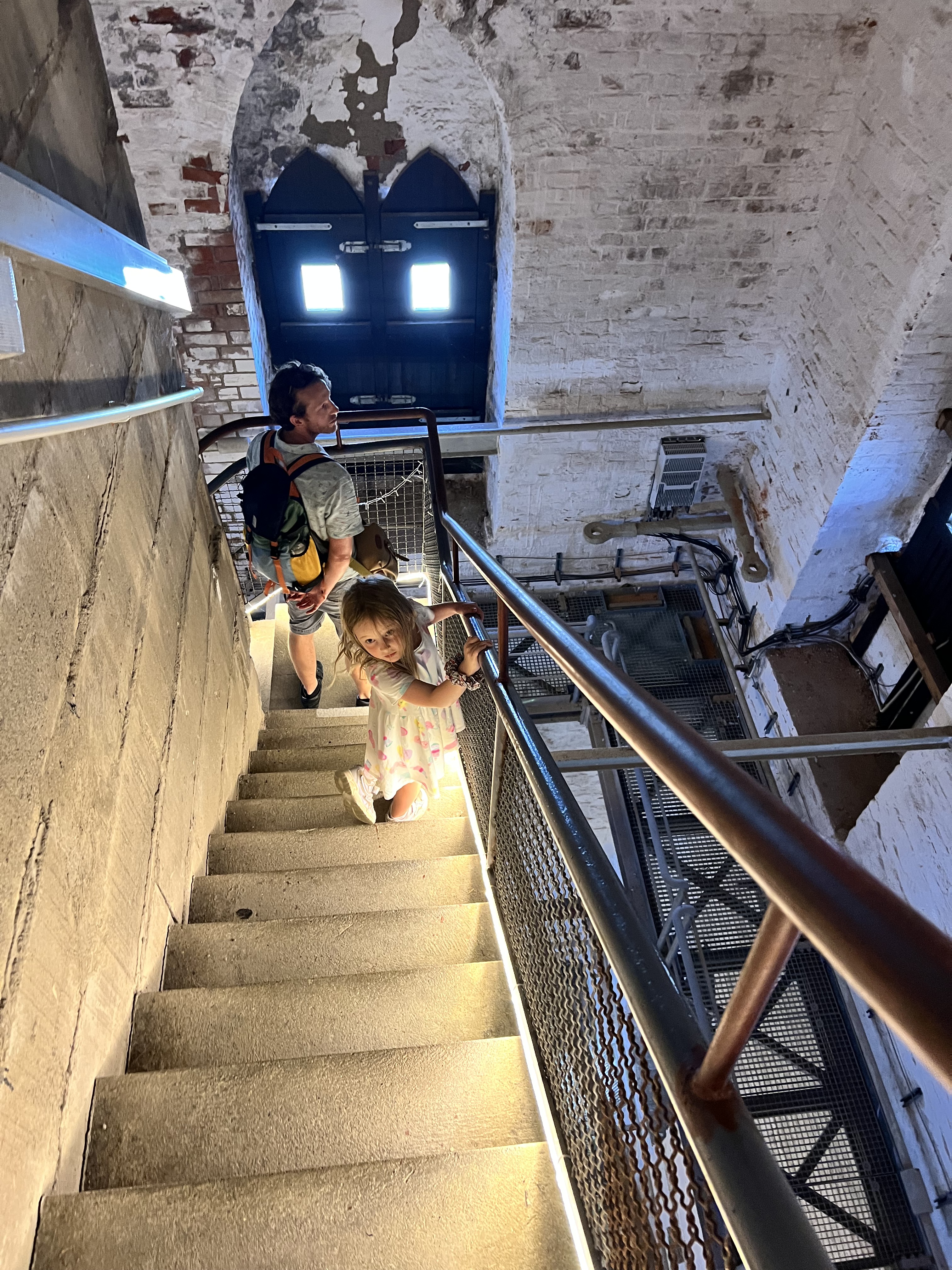
We decided to pay a few euros to ascend the tower – 108 metres high, up a huge number of steep metal steps. I read now that there’s also elevator access but I guess it must have been closed when we visited! The stairs were a bit of a challenge but we were rewarded with breathtaking 360° views of the medieval rooftops, the Holstentor gate, and even the Baltic Sea glimmering in the distance.
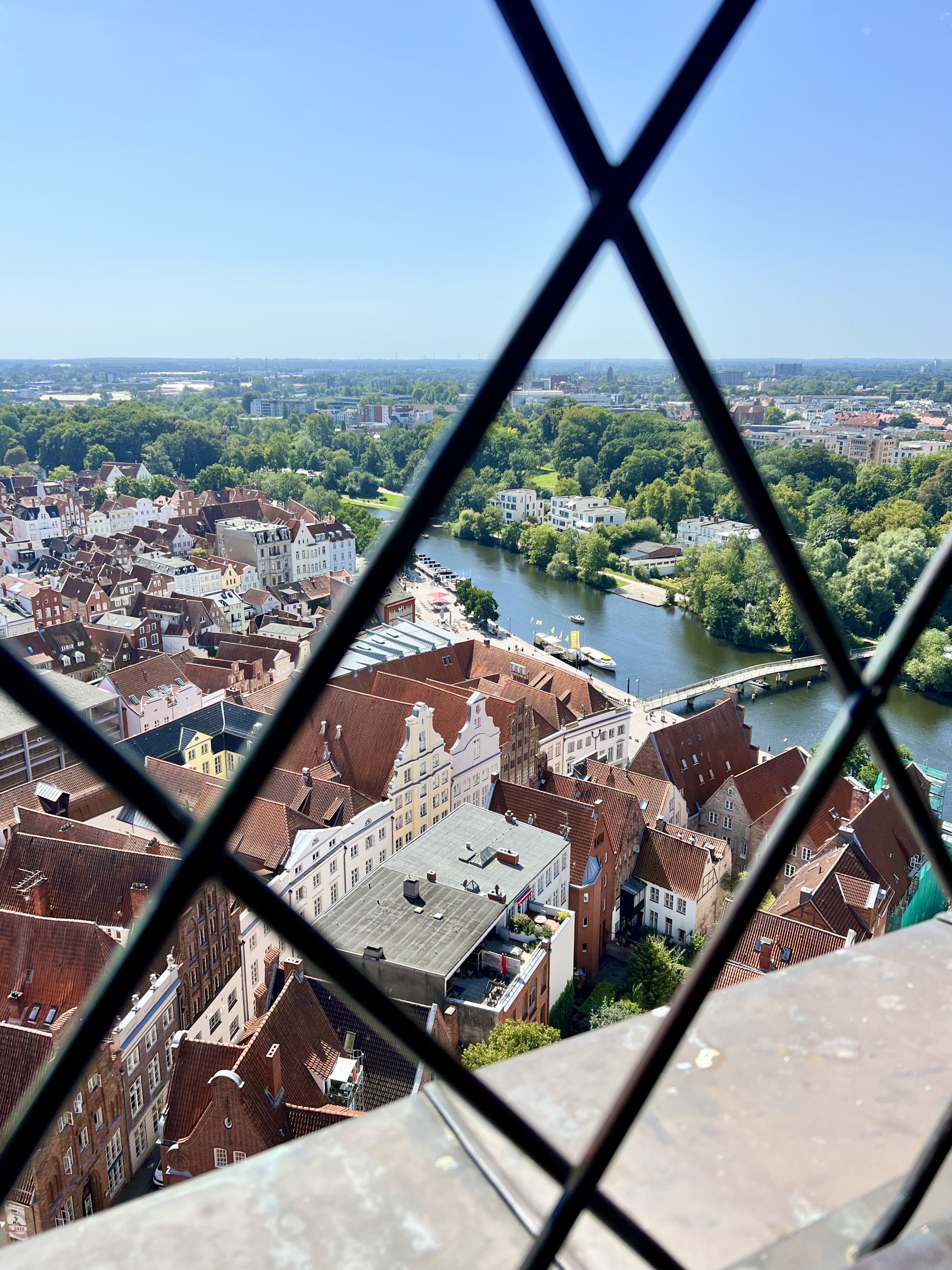
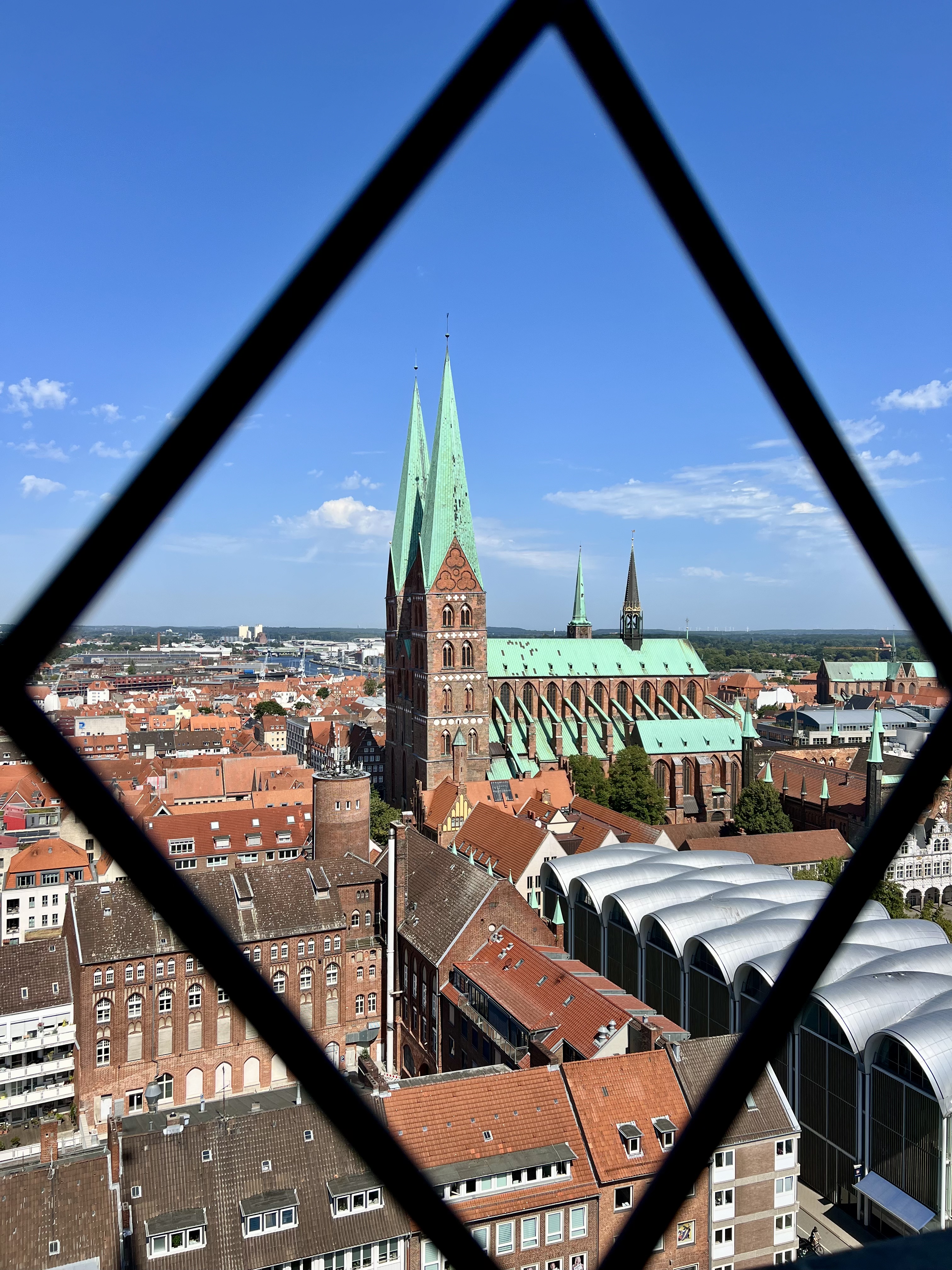
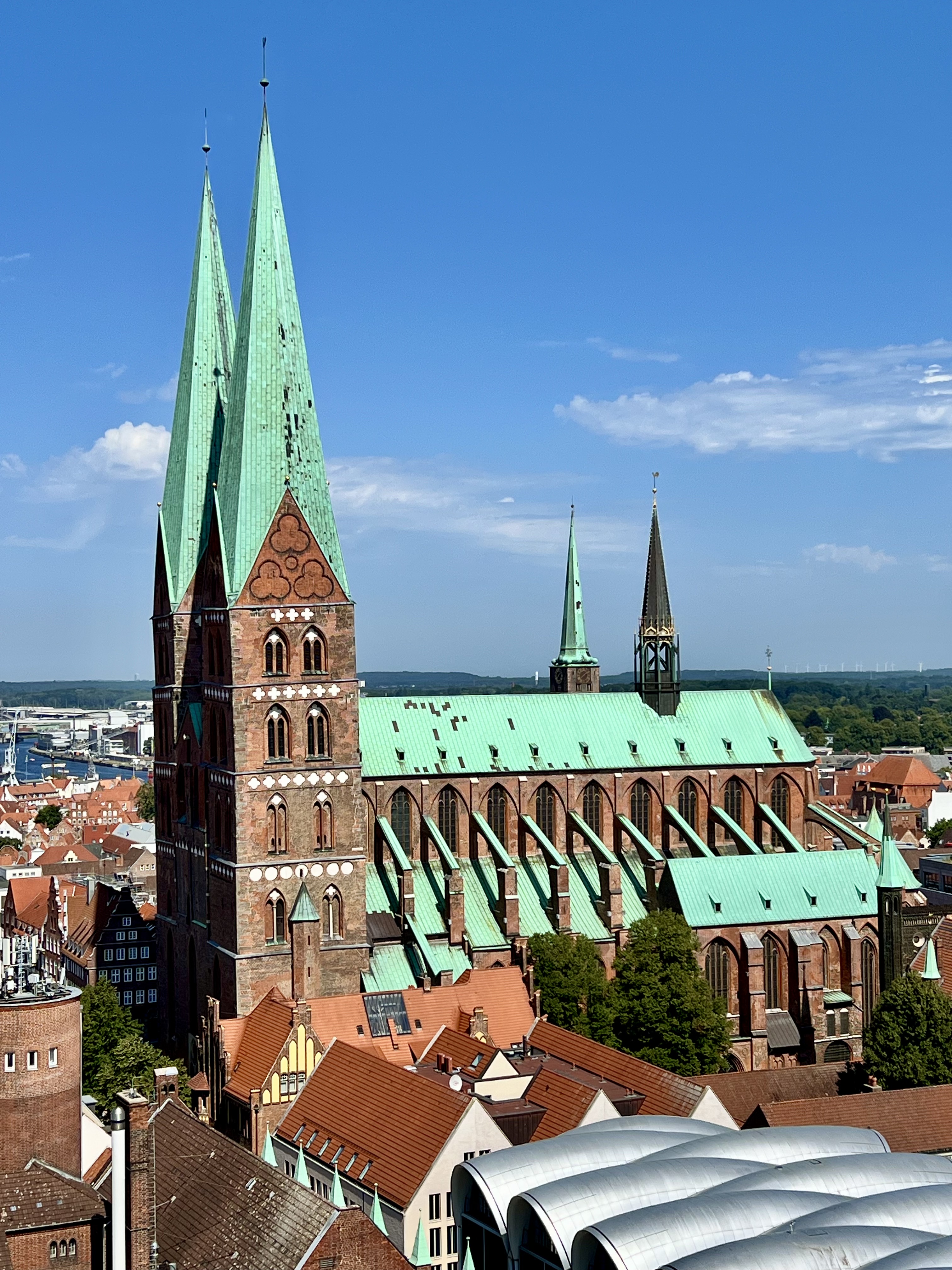
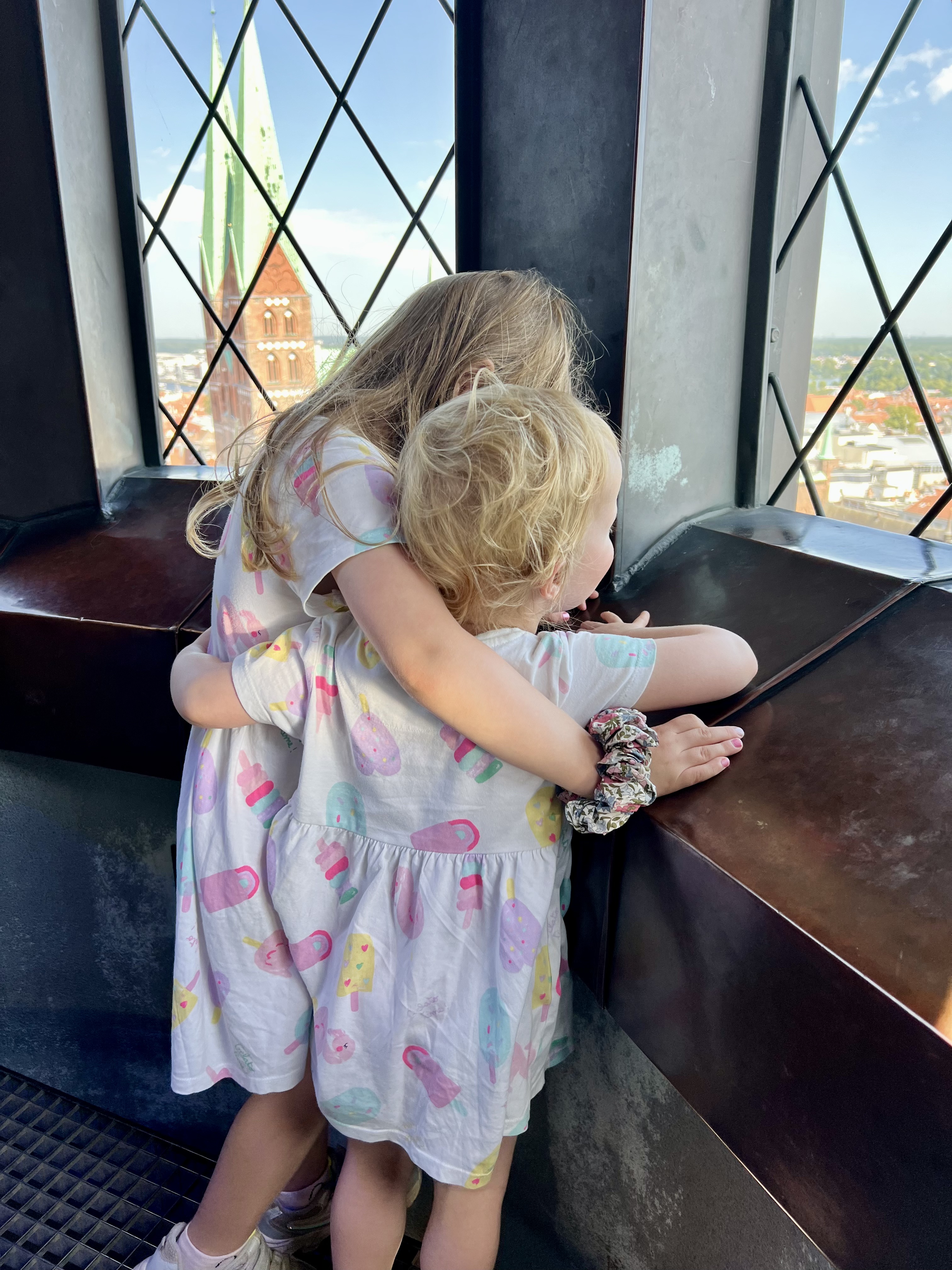
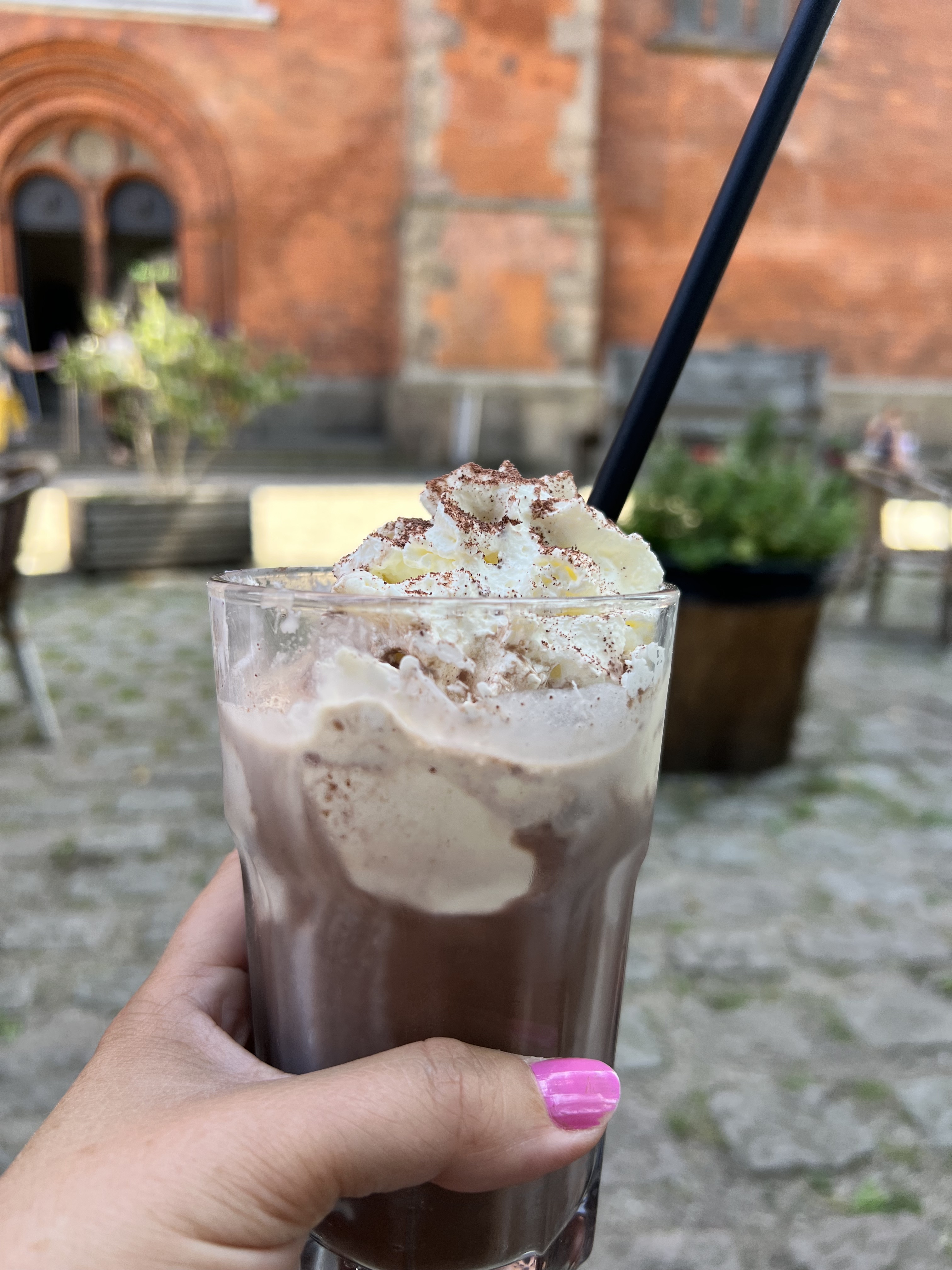
Afterwards, we had a little lunch from the ground floor cafe where there’s a strong lean towards quiches and cakes.
Explore the Old Town (Altstadt)
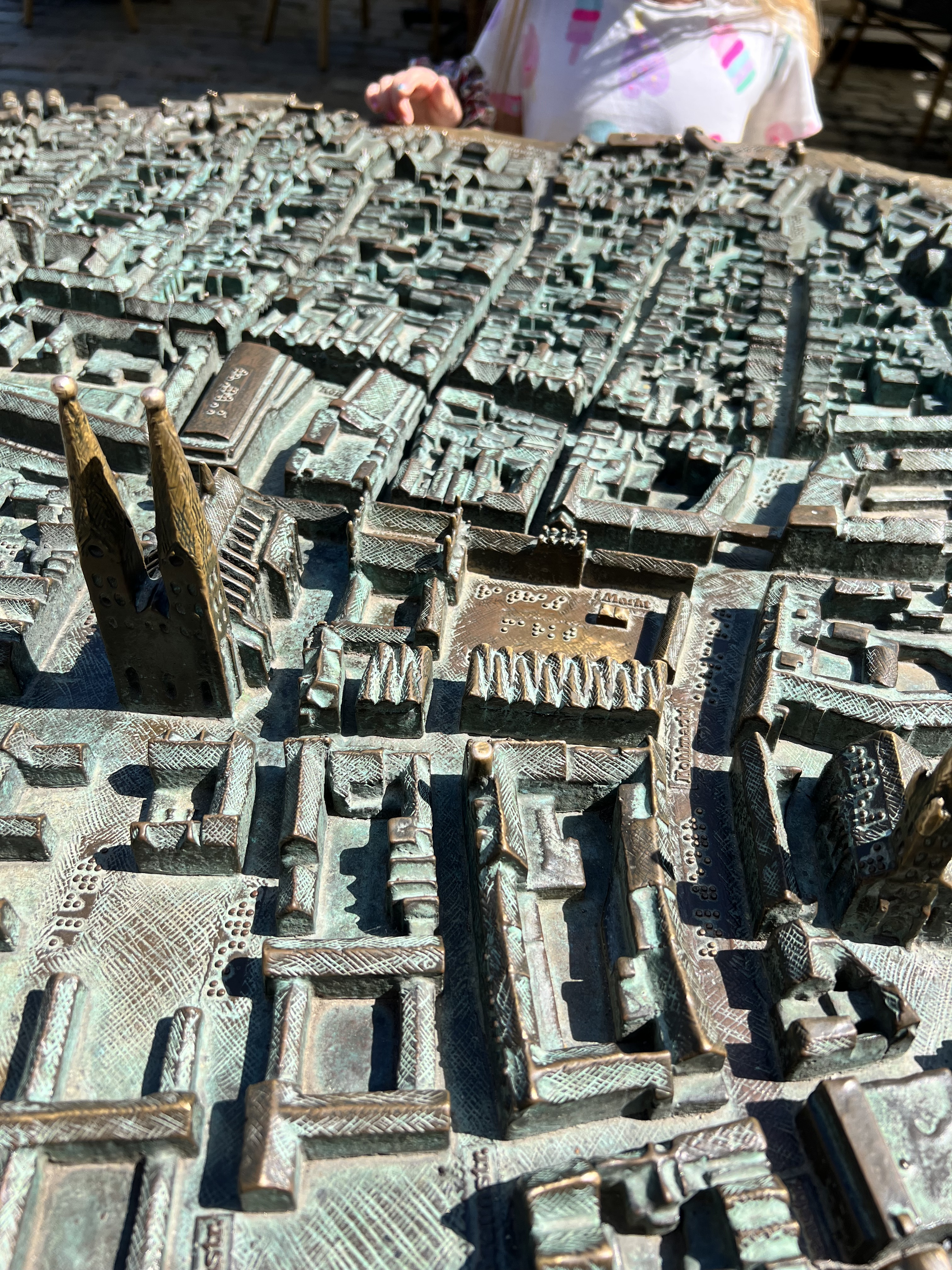
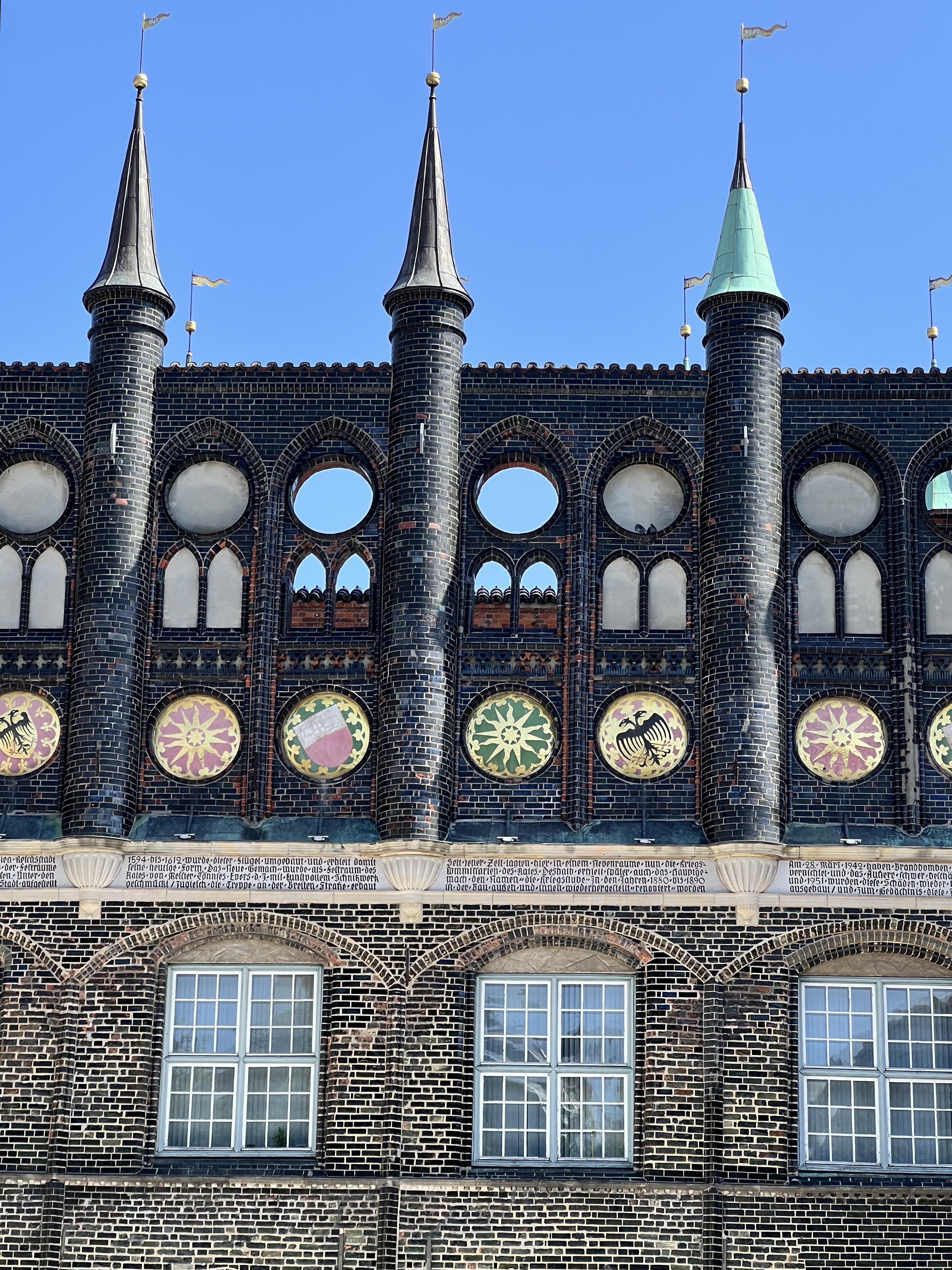
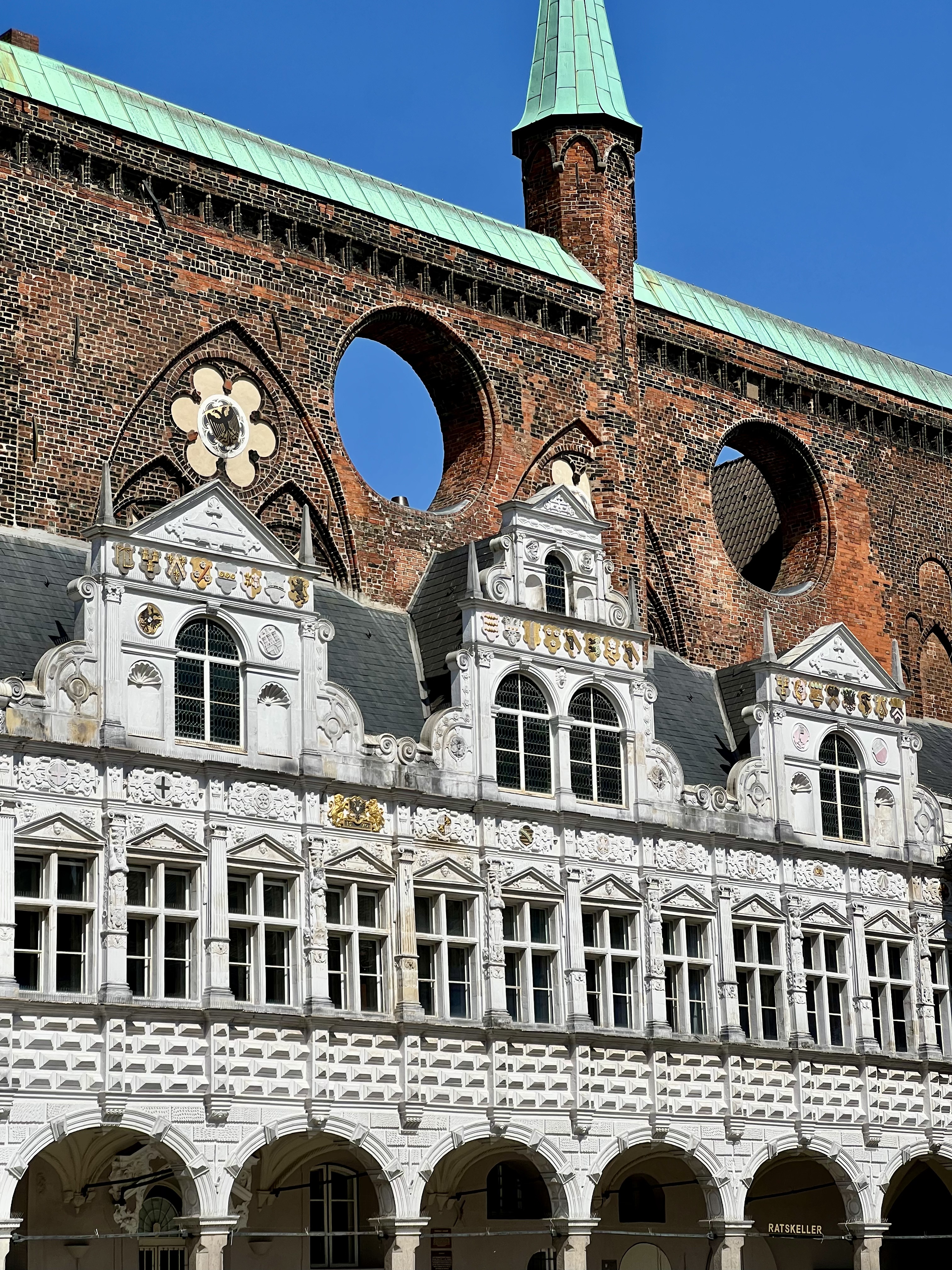
We wandered through the main square (Markt), presided over by the historic Rathaus (courthouse) and St. Mary’s Church (see below), as well as classic gabled Hanseatic townhouses. It’s hard to draw your eyes away from the unusual patchwork of buildings hailing from different eras of the town’s history, as you try to decipher what came first. Taking a moment to read or listen to information about them is worthwhile as it brings the place to life, as does the miniature reconstruction of the town.
Stumble Across Hidden Courtyards
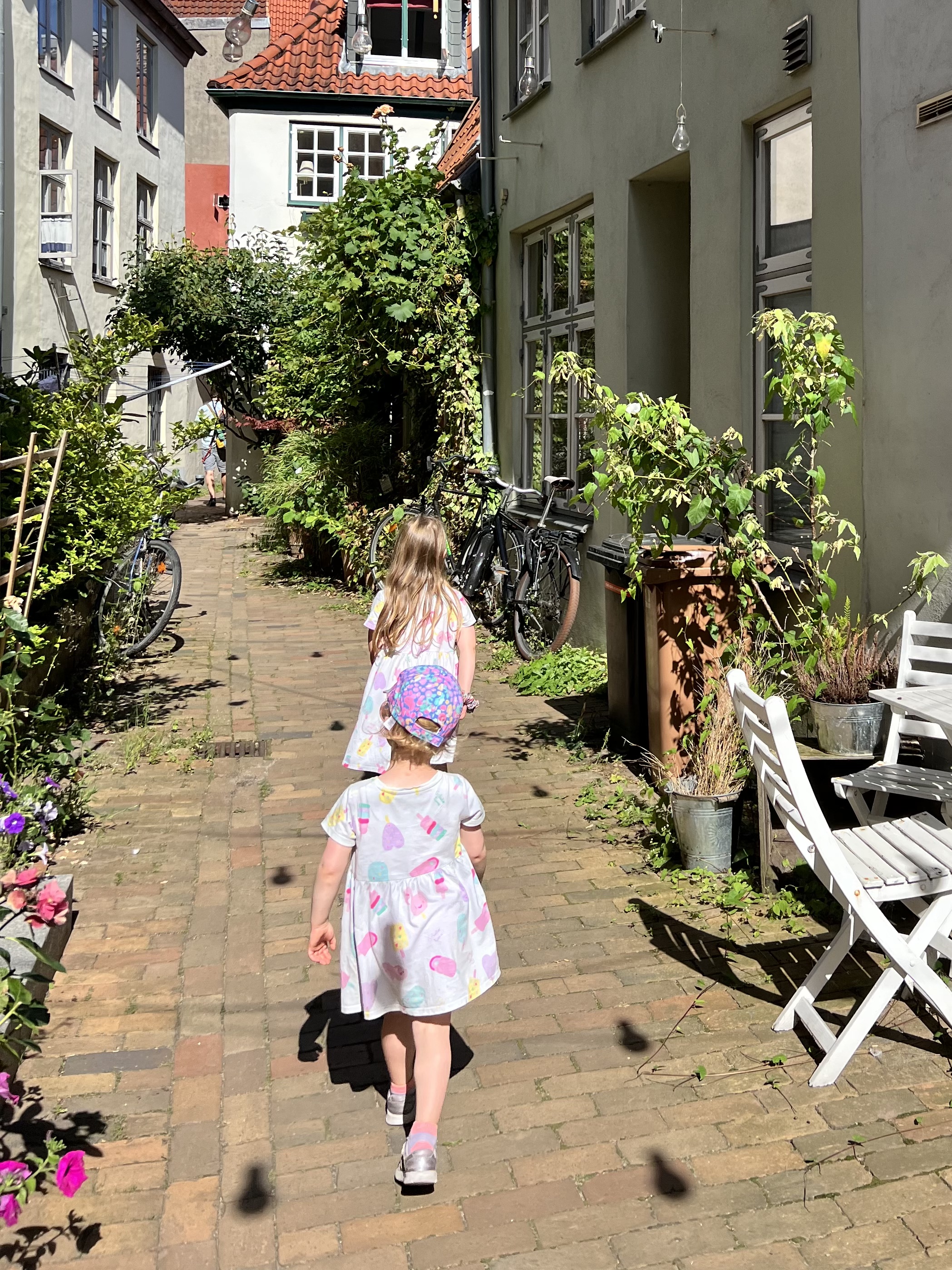
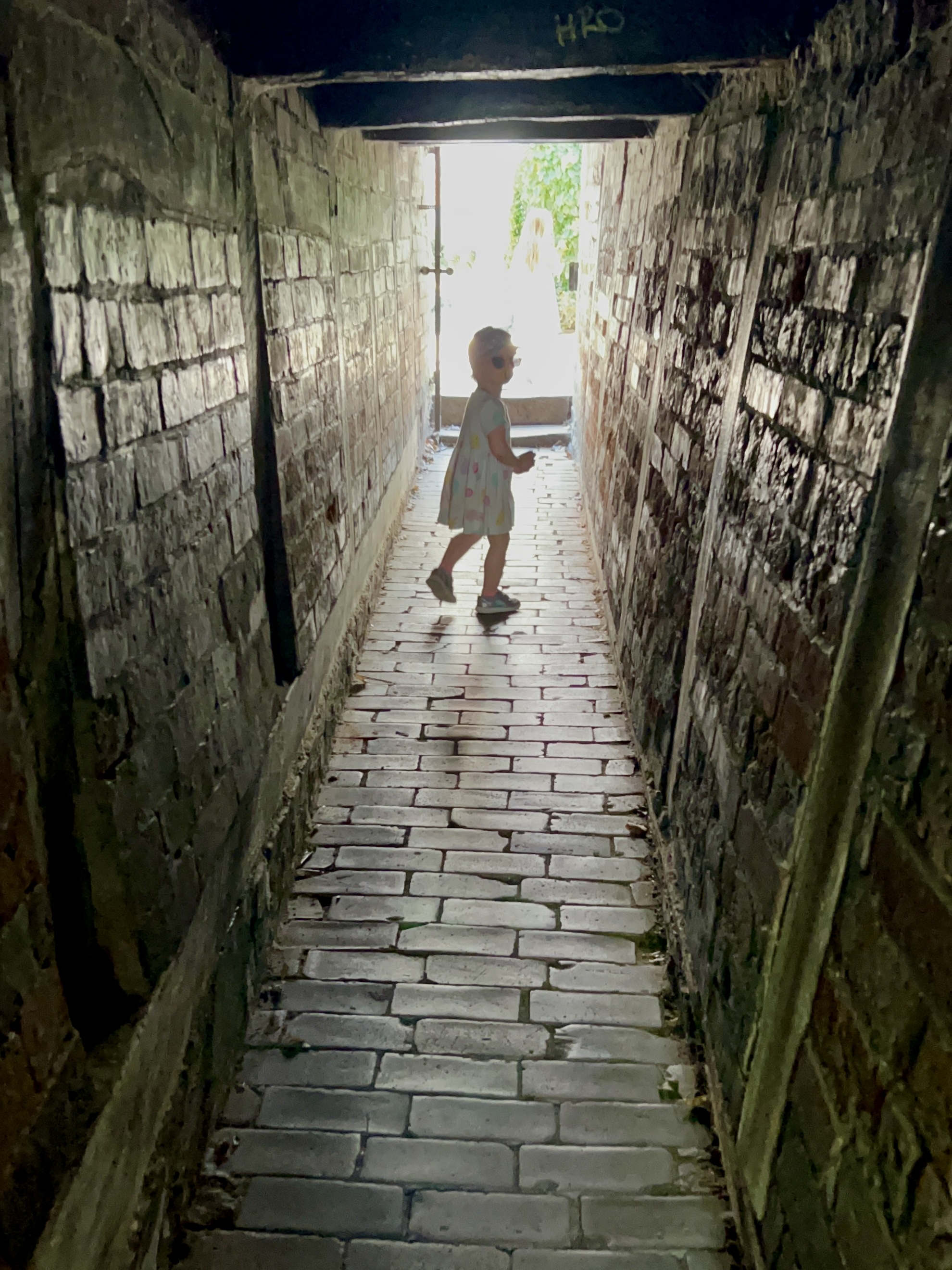
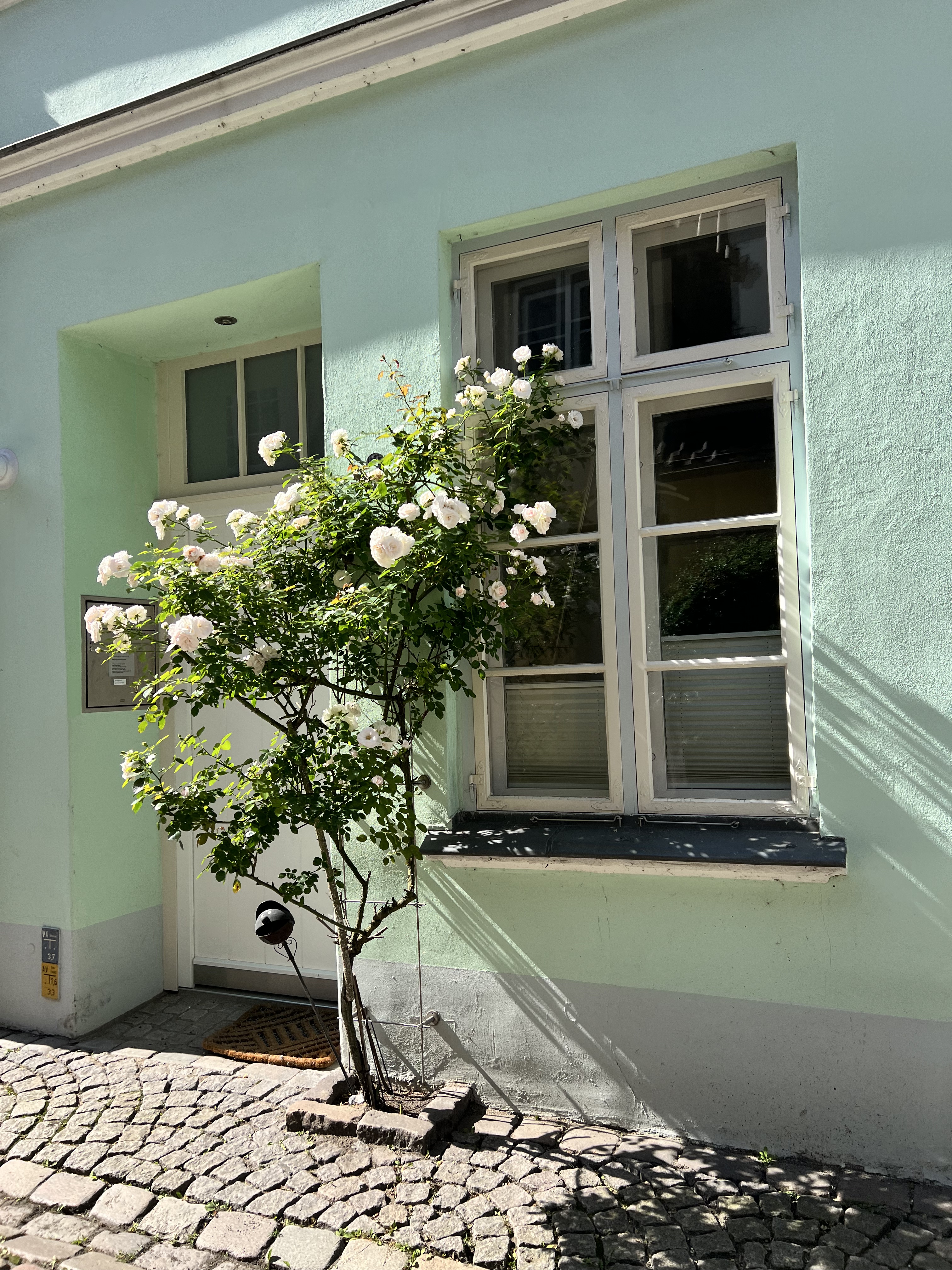
The children’s favourite parts of the city were the little, peaceful flower-filled courtyards, accessed by unassuming – and often very tiny – alleyways. I read that there are, in fact, over 90 hidden medieval passages in Lübeck. I’m not sure how much the residents will have enjoyed our noisy visits, but they certainly tend to maintain very aesthetically pleasing house fronts to the benefit of us tourists.
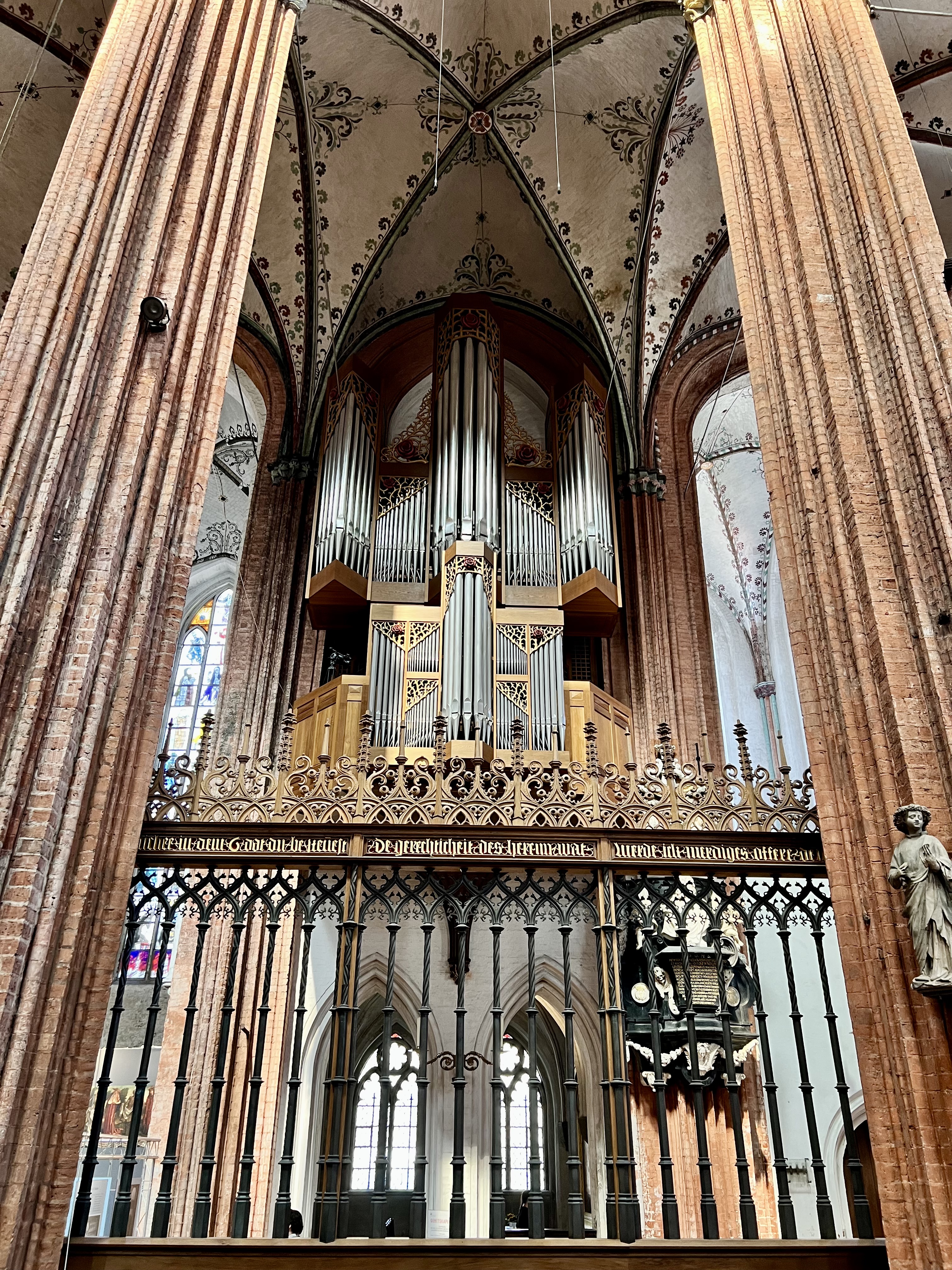
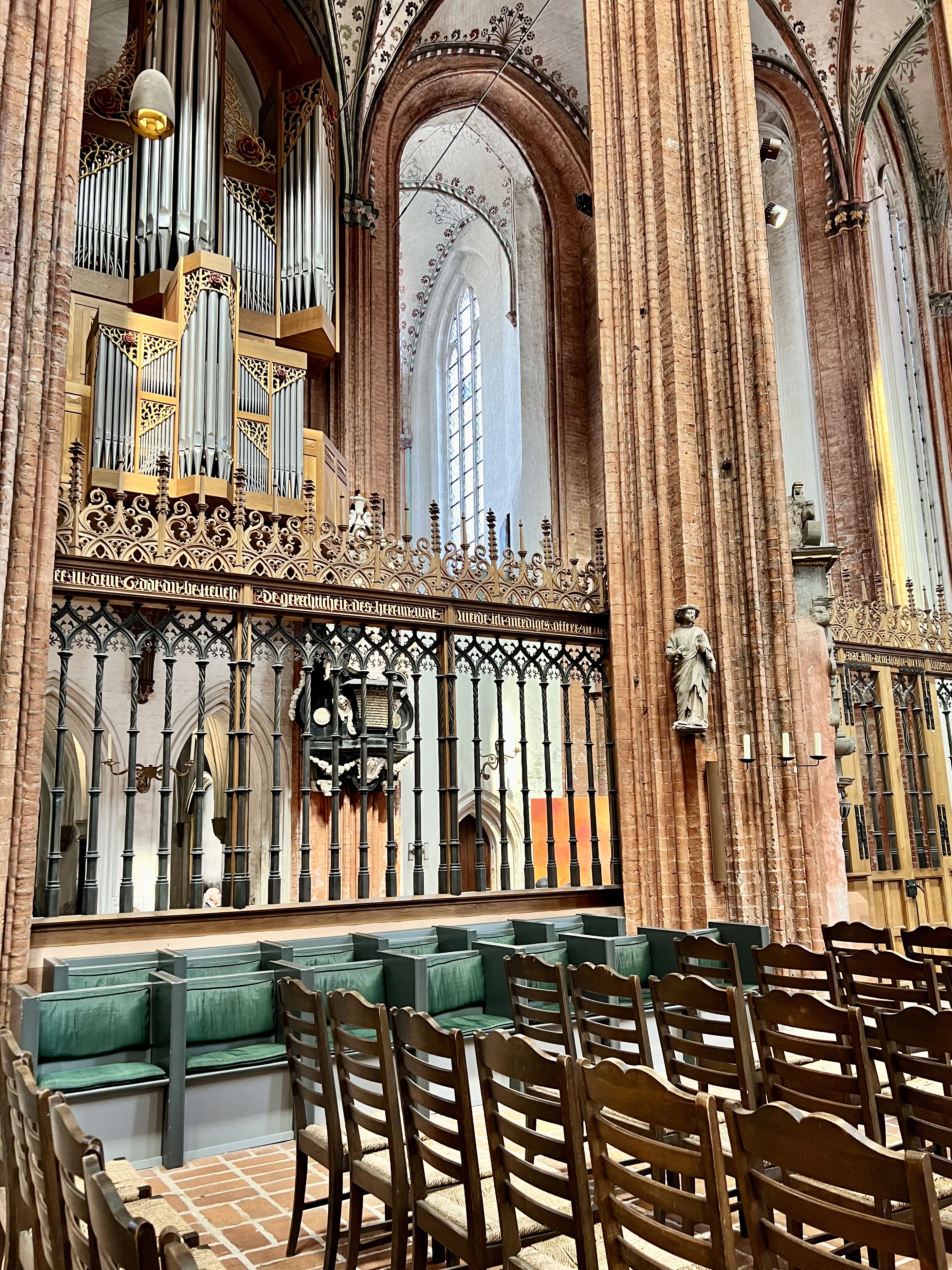
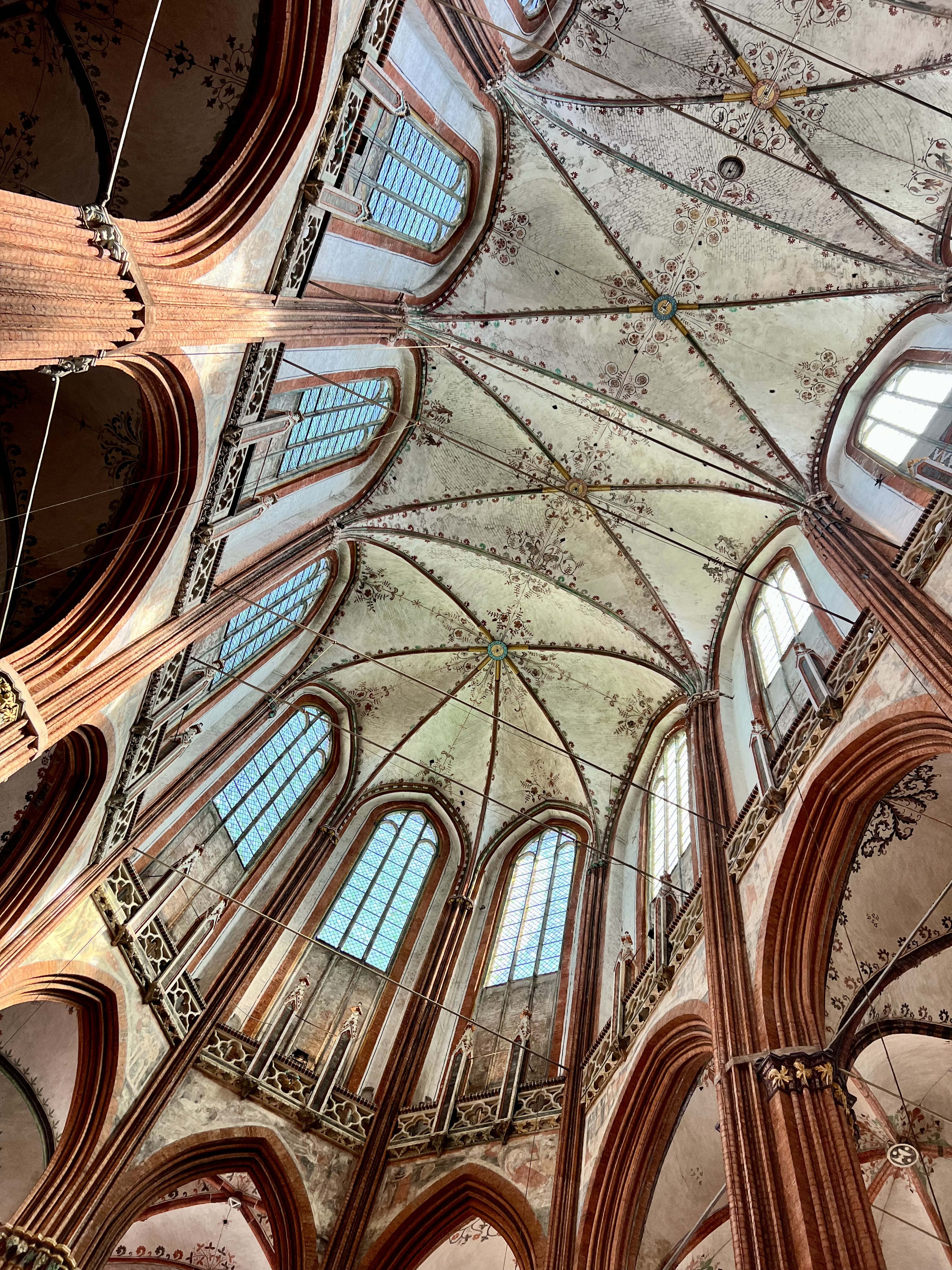
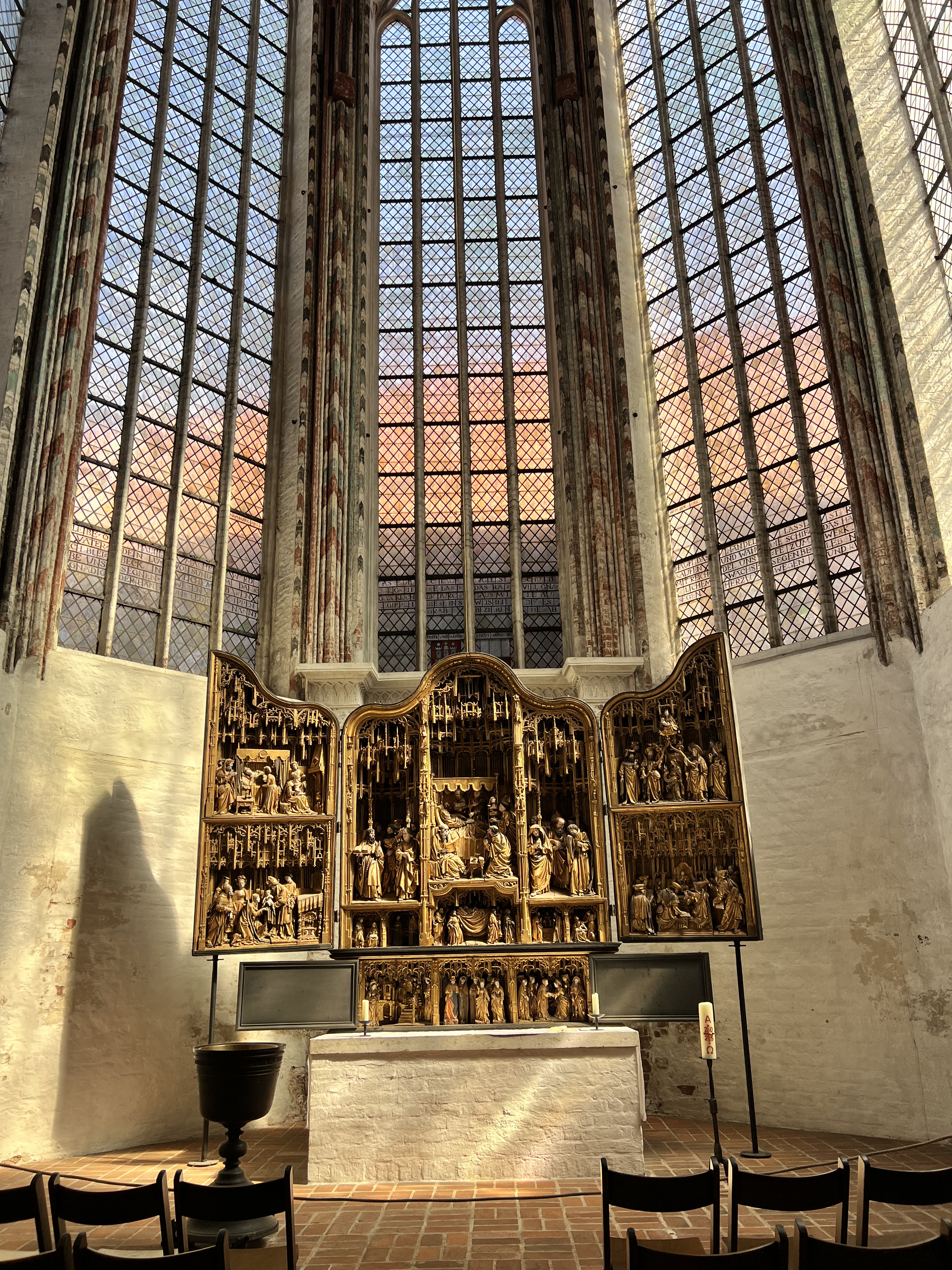
Visit St. Mary’s Church (Marienkirche)
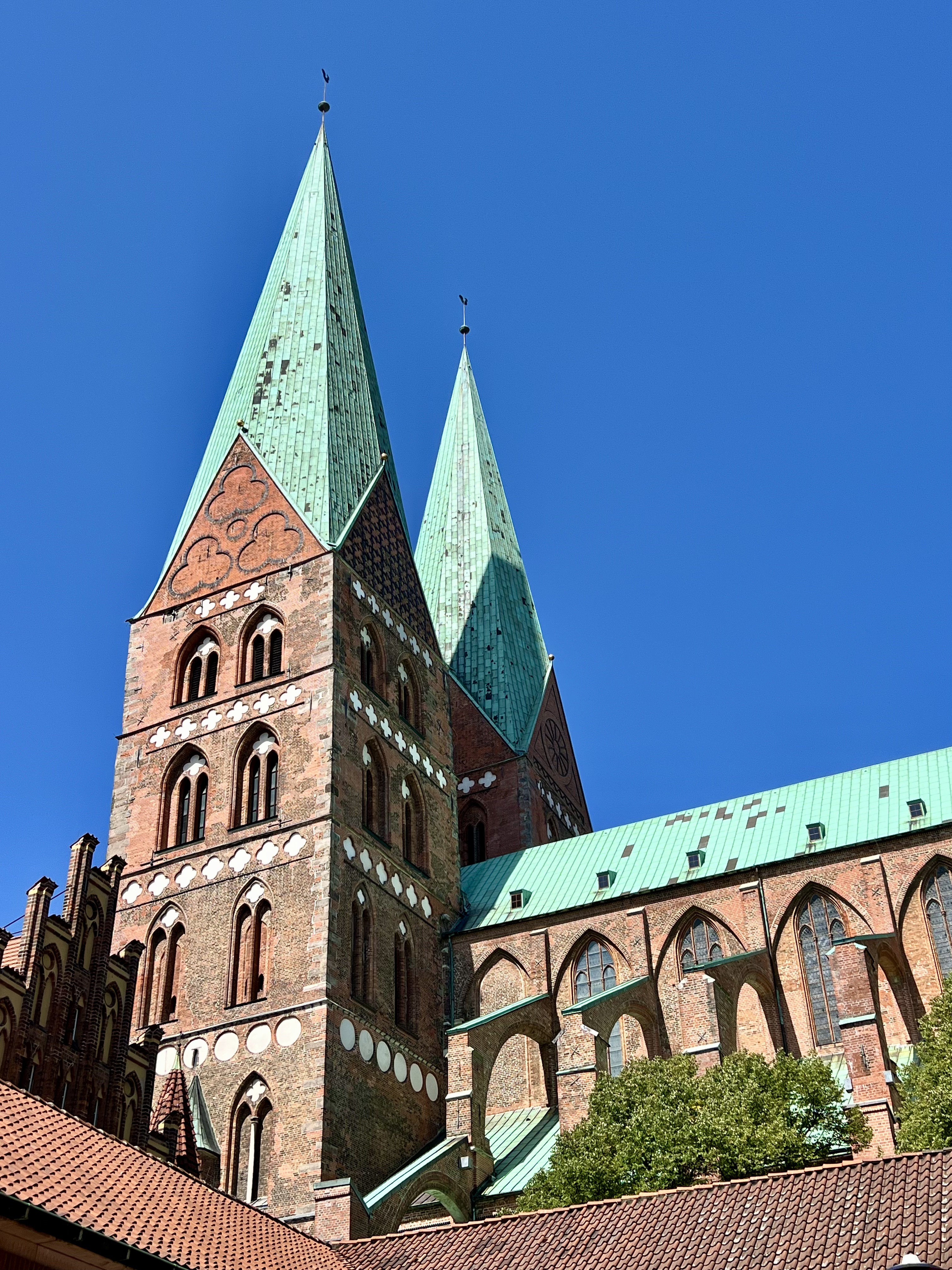
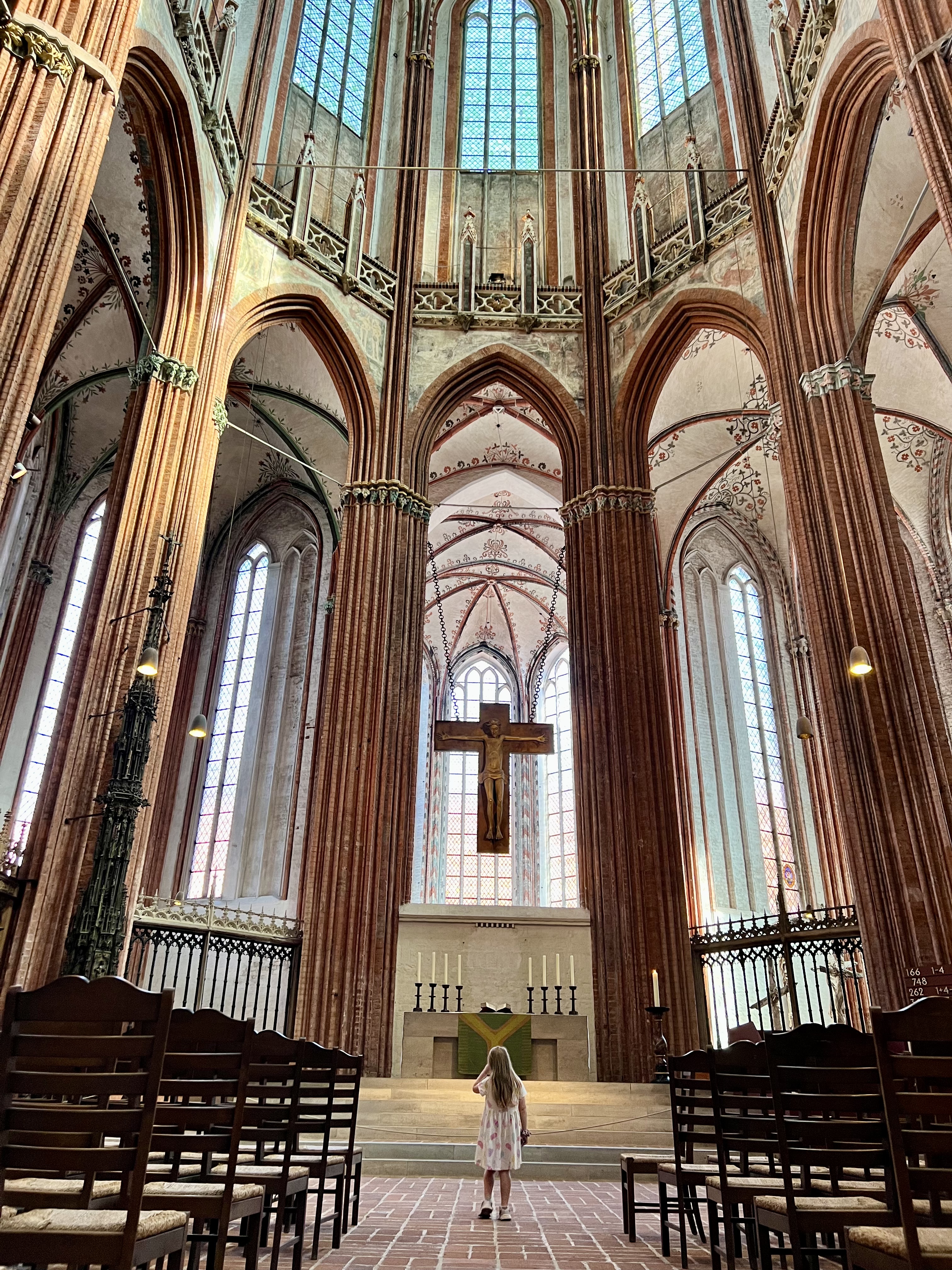
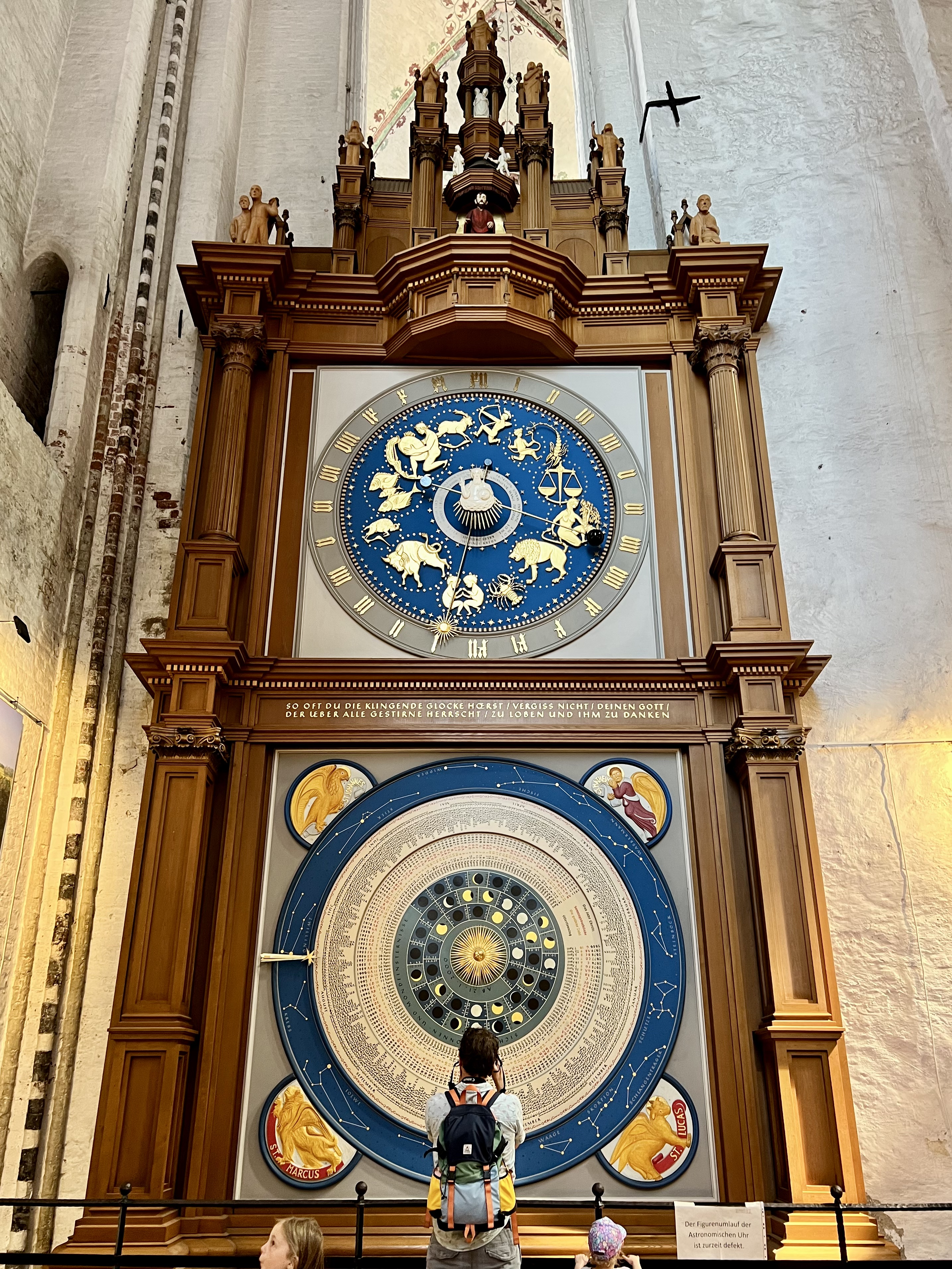
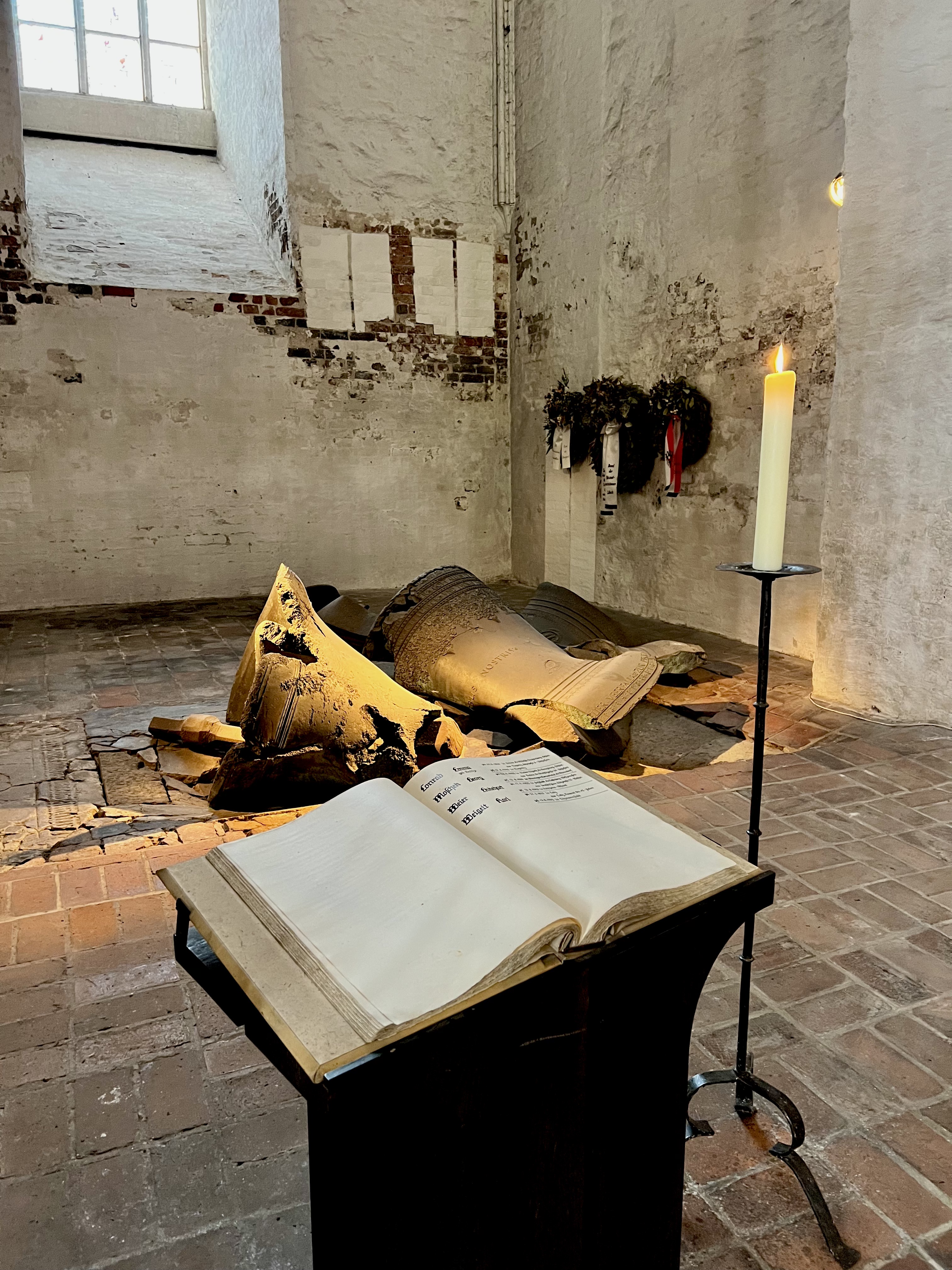
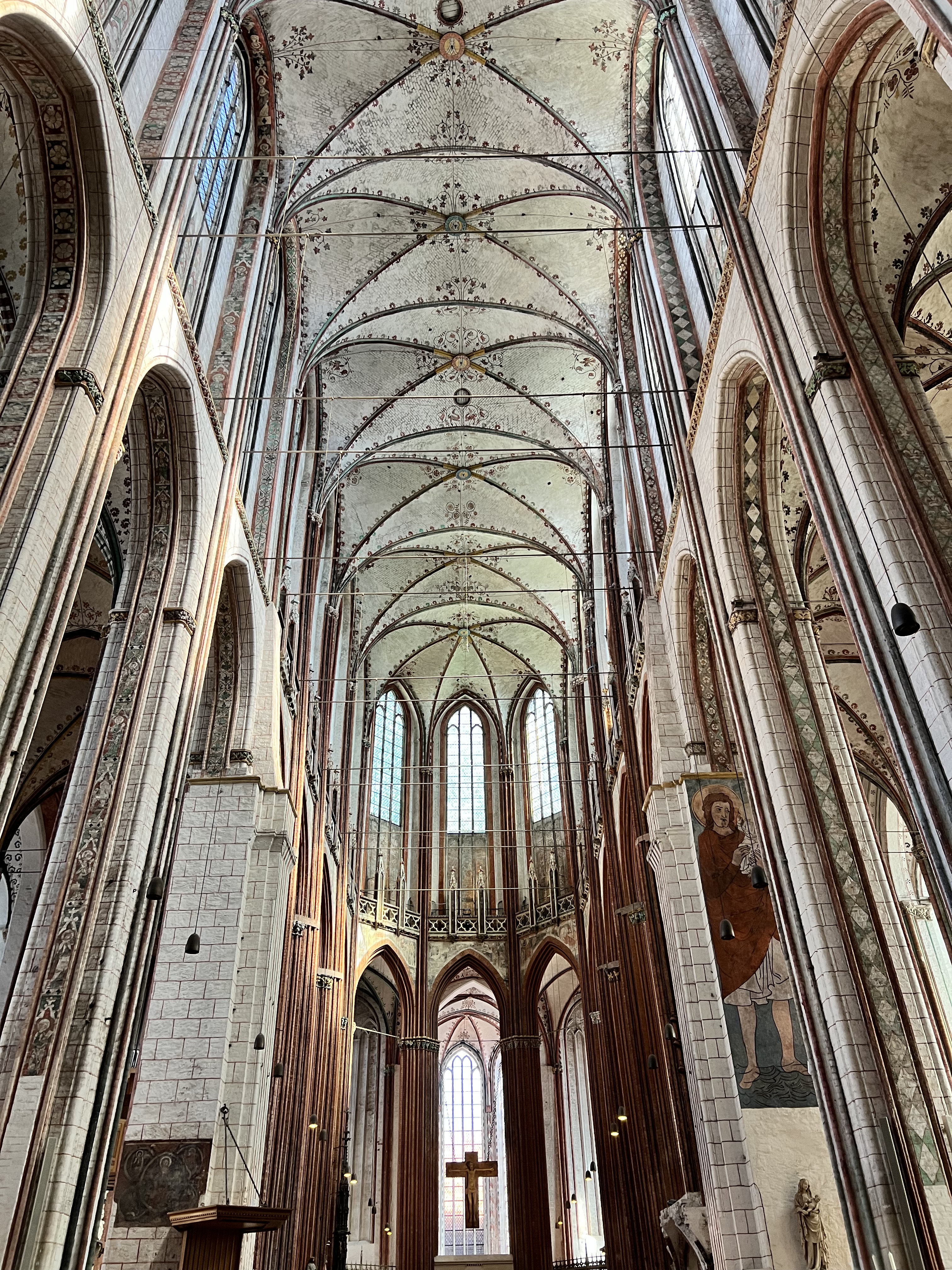
Another of the five original grand churches, St. Mary’s is beautiful and features a bell lying broken where it fell during the WWII Palm Sunday 1942 bombing. It also has the world’s highest brick vaulted ceiling and an astronomical clock behind the high alter.
Sample Some Marzipan
The town is also famous for Lübecker Marzipan, perfected here by the Niederegger family since 1806 which is still big business. You’ll find Café Niederegger in the main square but there are plenty of other shops and cafés around too.
The Hospital of the Holy Spirit (Heiligen-Geist-Hospital) and Peaceful Gardens
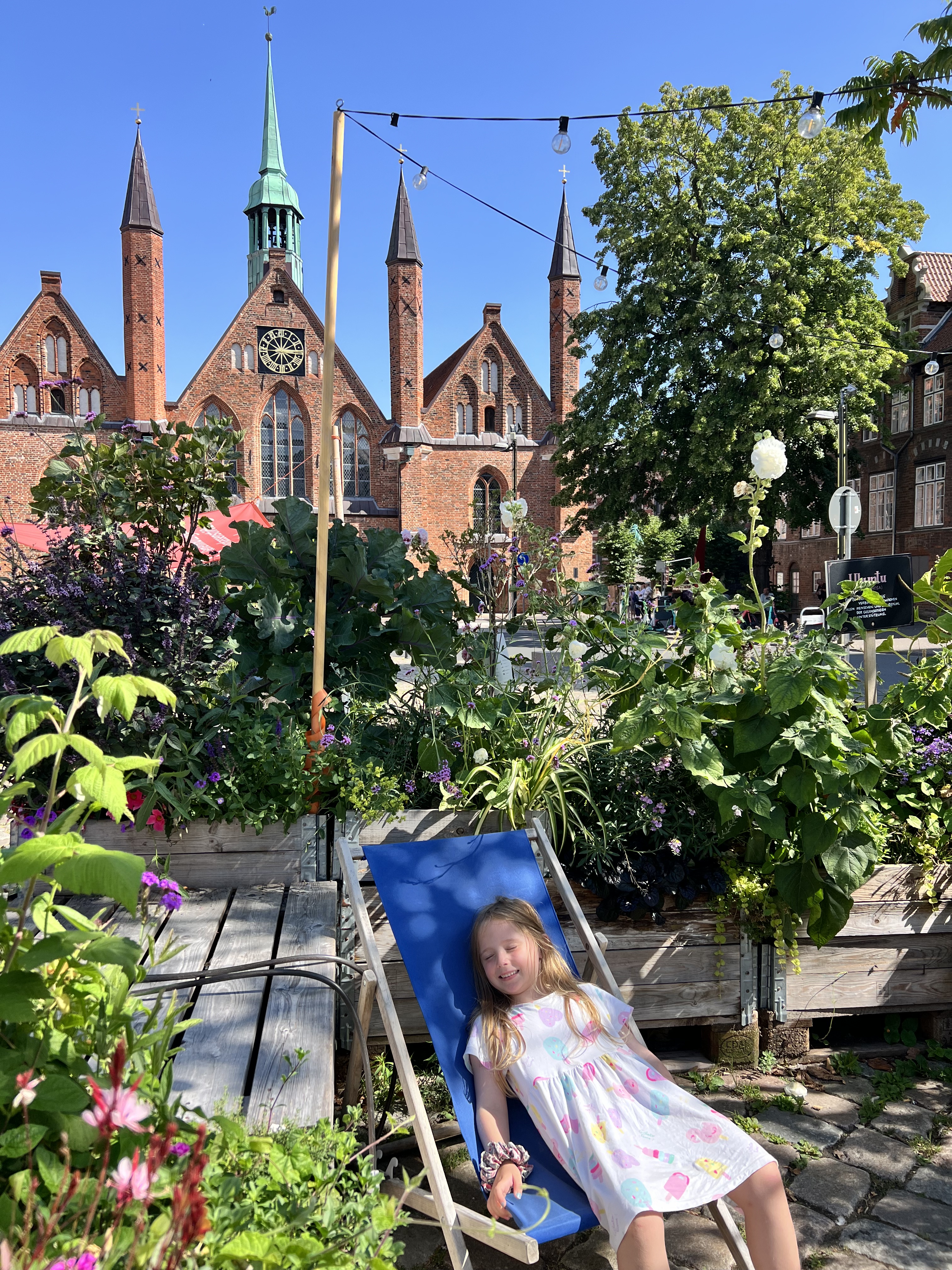
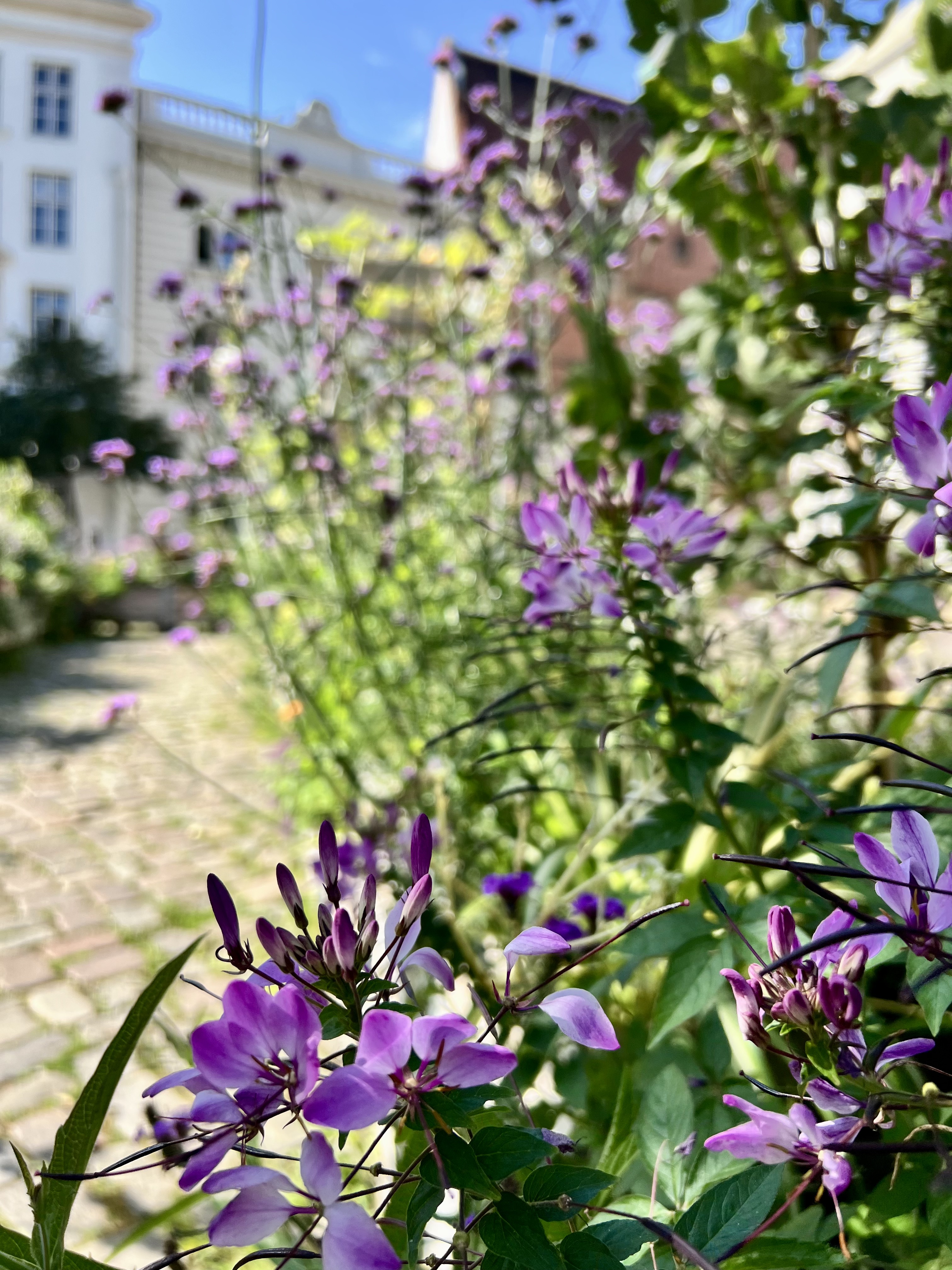
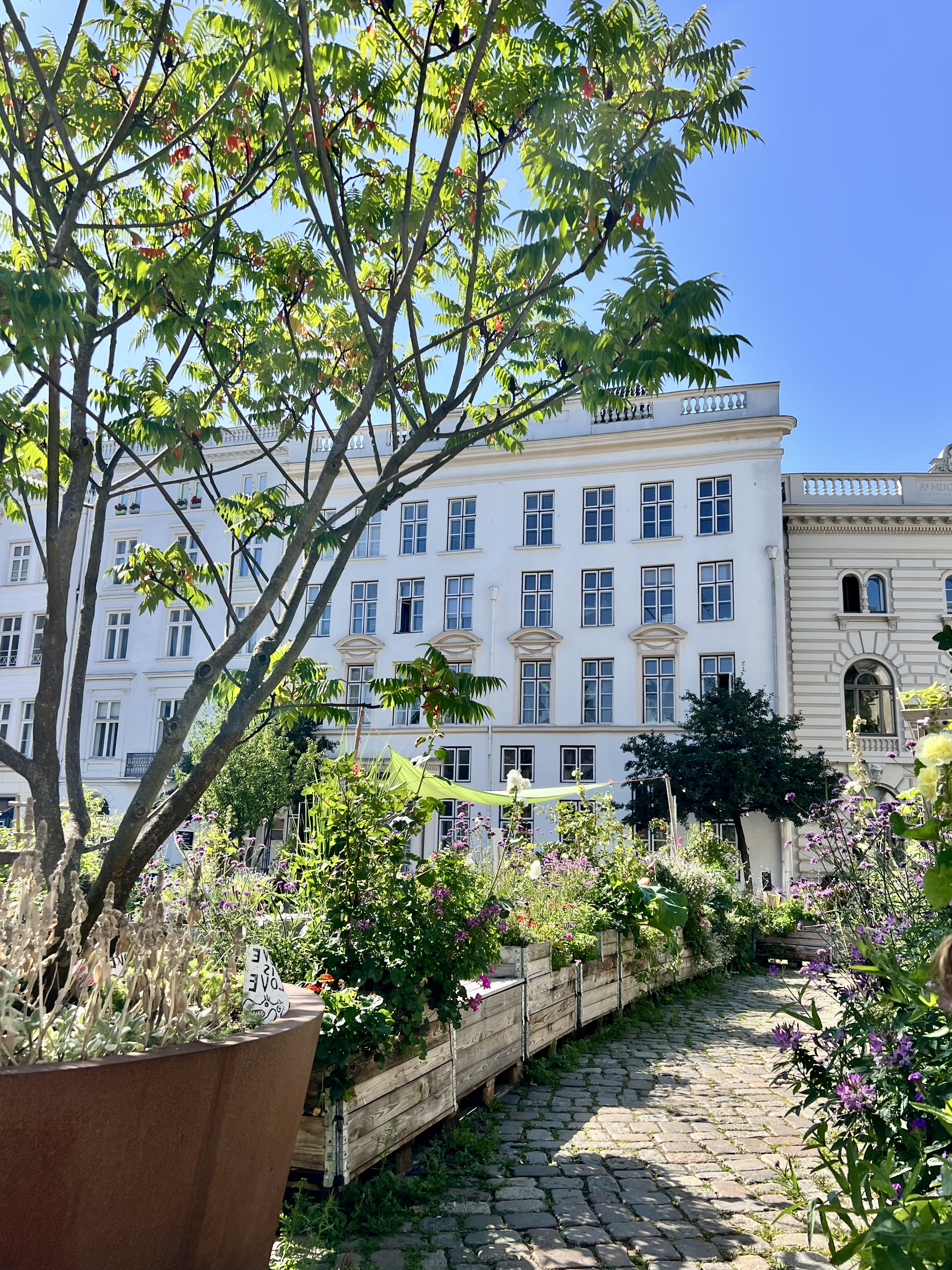
A beautiful spot for a little snack stop, Ubergangsgarten (Transition Garden) is an urban maze of raised beds, pollinator-friendly plants and herbs, deckchairs and a sandbox for children. It’s seasonal though, running from early summer until early October.
Ubergangsgarten sits in front of the hospital which is one of the world’s oldest surviving social institutions and it was built in 1286. It’s very grand to look at. You can visit the front areas and the chapel for free. There are more gardens – Bürgergärten – behind it: an oasis away from the busyness of the Old Town.
P.S. If you need another German road trip recommendation…
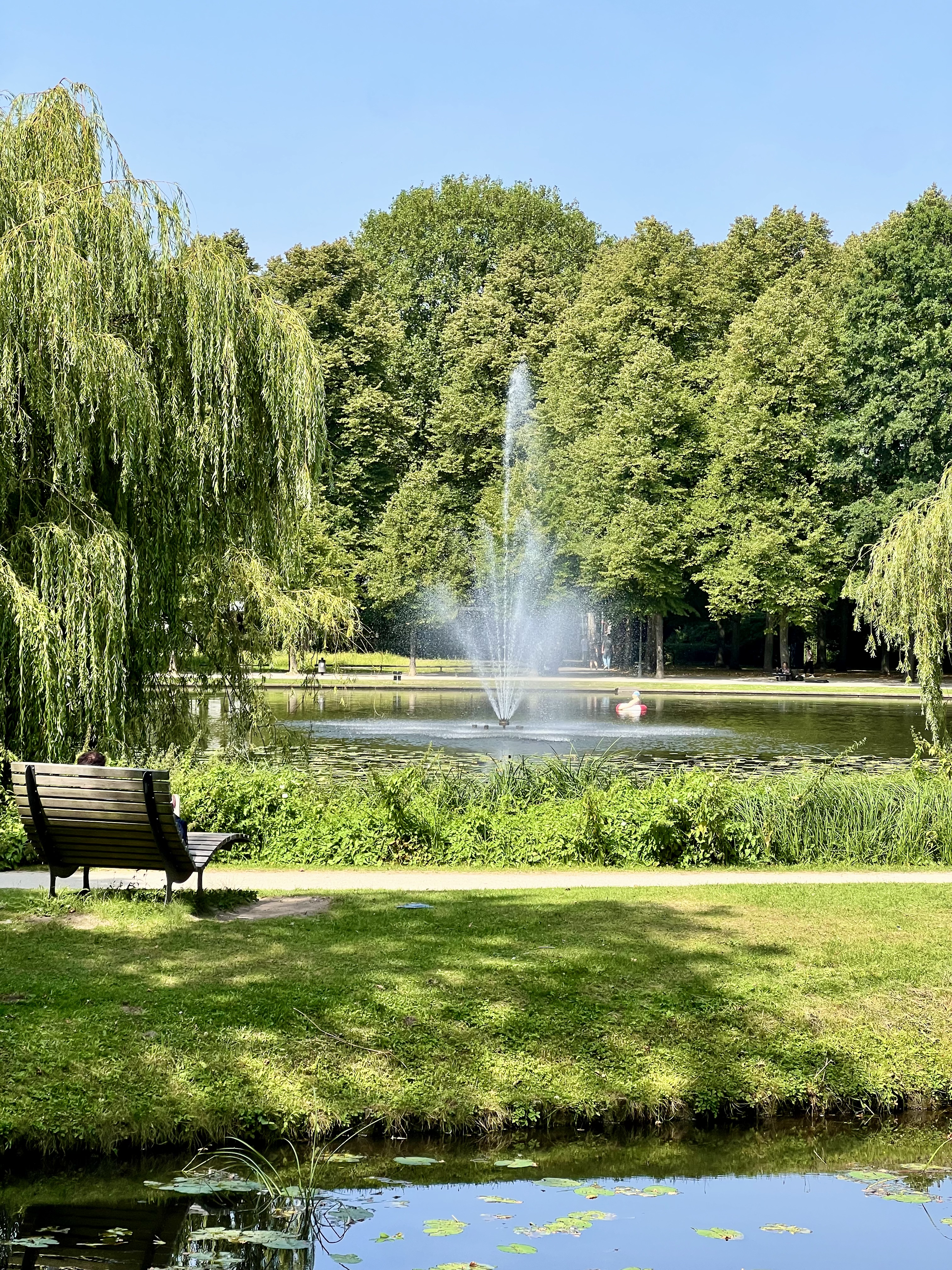
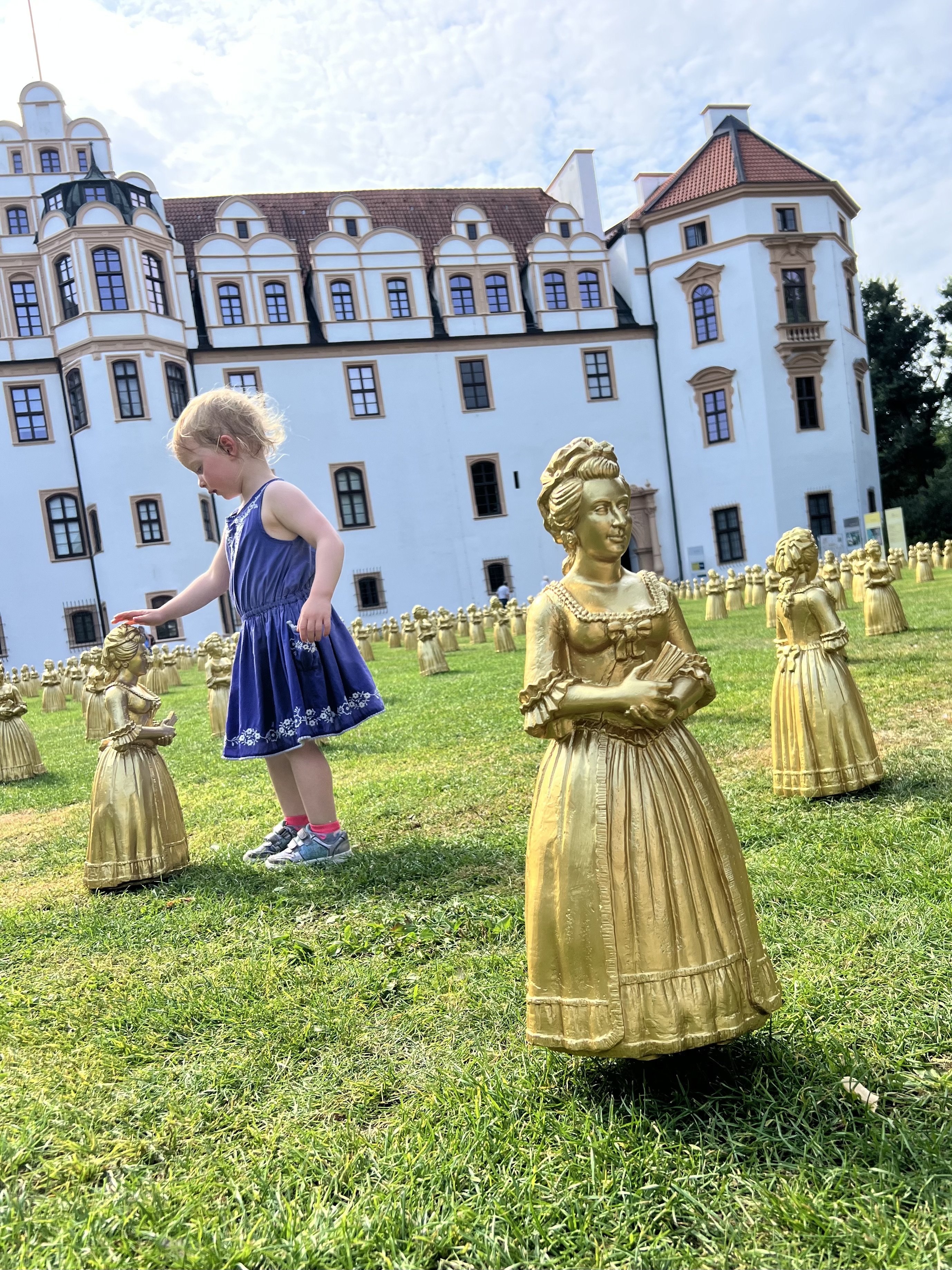
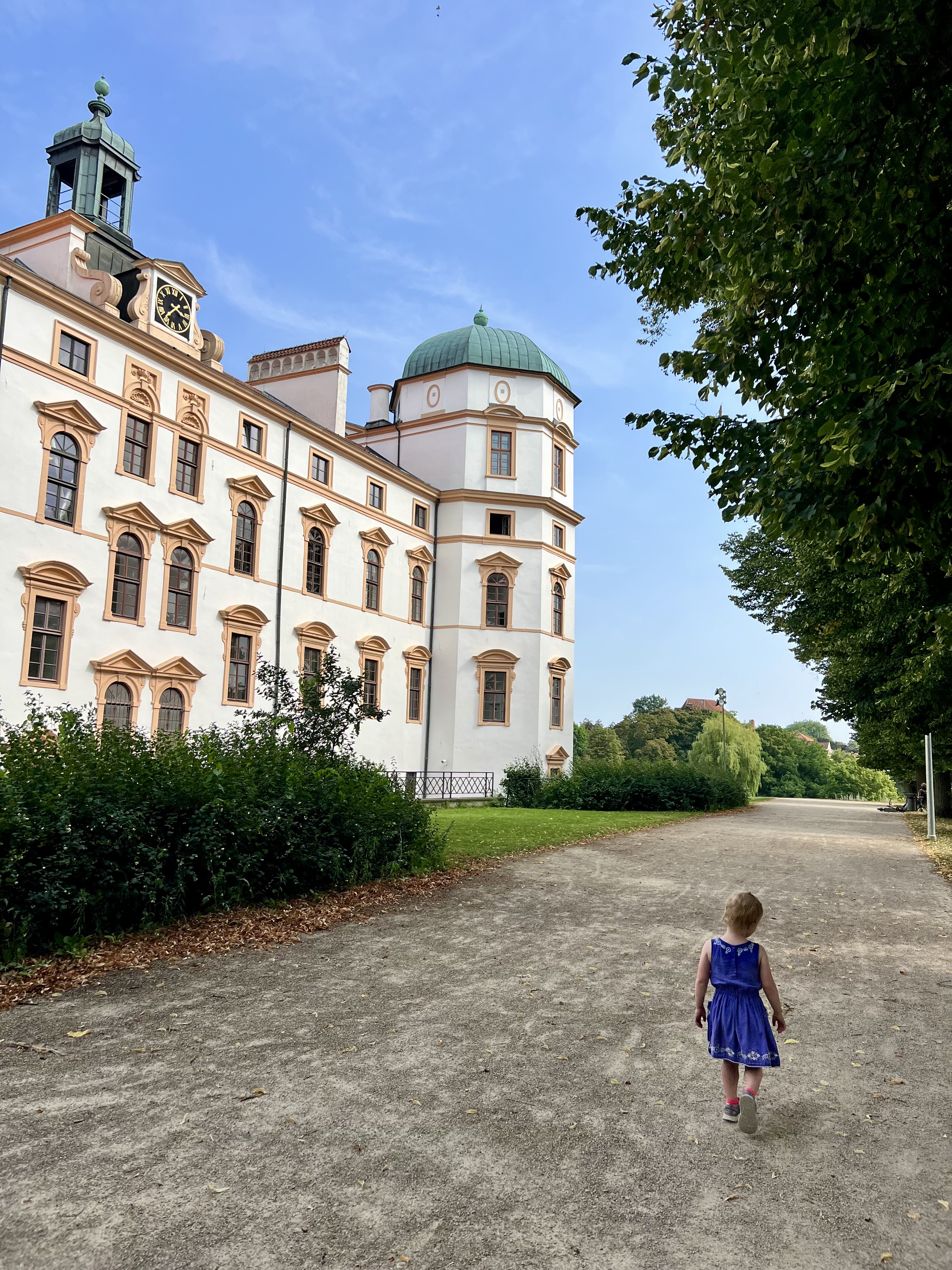
If you’re doing a similar road trip and looking for other places to stop, we’d also highly recommend the German town of Celle. Its home to such beautifully ornate buildings, delicious ice cream, a refreshing water feature to play in, a grand castle, and a tree-filled shady park. We recommend Happy Crêppy for crêpes and ice creams.
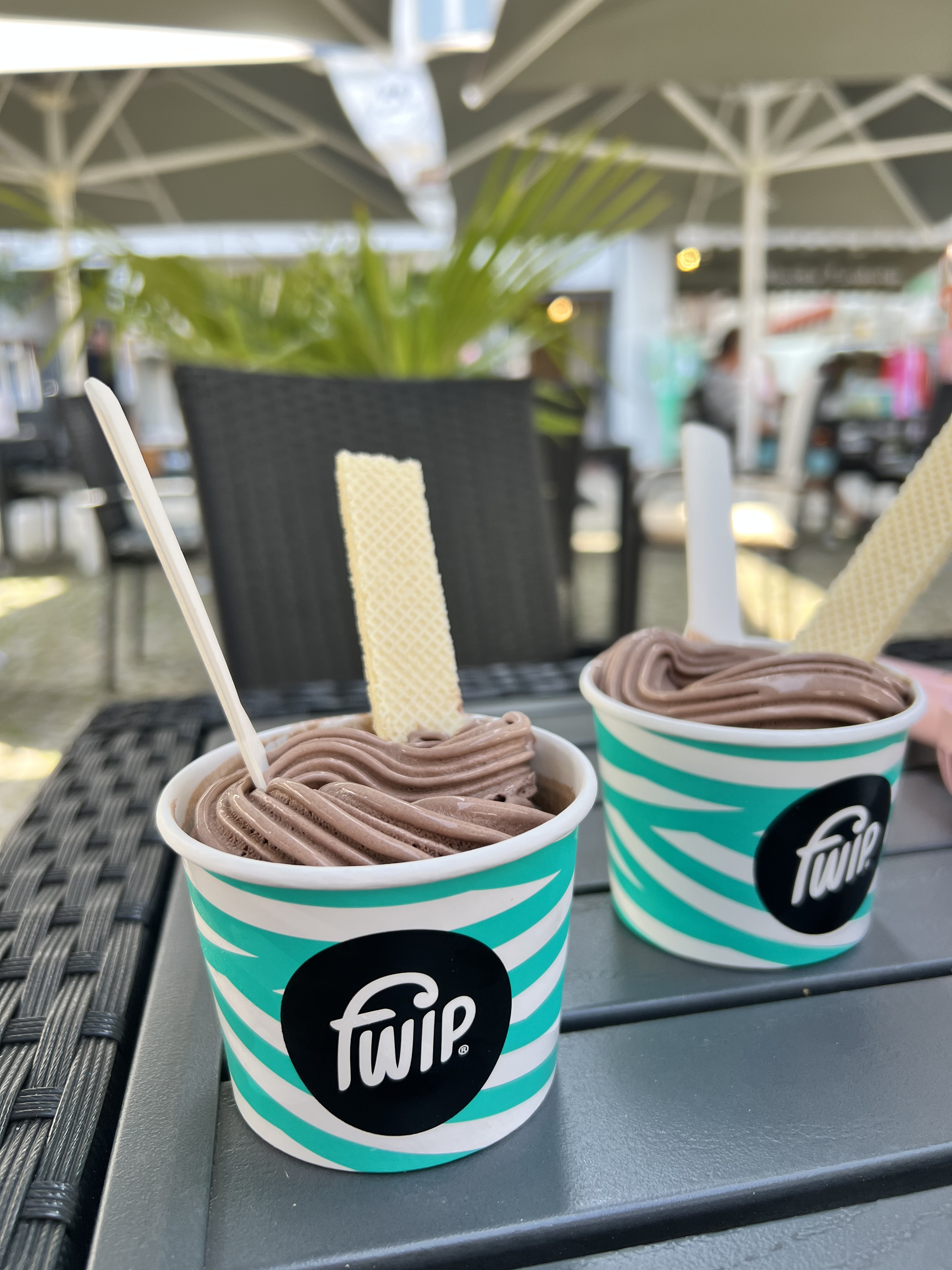
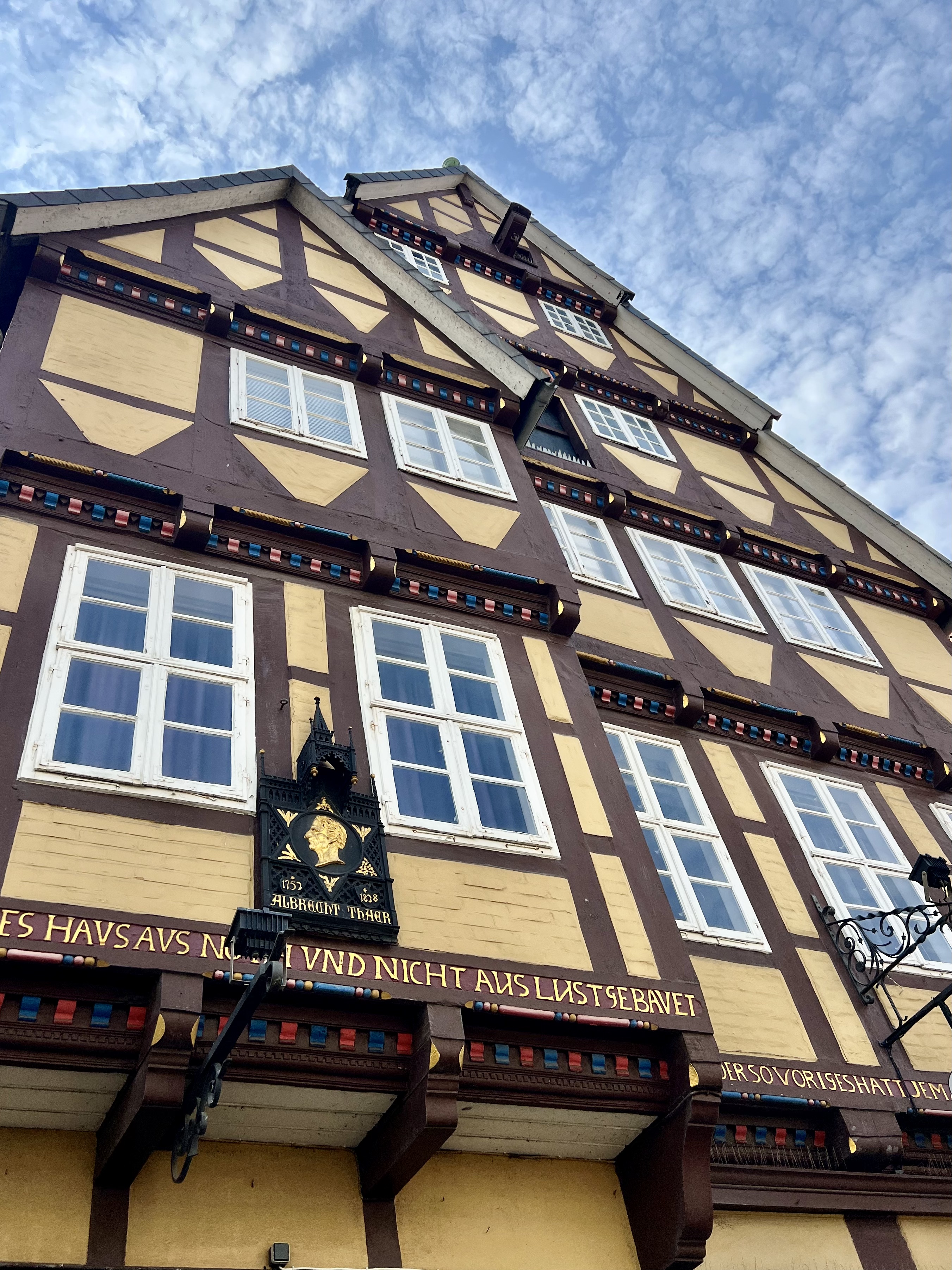
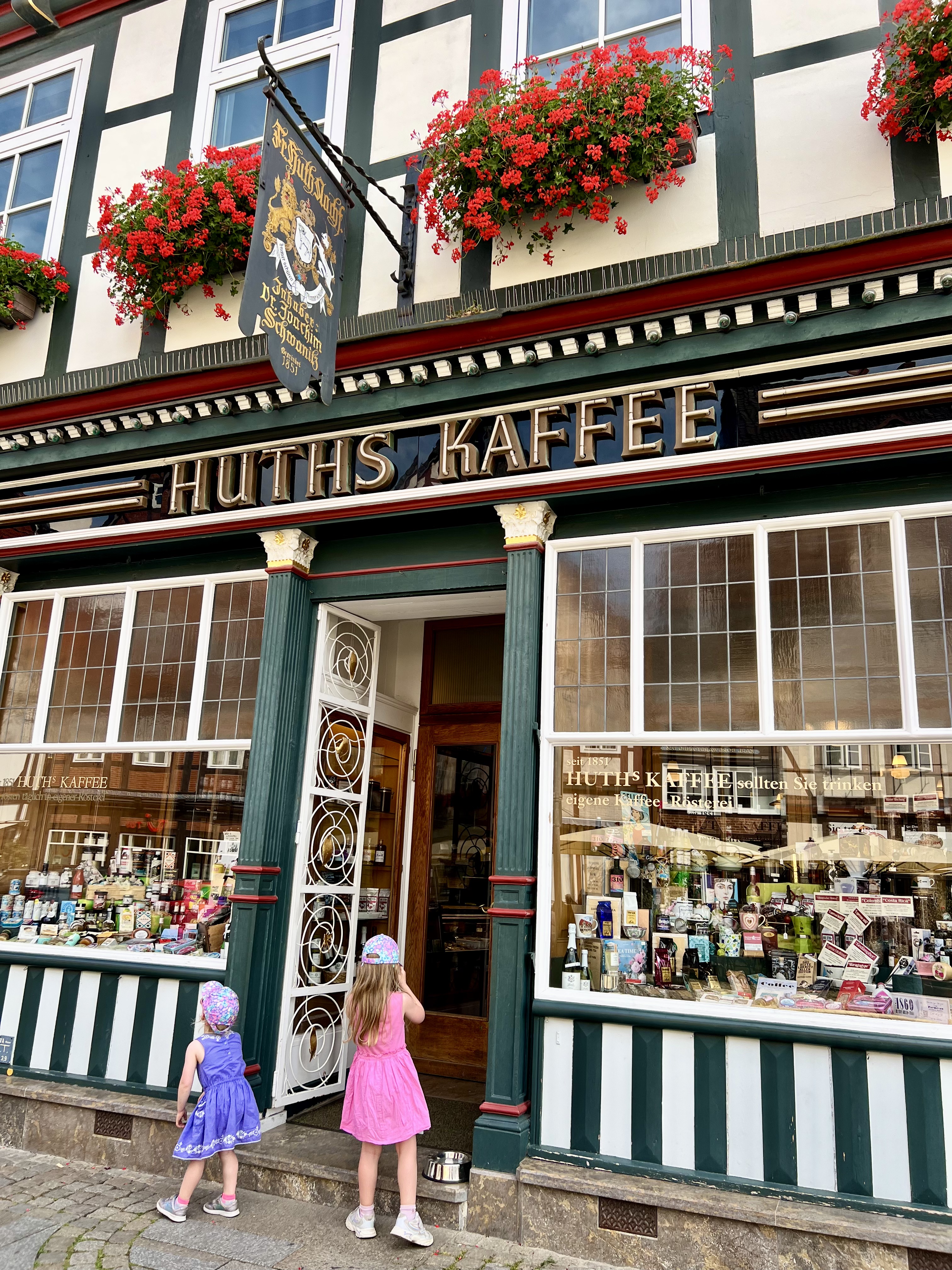
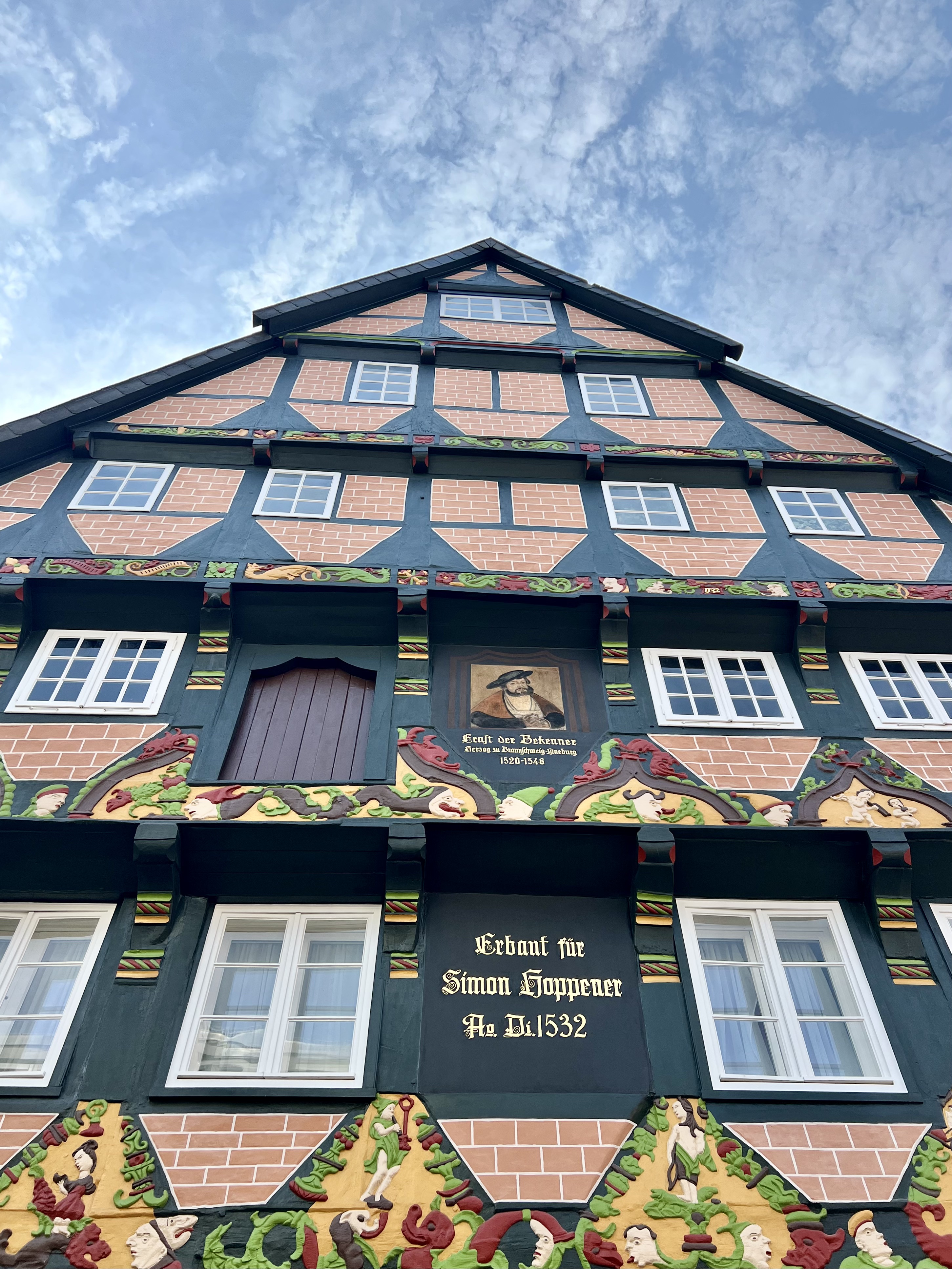
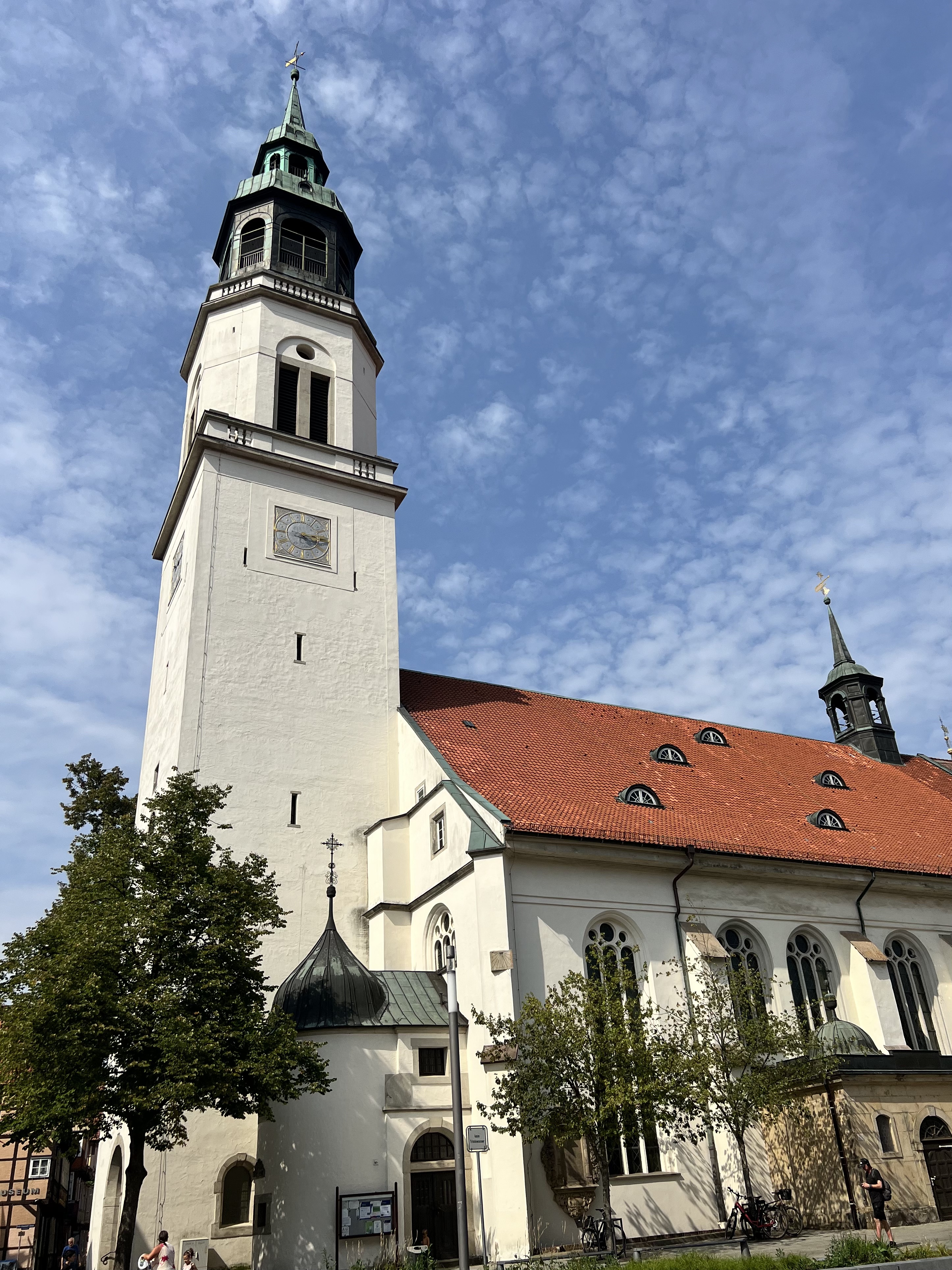
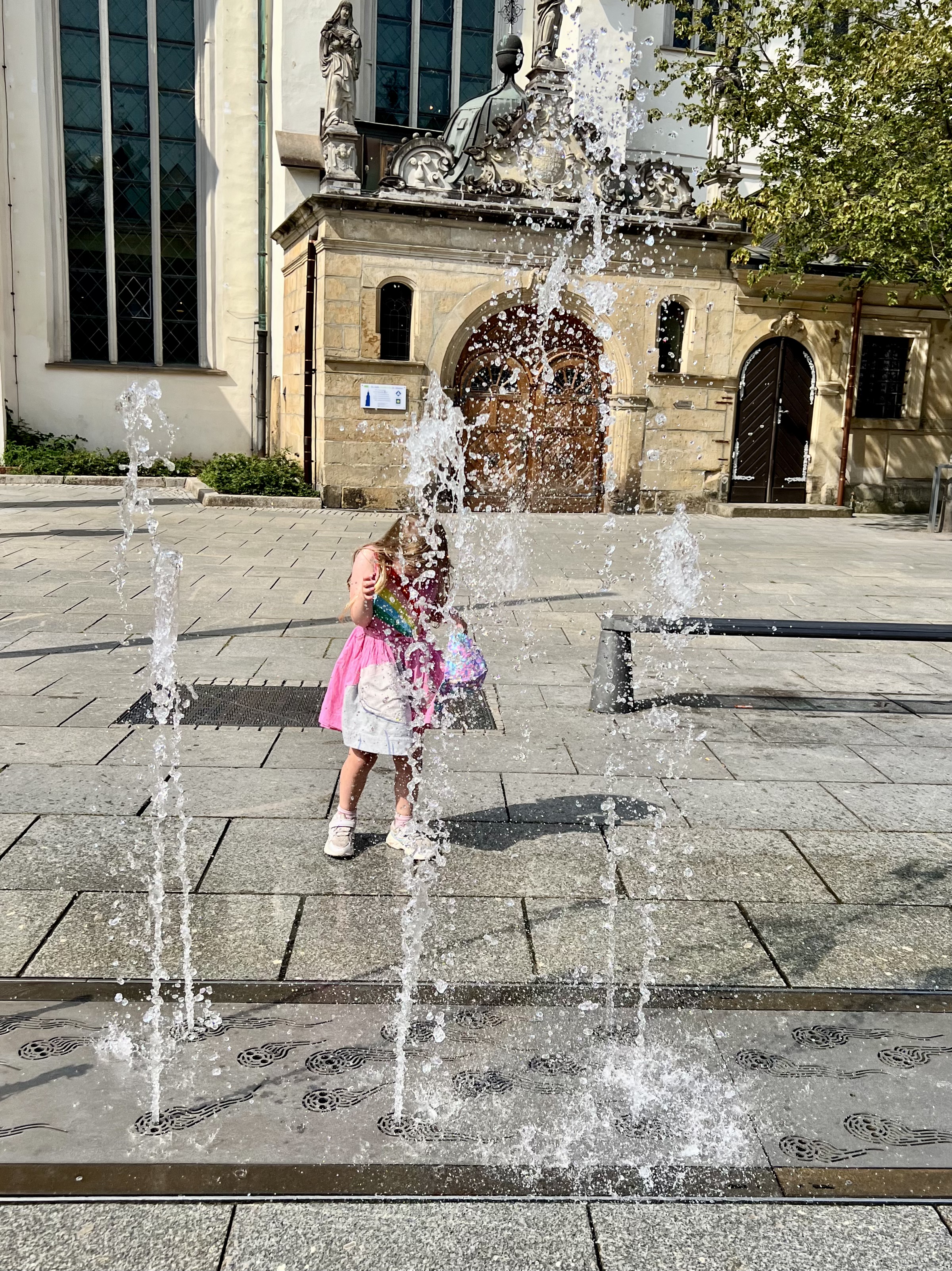
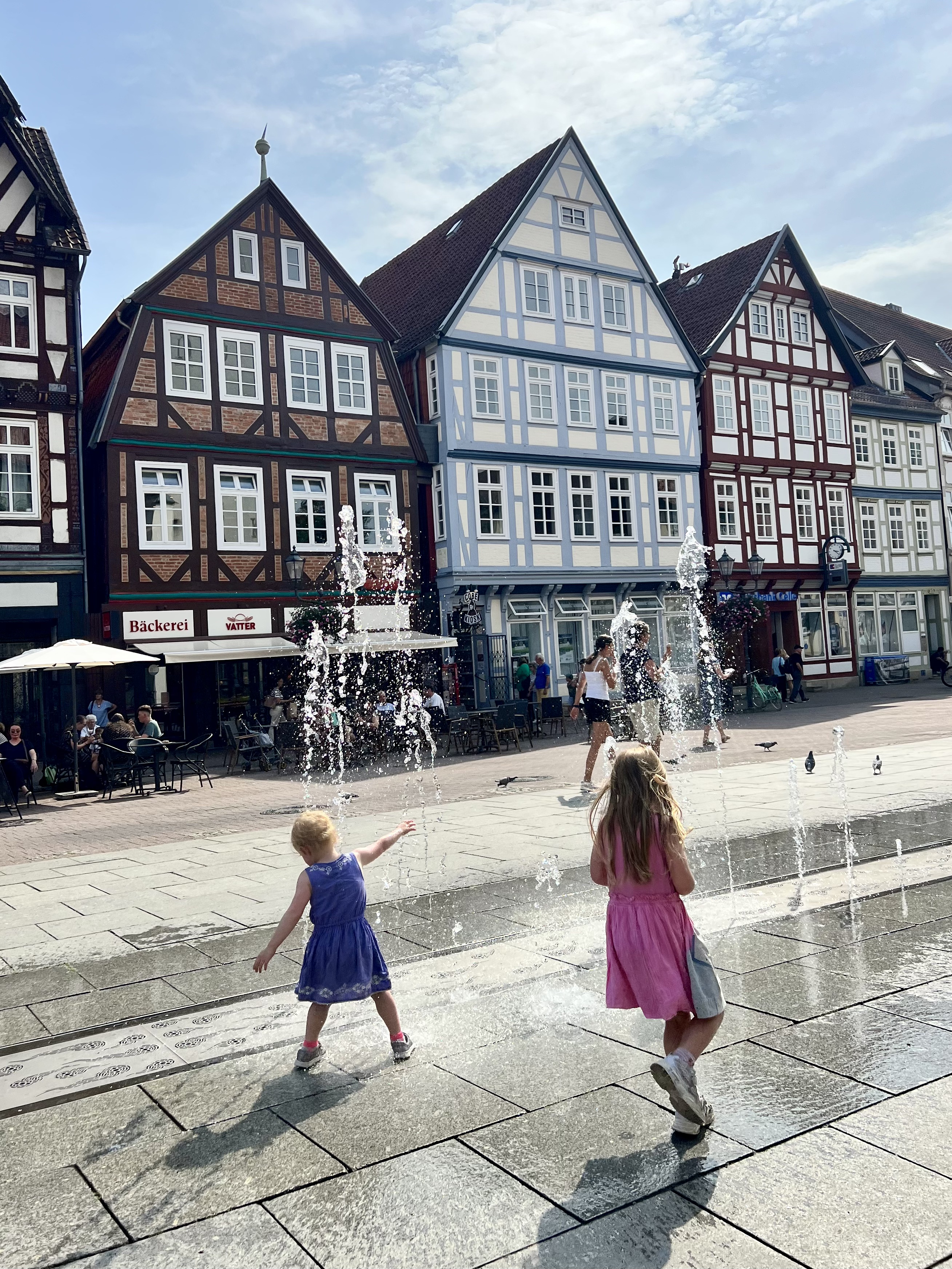
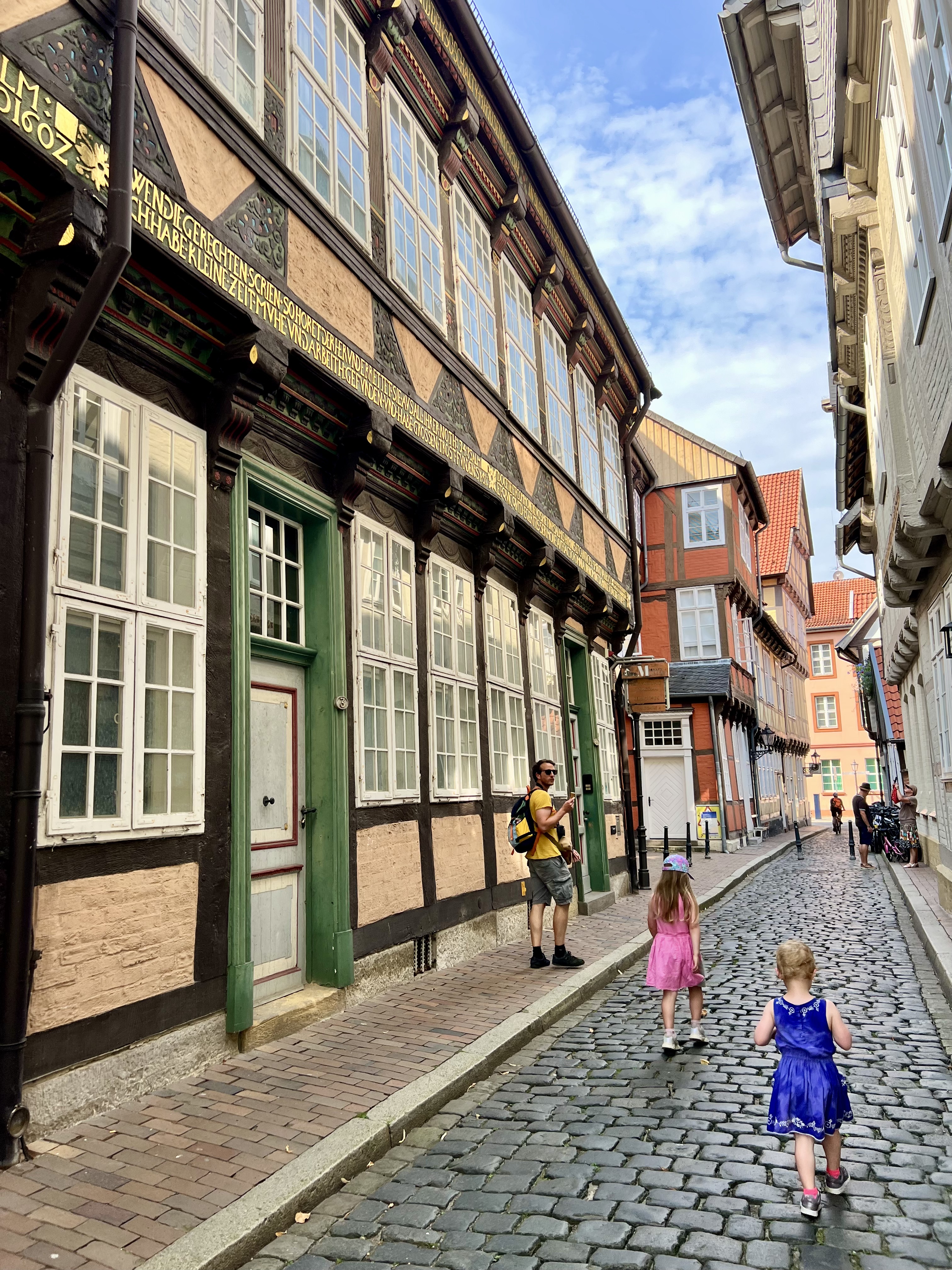
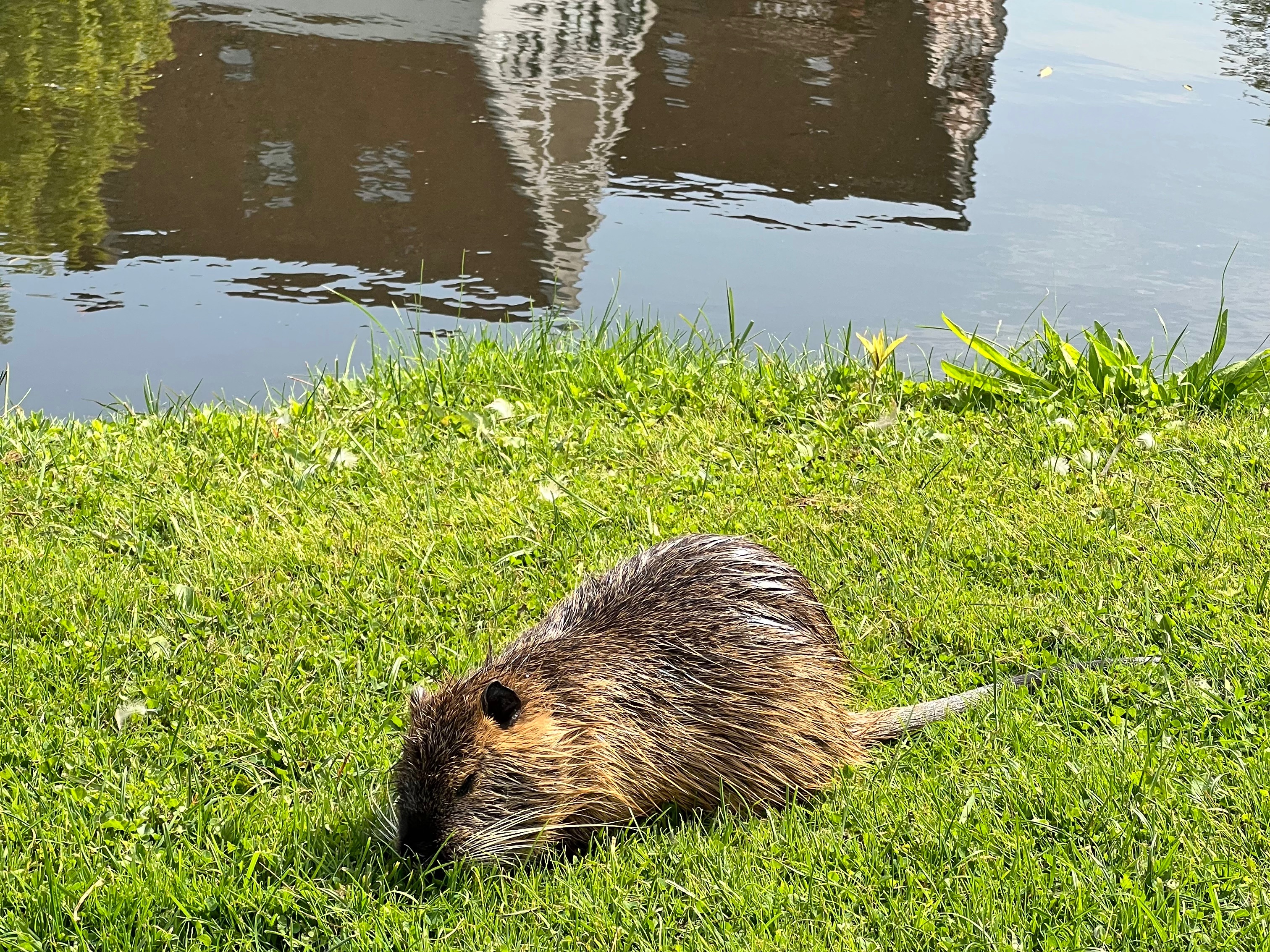
Most surprising of all, though, was finding a muskrat mooching about on the riverbank!
Lübeck was just one stop in our 2.5 week road trip from Derbyshire (UK) to Copenhagen in Denmark. The full itinerary, using our own car, is below. It was a great trip but, if we did it again, we’d add another night on the way up north to break the journey up, and possibly the same again on the way back down.
Day 1: home to Folkestone for our LeShuttle crossing; drive to Bailleul, France (or similar for 1 night) (a long travel day but broken up so it didn’t feel too bad)
Day 2: long travel day #1 – breakfast in France, lunch in Belgium at Chateau d’Hélécine (free bouncy castles and amazing playgrounds next to a lake and café) and dinner in Germany (stay 2 nights in Weilerswist or similar or stay in Cologne if preferred)
GERMANY
Day 3: visit Cologne
Day 4: long travel day #2 – Cologne to Fleckby (or similar for 1 night) via Bremen Rhododendron Park (playgrounds, walks and a pricey/busy café so maybe bring a picnic)
DENMARK
Day 5: travel to Svendborg (4 nights) and visit Odense
Day 6: visit Ærø island by passenger ferry
Day 7: visit Egeskov Castle
Day 8: visit Langeland island (self-drive tour)
Day 9: visit Sagnlandet Lejre (Land of Legends) then travel to Roskilde (or similar or stay in Copenhagen if preferred for 2 nights)
Day 10: visit Copenhagen
Day 11: visit Lisleje Beach; travel to Askeby (or similar for 2 nights)
Day 12: visit Møn island (self-drive tour)
Day 13: long travel day #3 – Askeby to Lübeck (2 nights) via a stop in Heiligenhafen Pier
GERMANY
Day 14: visit Lübeck
Day 15: long travel day #4 – Lübeck to Oberhausen (or similar for 1 night) via a stop in Celle
BELGIUM
Day 16: visit Ghent, Belgium (stay 2 nights in Wingene or similar or in Ghent/Bruges if preferred)
Day 17: visit Bruges
Day 18: Bruges to home
All information is correct at the time of posting. Follow us on Instagram @four_go_exploring for more independent family adventures.


One thought on “GERMANY: Six Lübeck Highlights with Kids”