Habarana as a base for exploring Sri Lanka’s Cultural Triangle is ideal because it provides easy access to so many cultural and natural sites. Part three of this series featured our visit to Ritigala and our wonderful accommodation while this post is jam-packed with four more activities we did from Habarana.
Scroll to the end for the full itinerary and linked posts.
Day 6 – Polonnuwara
In Sri Lanka, the capital city has moved around eight times over the centuries, based on who was in power at the time. Taking power was mainly about strength but having control of the Buddha tooth relic also helped (we actually saw it in Kandy many years ago!). The ancient city of Polonnaruwa held the relic from 1055 to 1215 and was the second capital – for about 300 years. Its ruins are surprisingly well-preserved. This, alongside the main monuments standing fairly close together and being joined by roads, makes it a very accessible and enjoyable place to experience Sri Lankan history. It’s very worthy of its UNESCO World Heritage status.
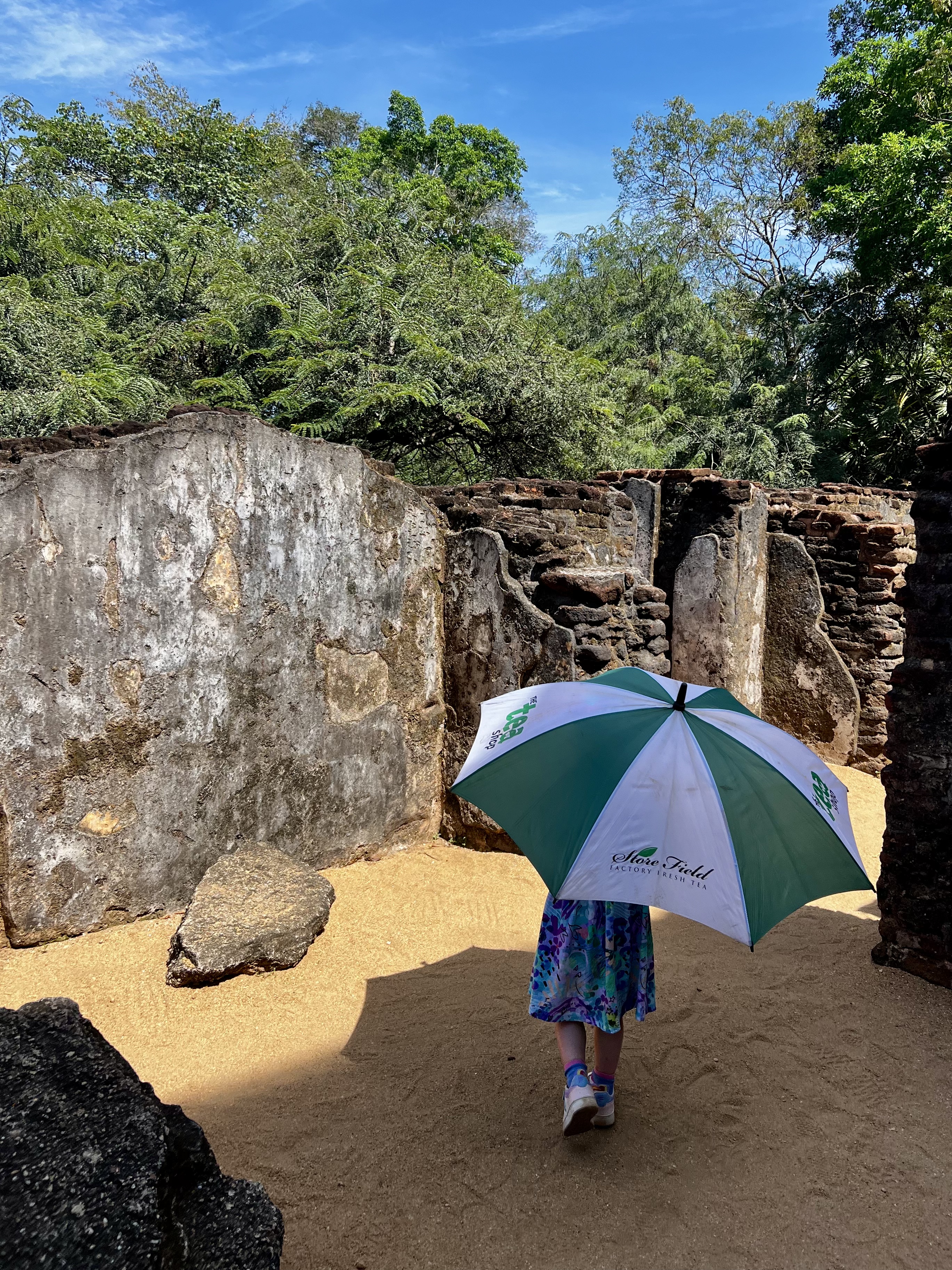
Our driver, Kiyas, linked us up with a great guide named Sunandah. Like almost everyone else we met, he adored Tiny with her blue eyes, pale skin and golden curls, so he treated her like a princess for the duration! Hiring a guide can make things feel challenging when you have wild and roaming children in tow who don’t want to stand and listen but, as adults, it’s so rewarding to learn more about a place from an expert. We now try to pick one destination every trip to have a guide as our compromise! Small will usually engage, especially if there’s a wildlife focus but, at Polonnuwara, she was too hot to listen much beyond our paraphrasing of key information, and mainly just wanted to make umbrella tents with her sister!
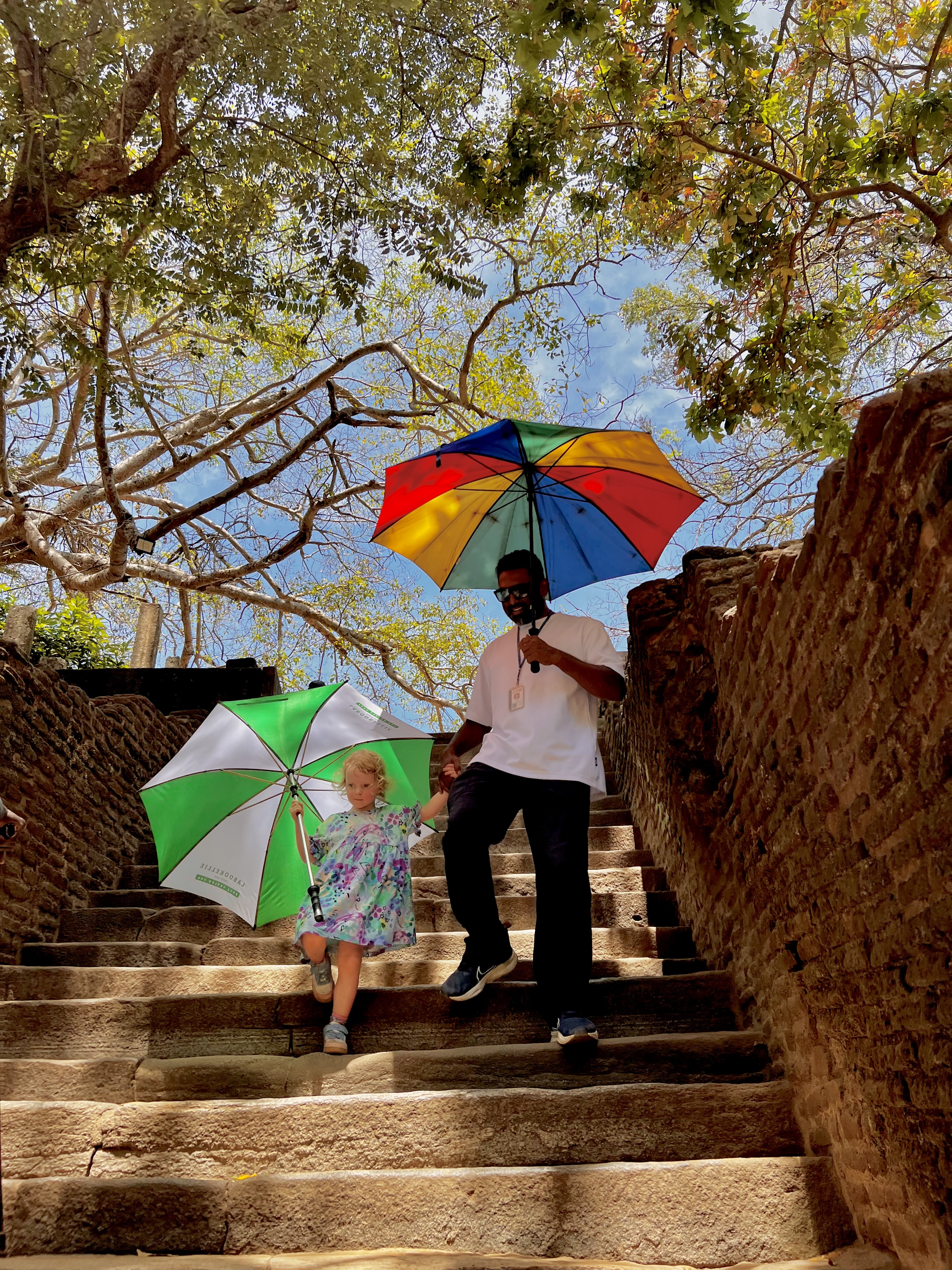
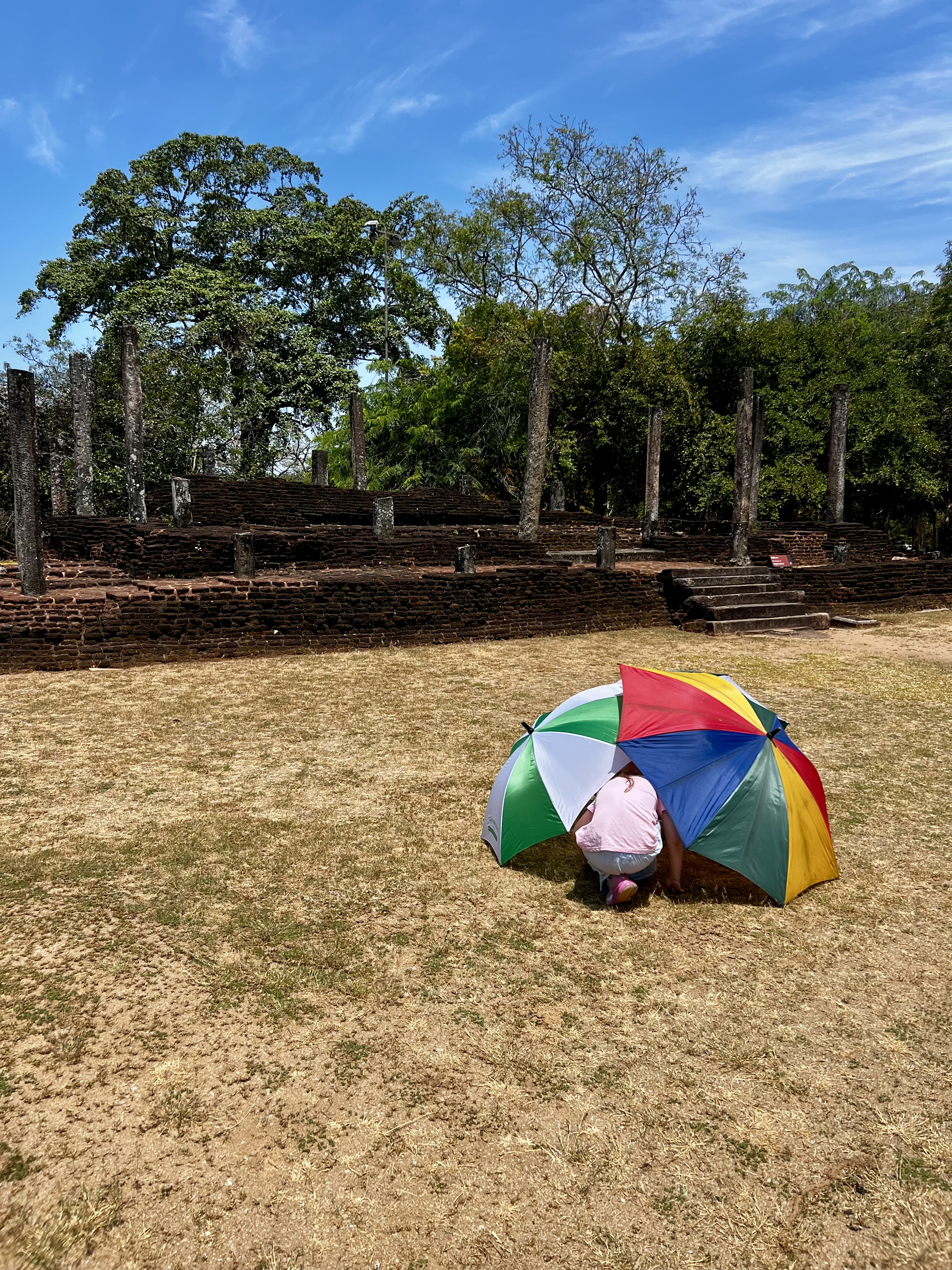
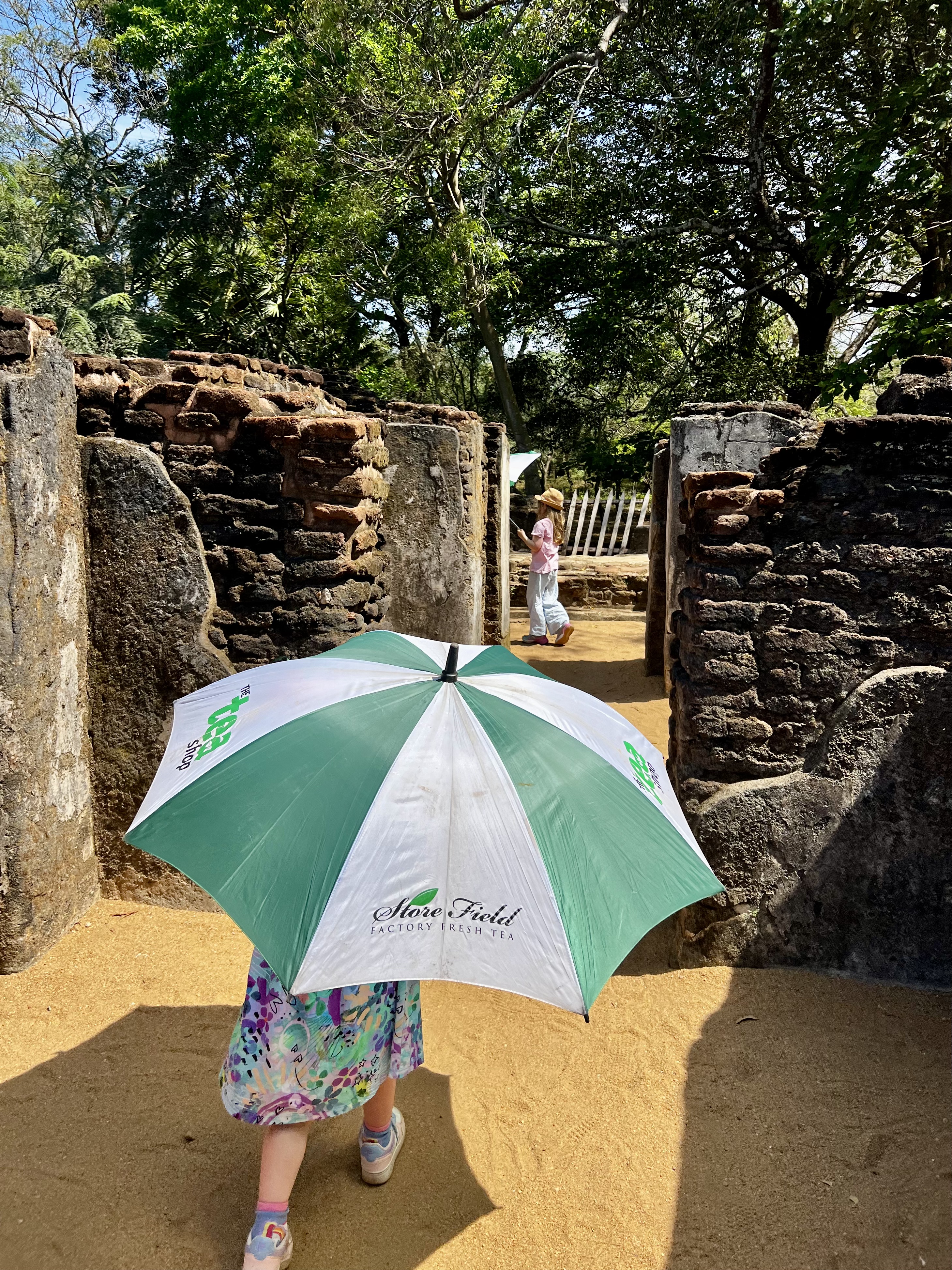
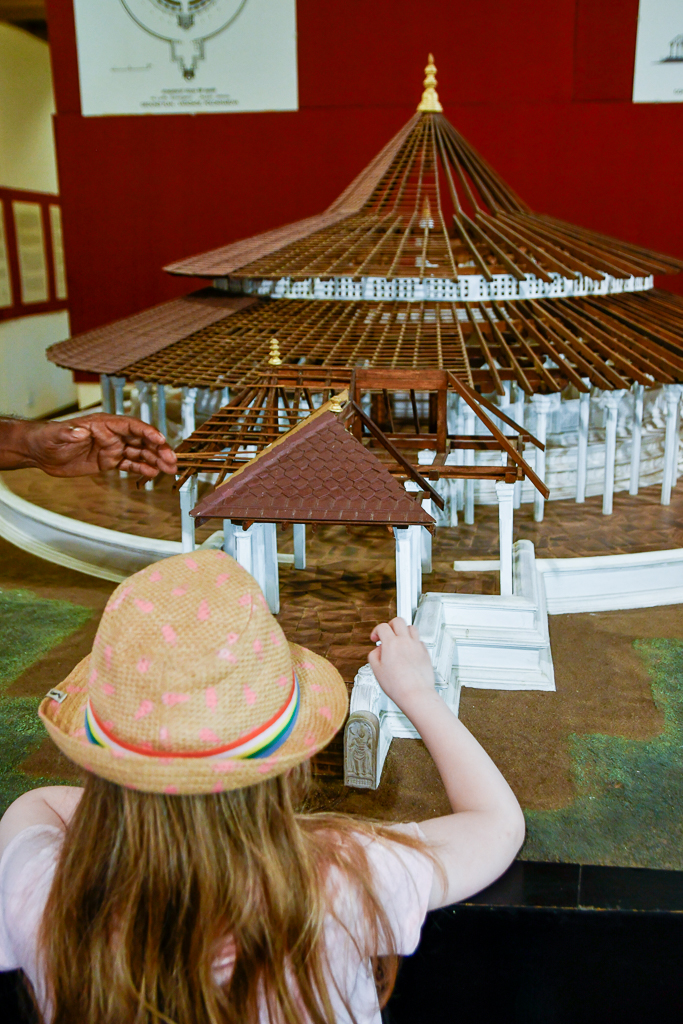
It’s recommended to start with the museum to give everything some context. There are many ancient artefacts found by archaeologists, as well as rescued religious items but of particular interest are models of how various structures would have looked originally, before the South Indians invaded, looted and burnt all the wooden parts of the buildings.
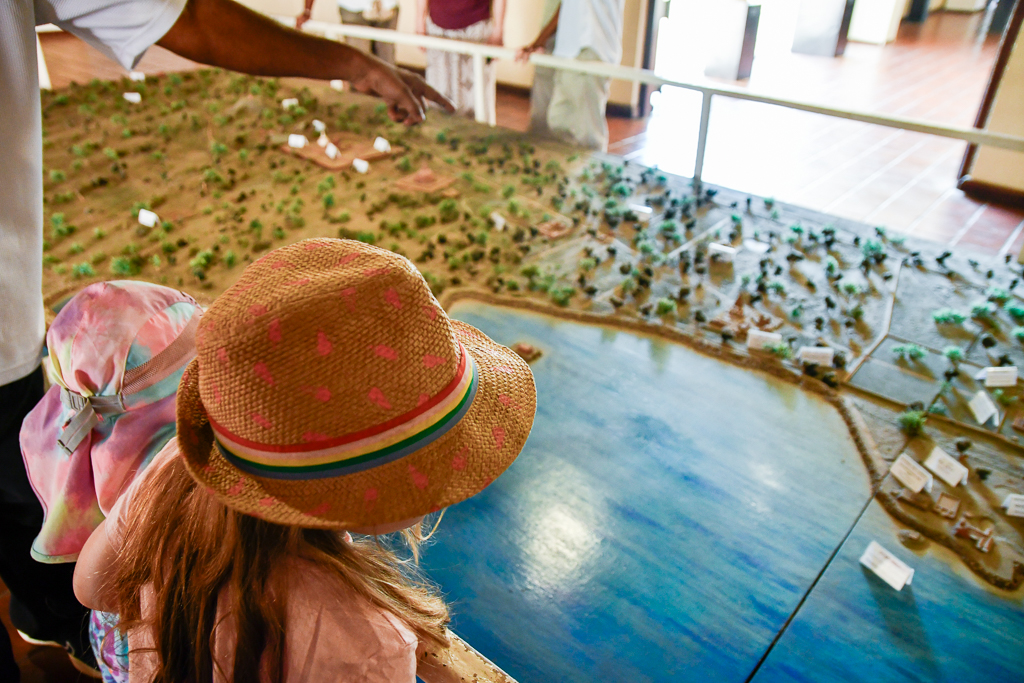
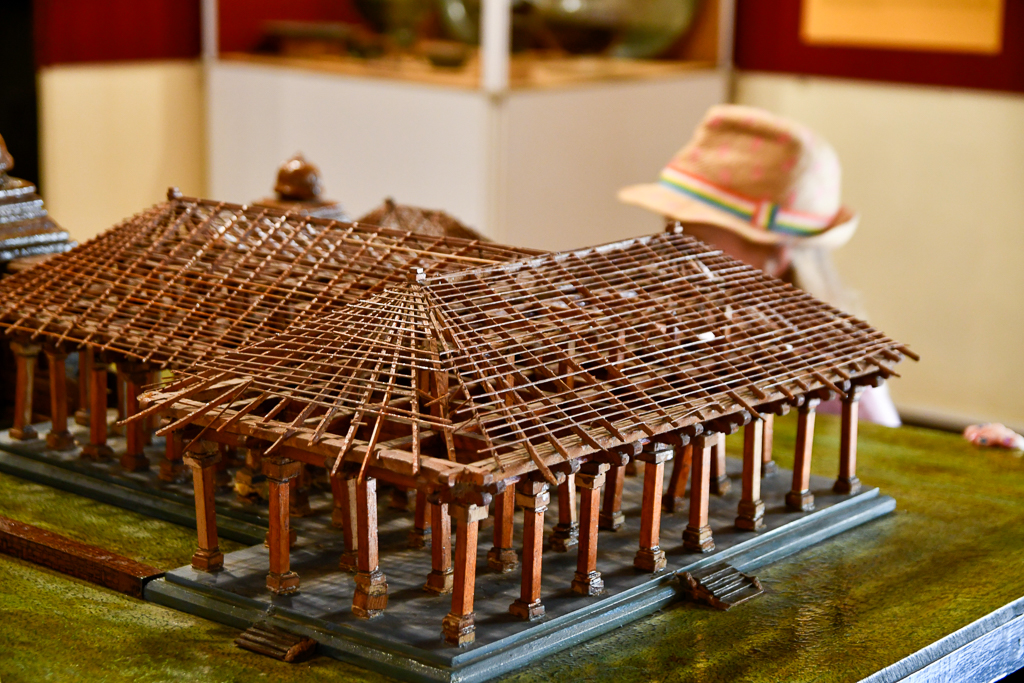
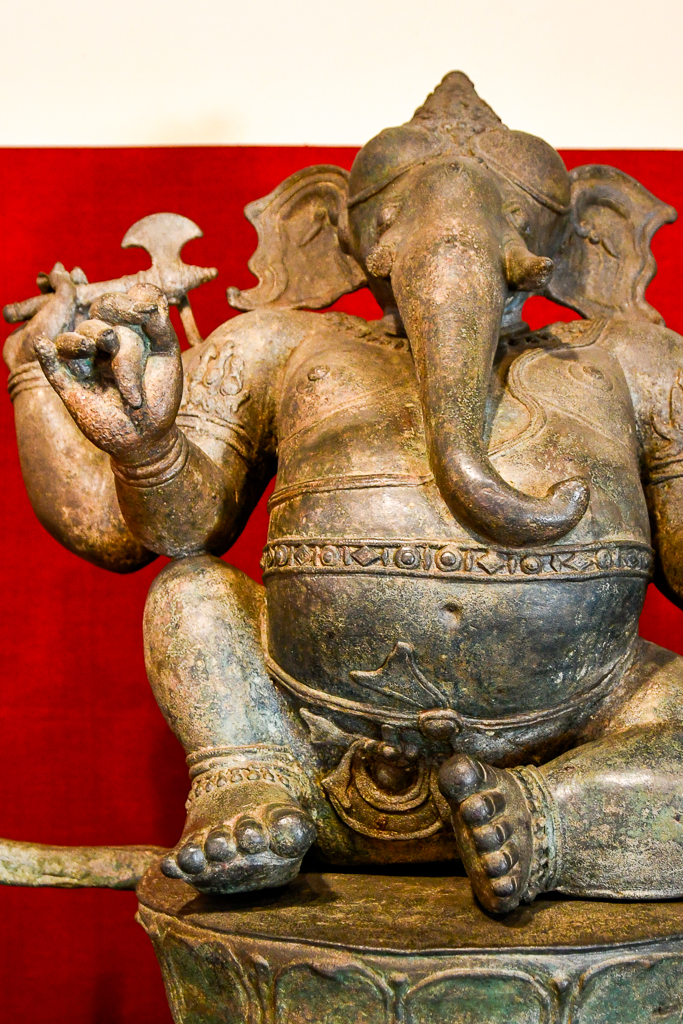
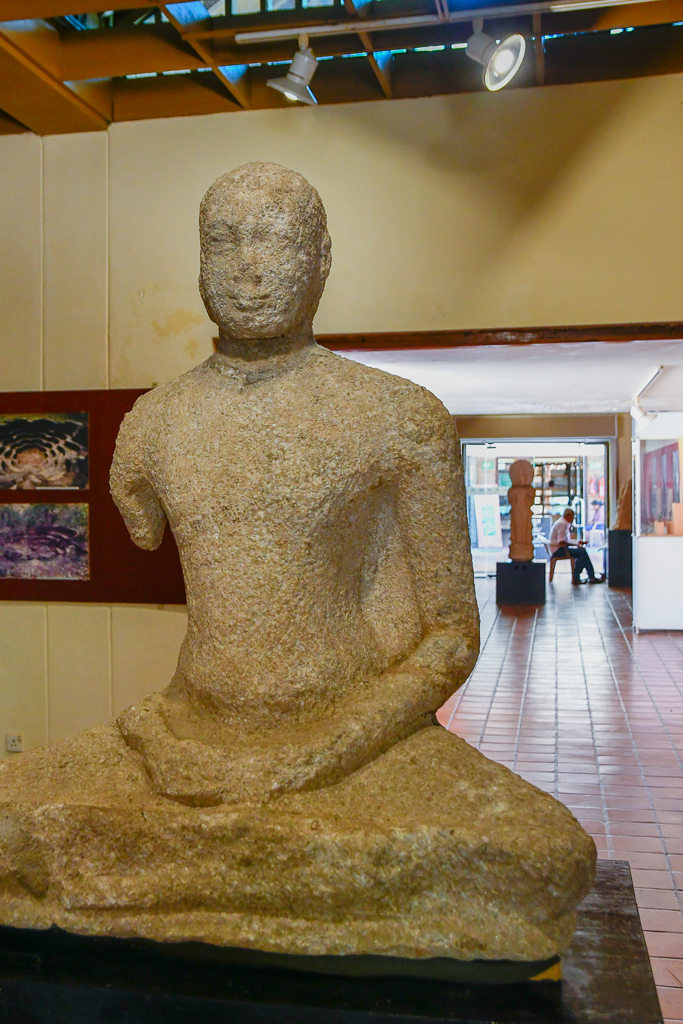
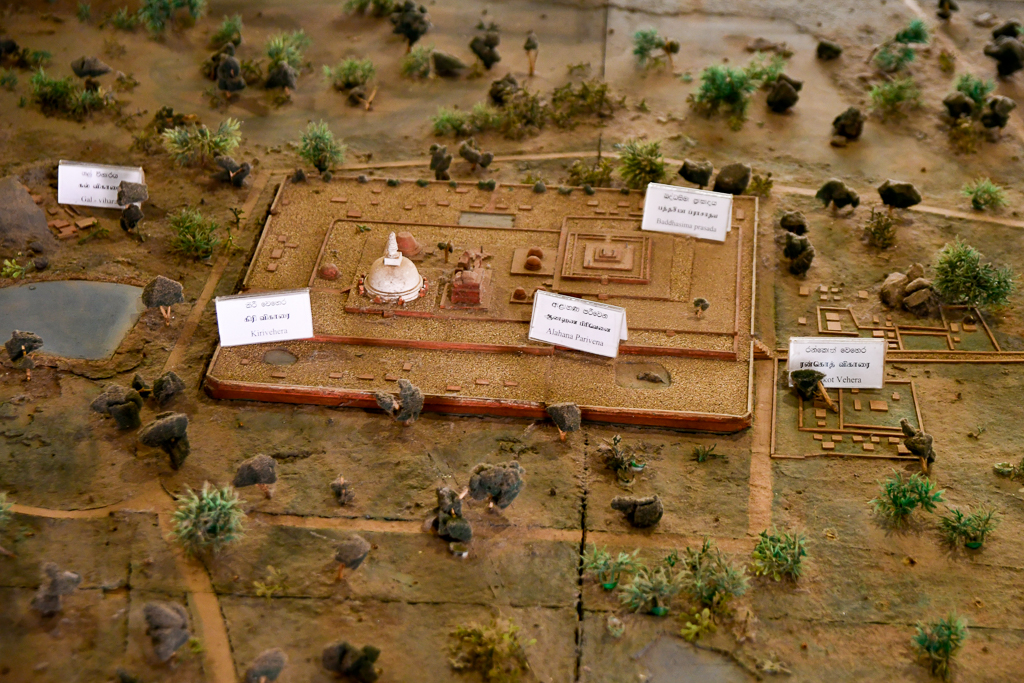
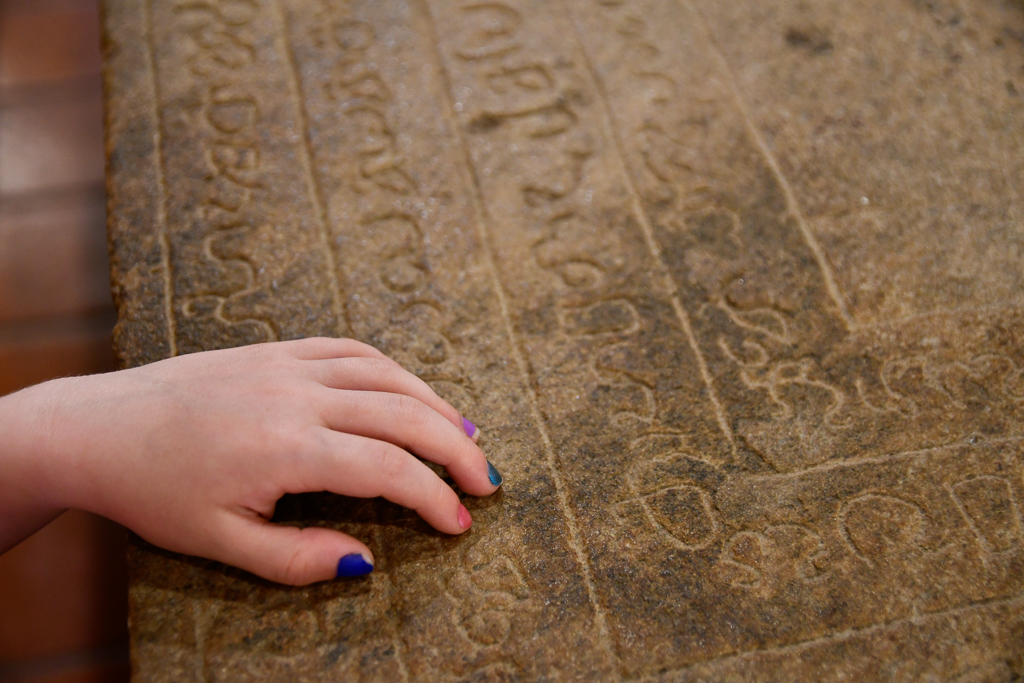
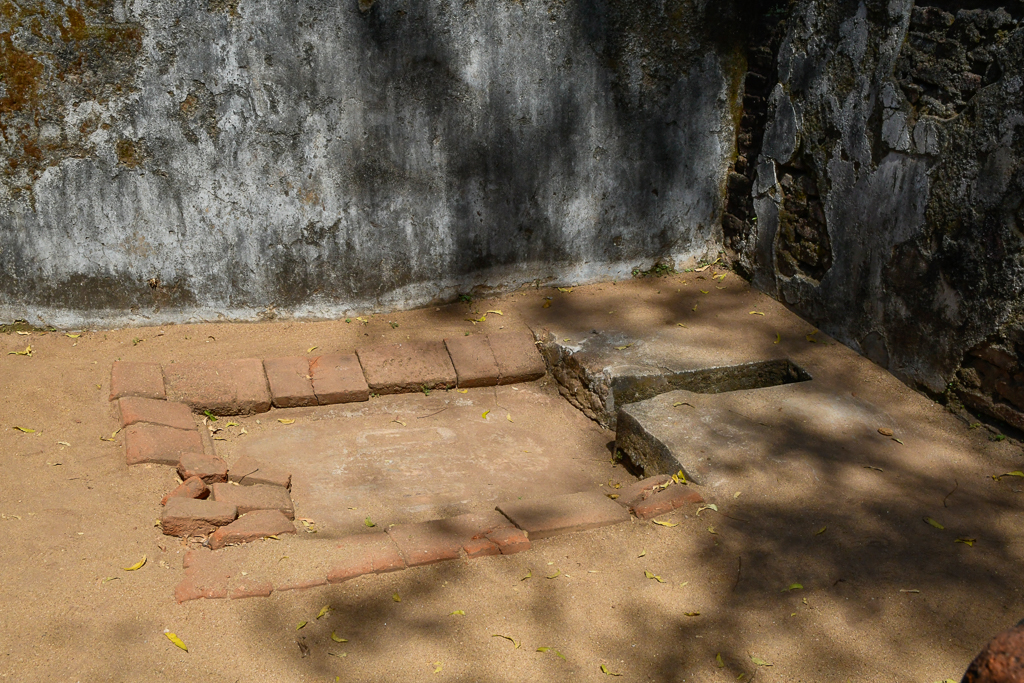
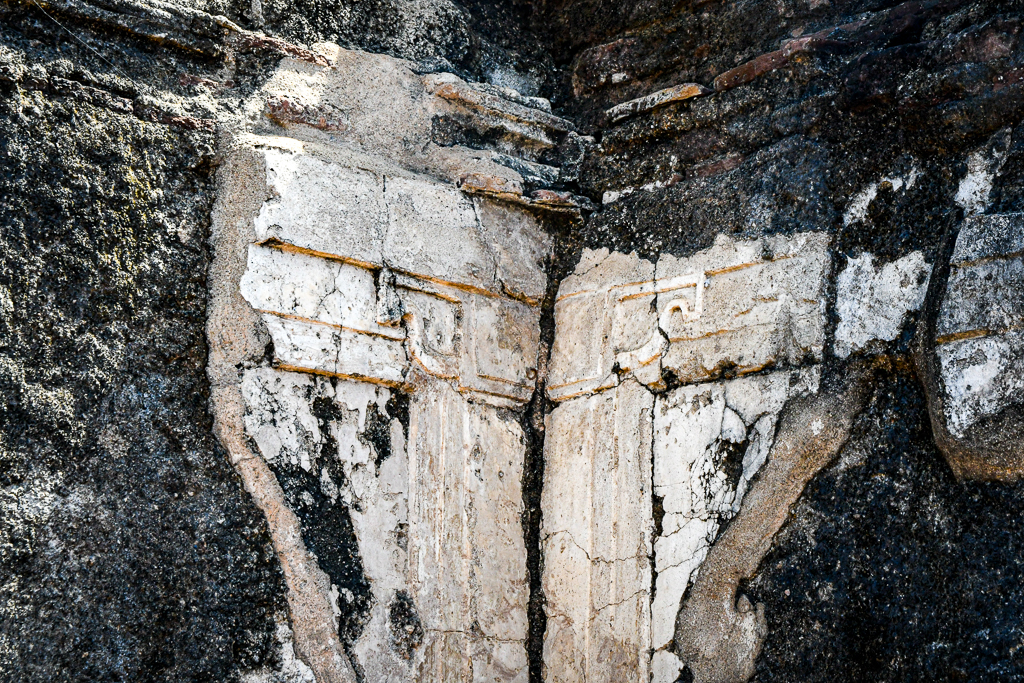
Our first outdoor stop was the citadel. It contained a palace which had over 1000 rooms and once stood at seven storeys although only three remain. Our guide said that the first floor was for the officials and then there was a floor for each of his five wives: three Sri Lankan and two Indian. I absolutely love the feeling of walking where those have walked in the past and it’s things like little glimpses of original décor, a stage and backstage area, and even the ancient toilet, that bring it all to life!
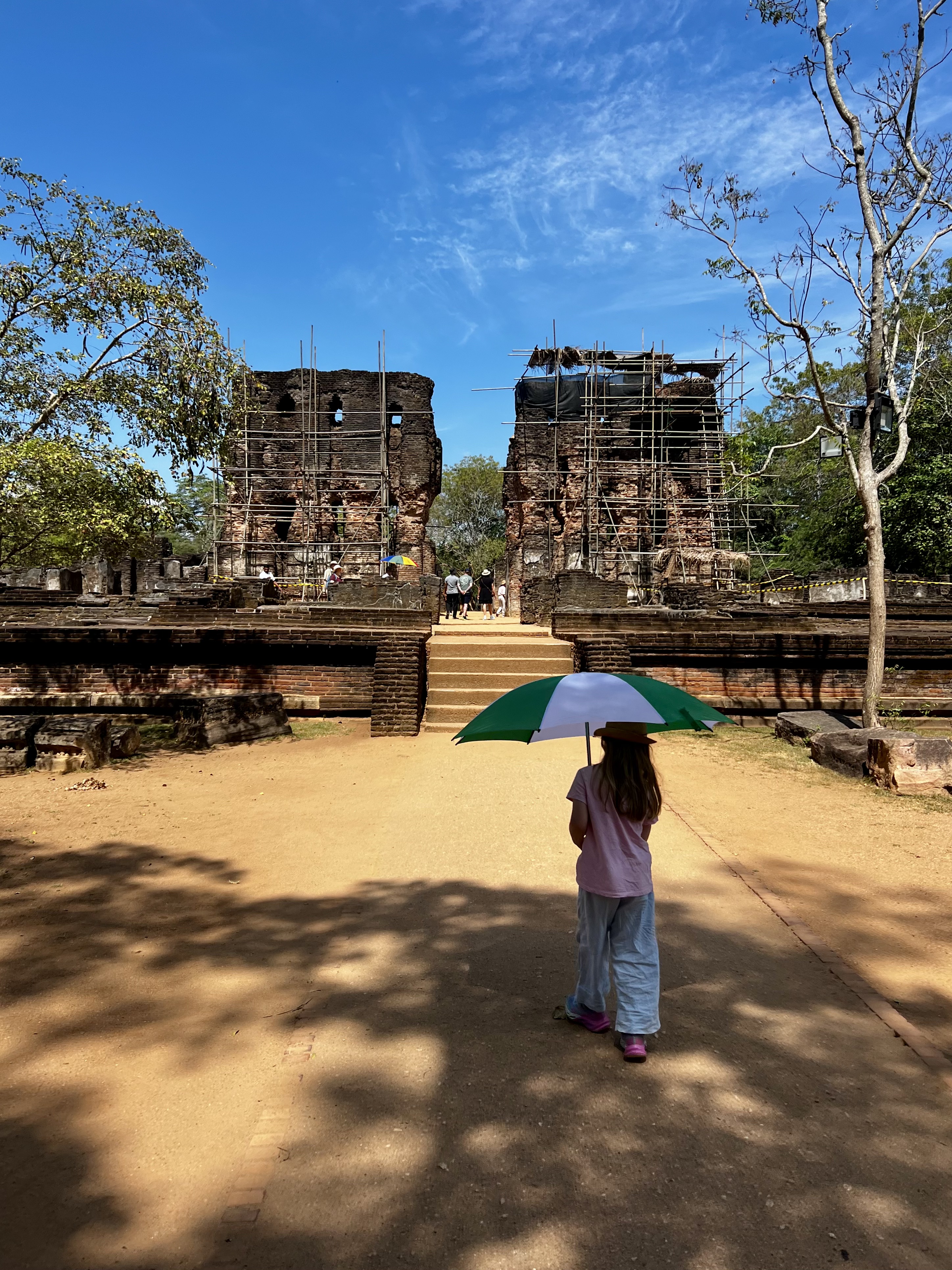
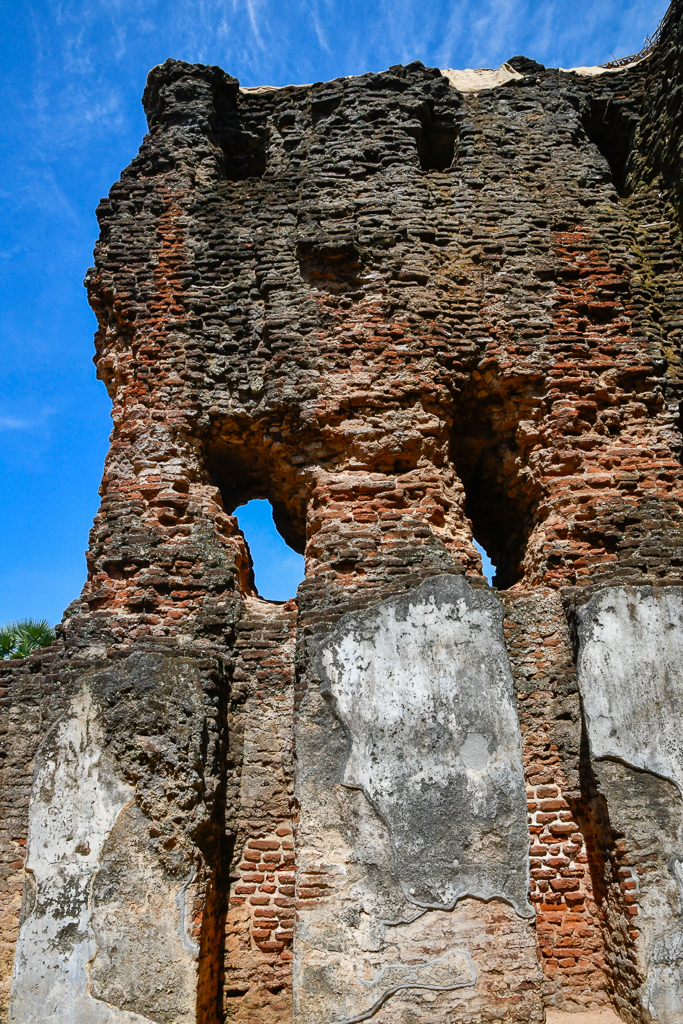
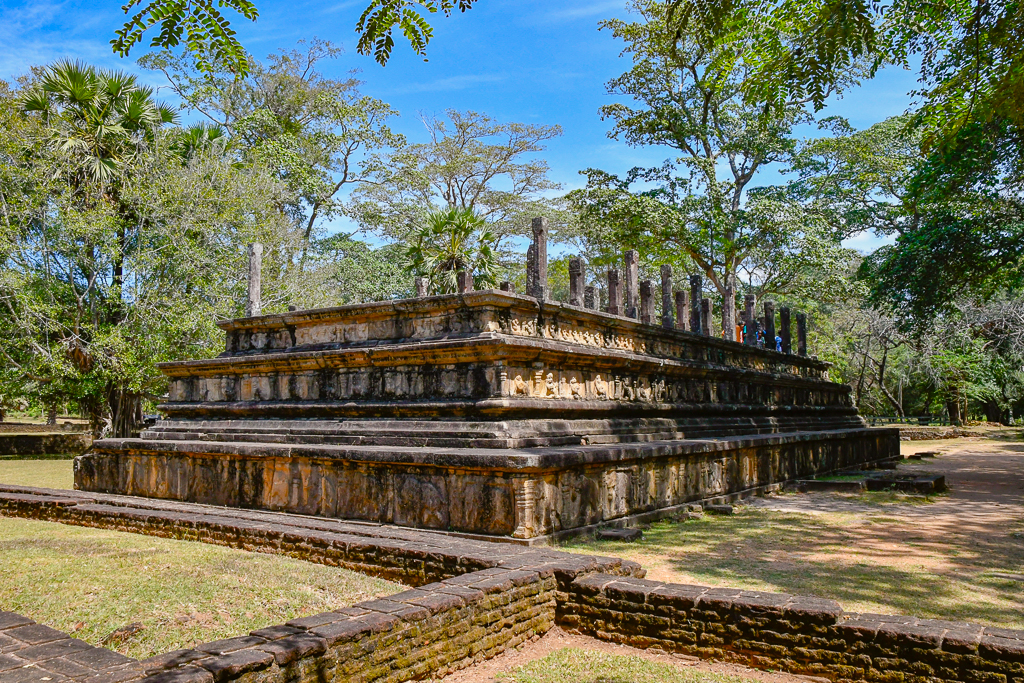
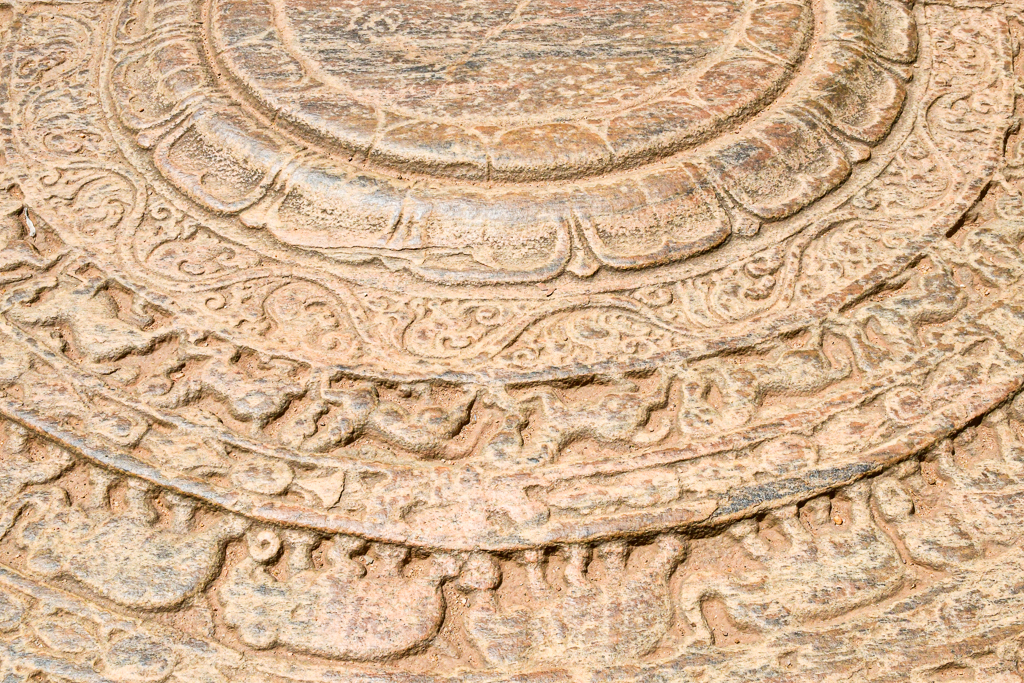
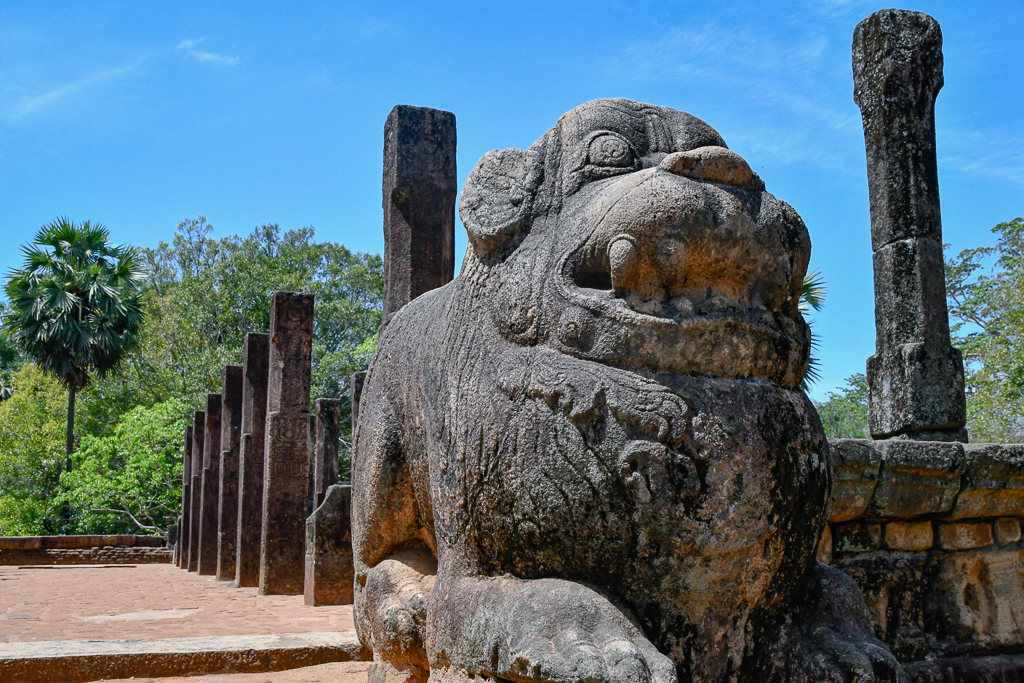
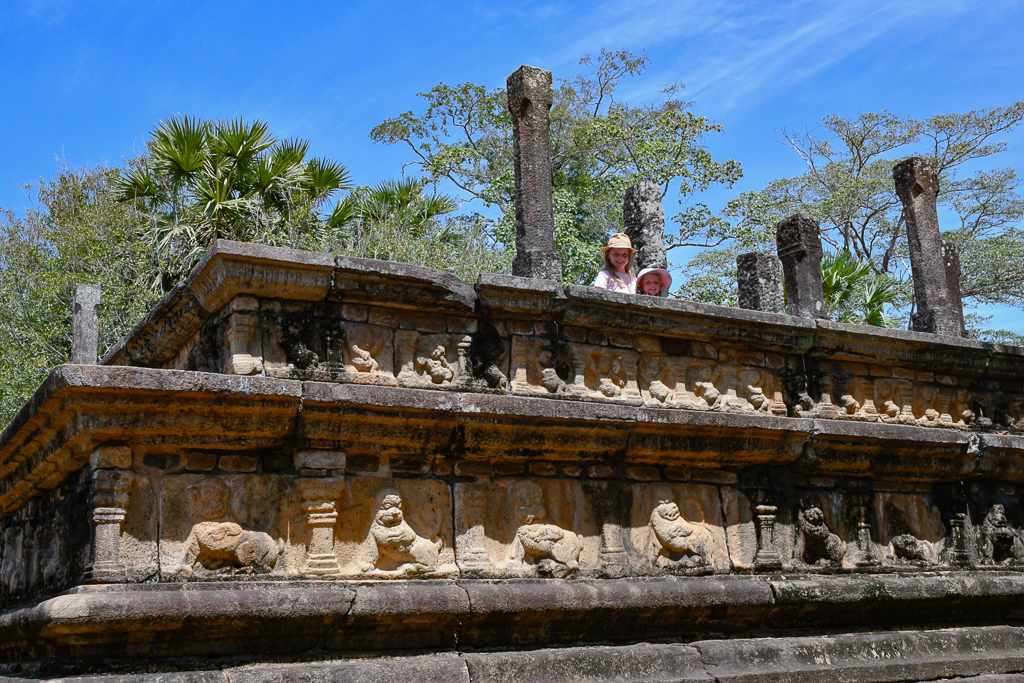
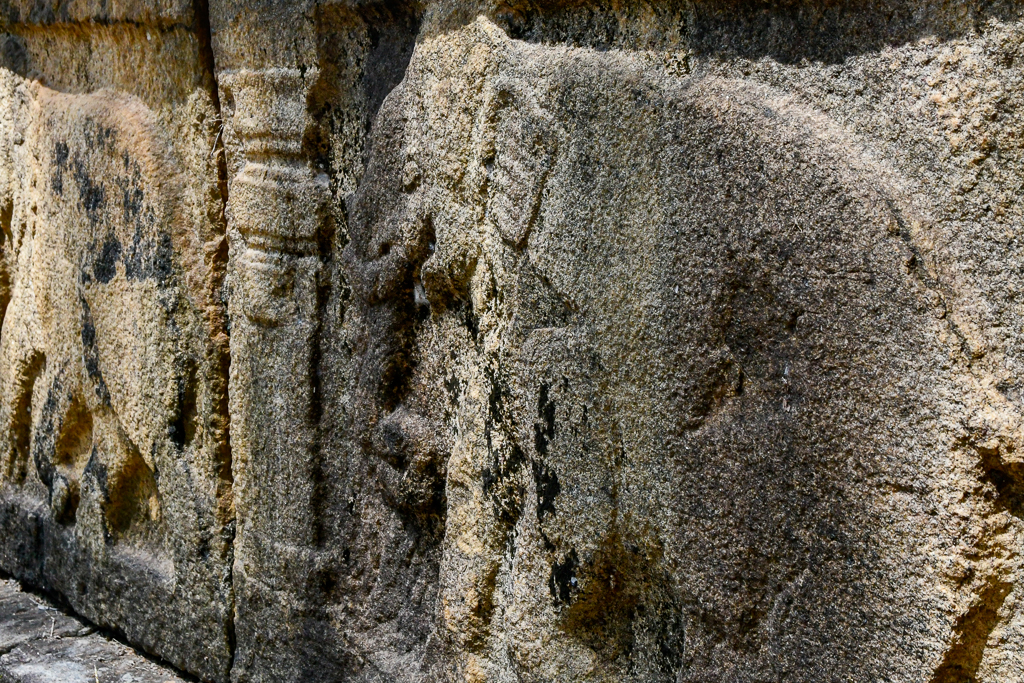
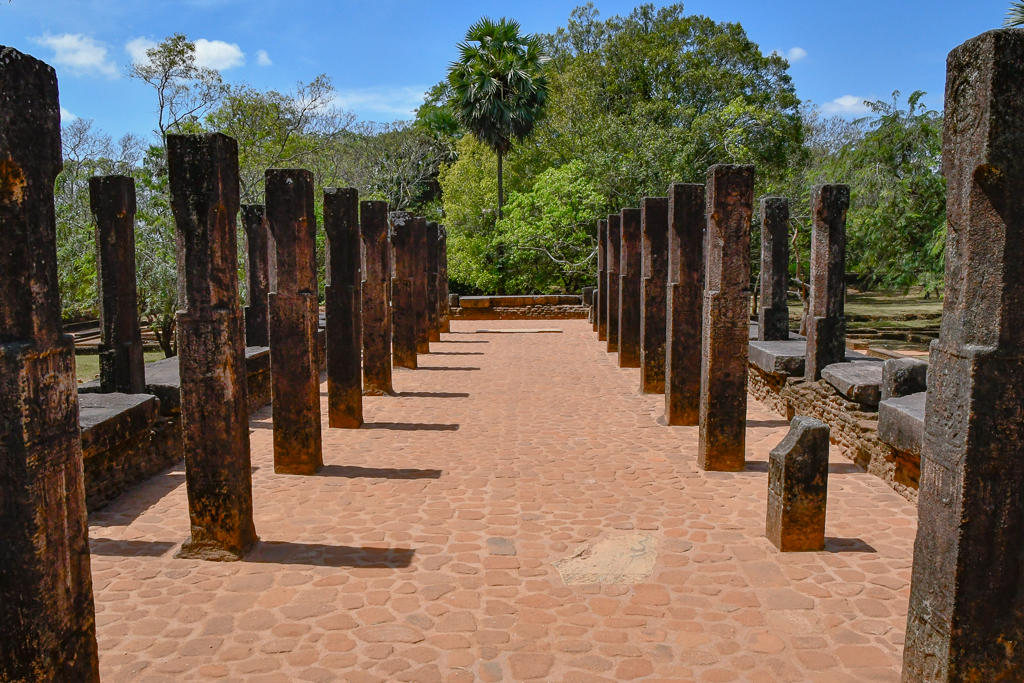
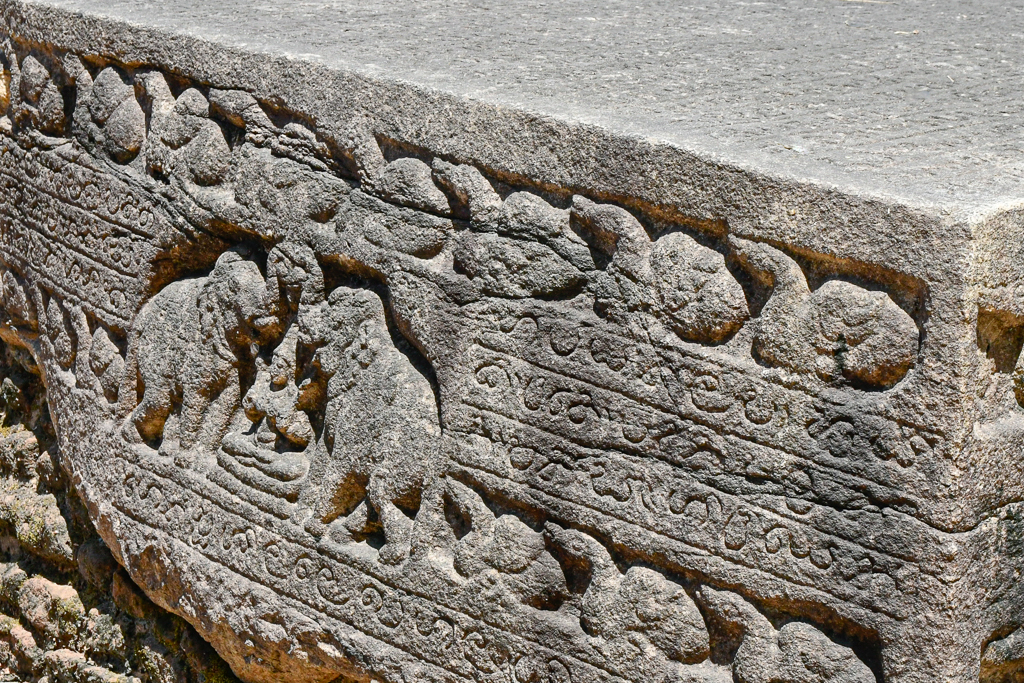
The Audience Hall is an impressive granite pavilion with an intricate frieze of elephant carvings around the outside, ornate pillars, majestic stone lions and the moon stone at the entrance. It’s incredible to think that everything was carved by hand.
Next, we saw this very old book!
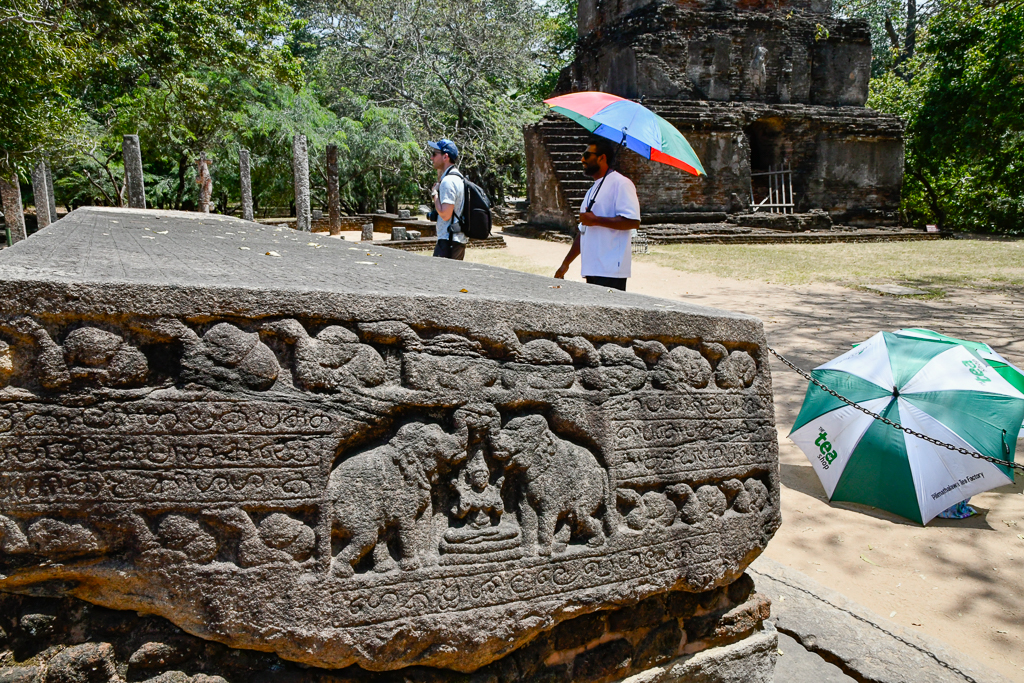
Once you had Buddha’s sacred tooth relic, it needed protecting: there are two shrines built as tooth relic temples at Polonnaruwa in the Sacred Quadrangle. We had to take off our shoes to walk through these. This striking circular relic house is also in the same area.
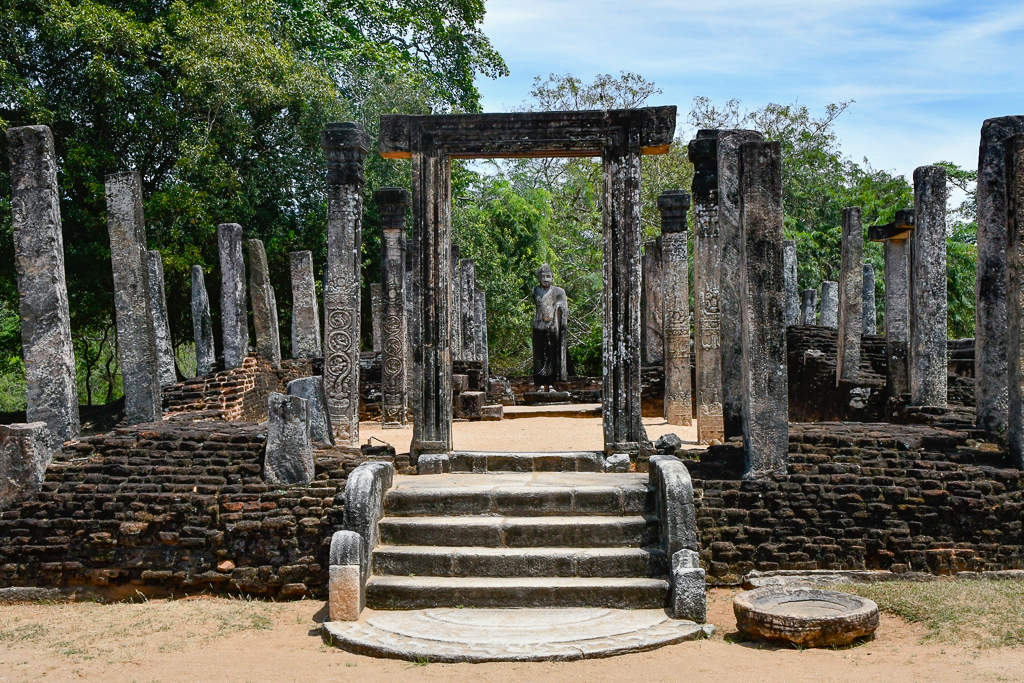
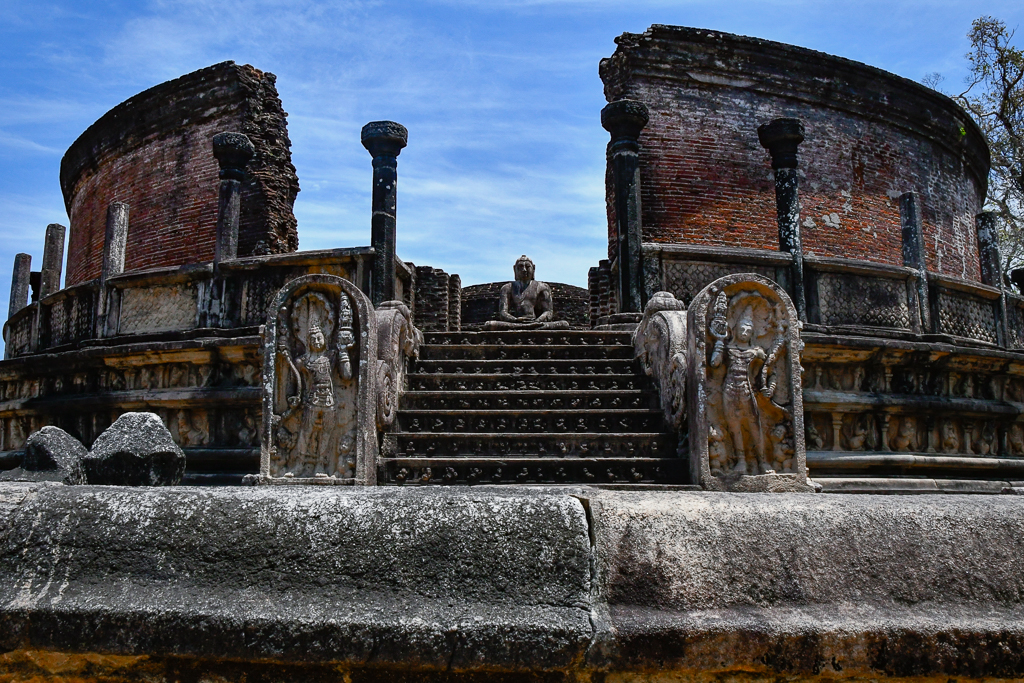
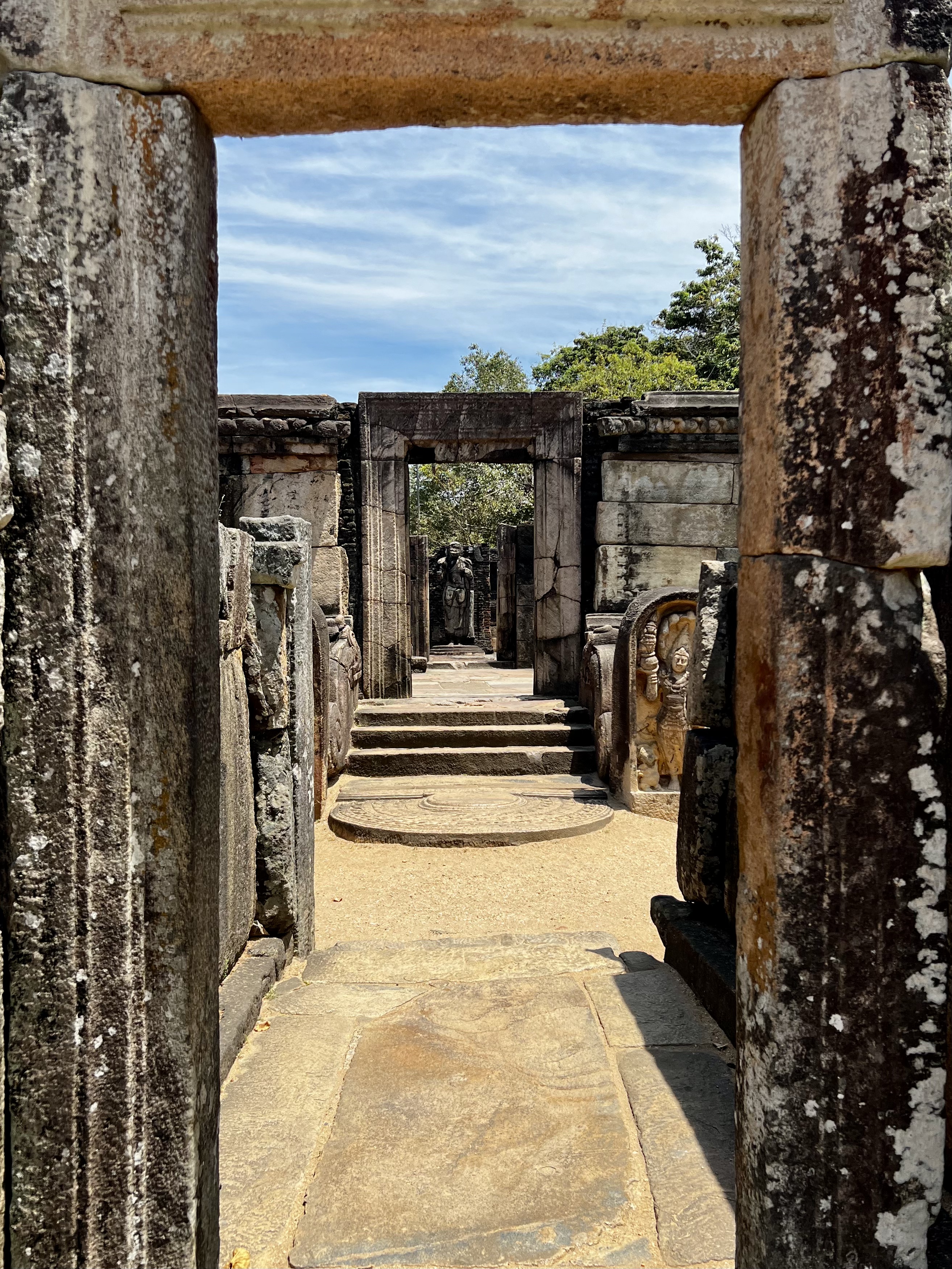
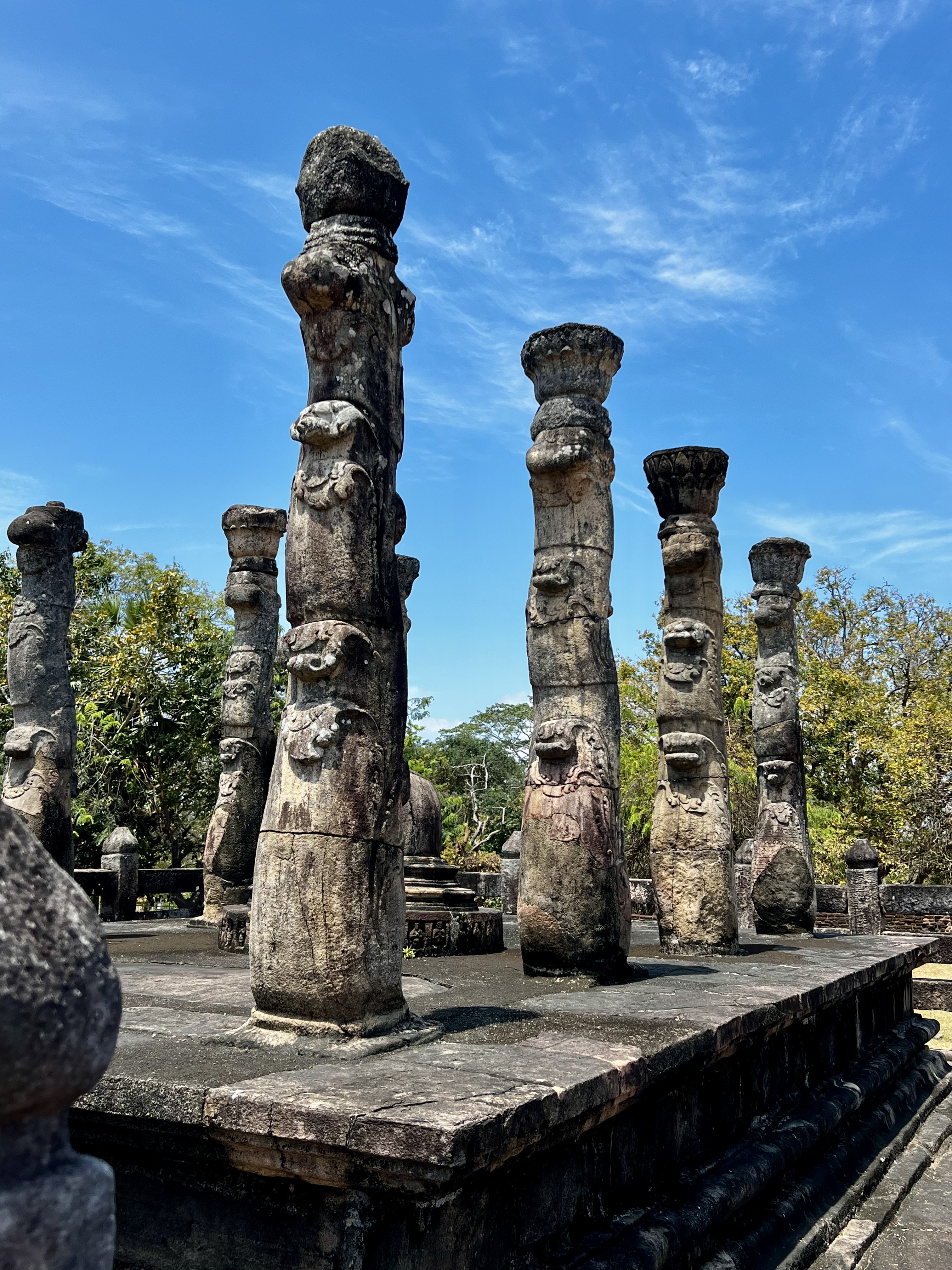
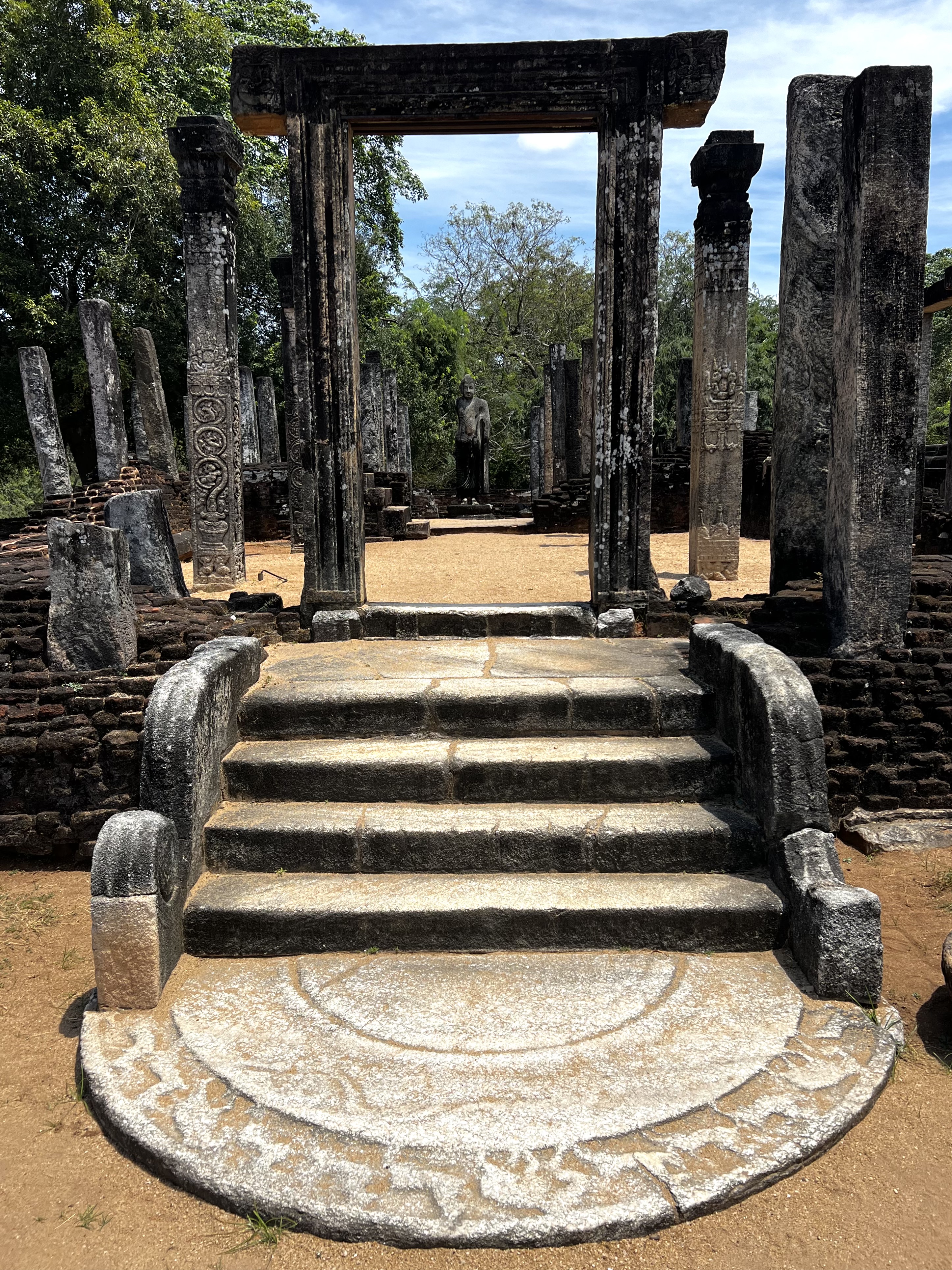
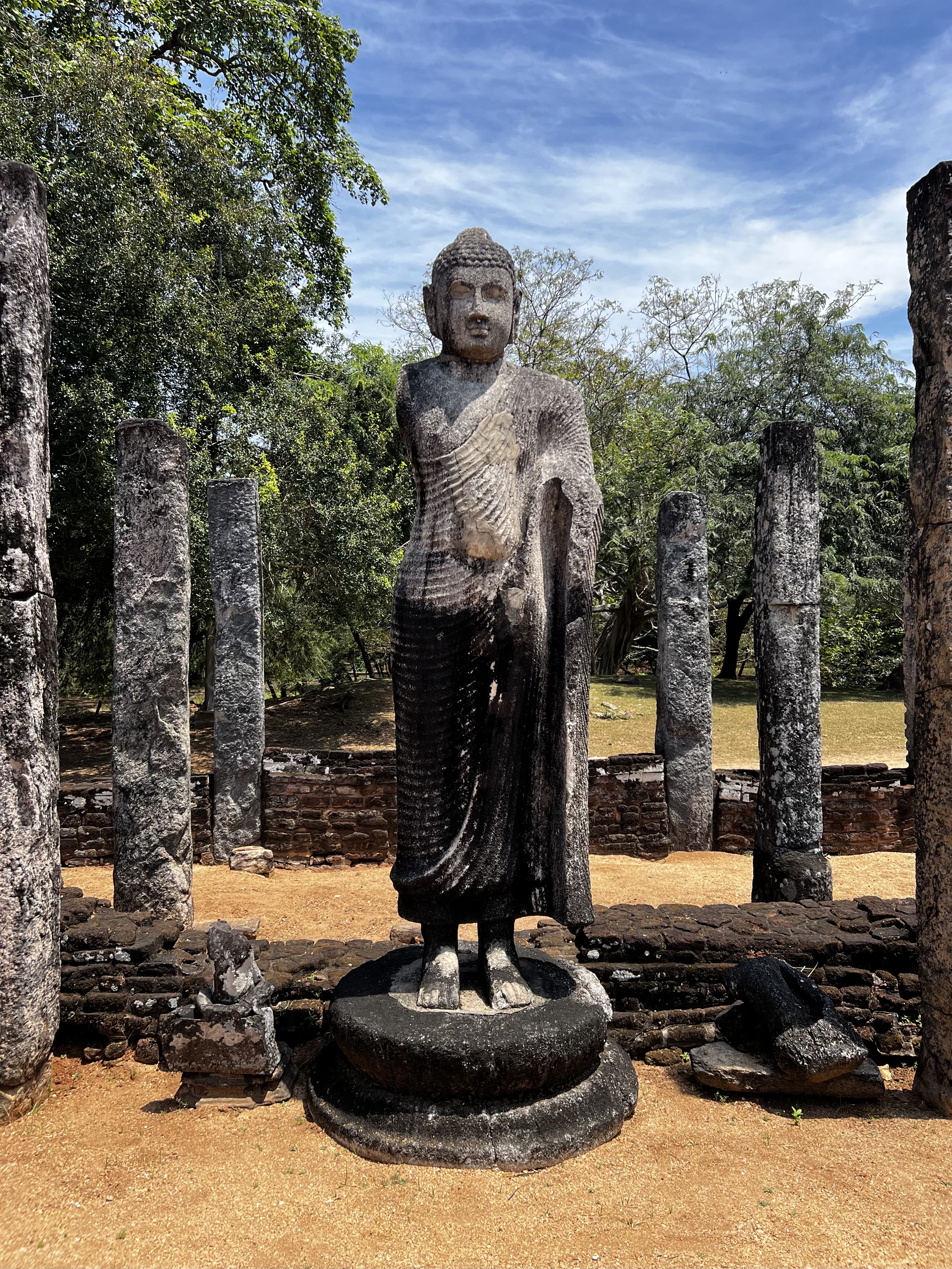
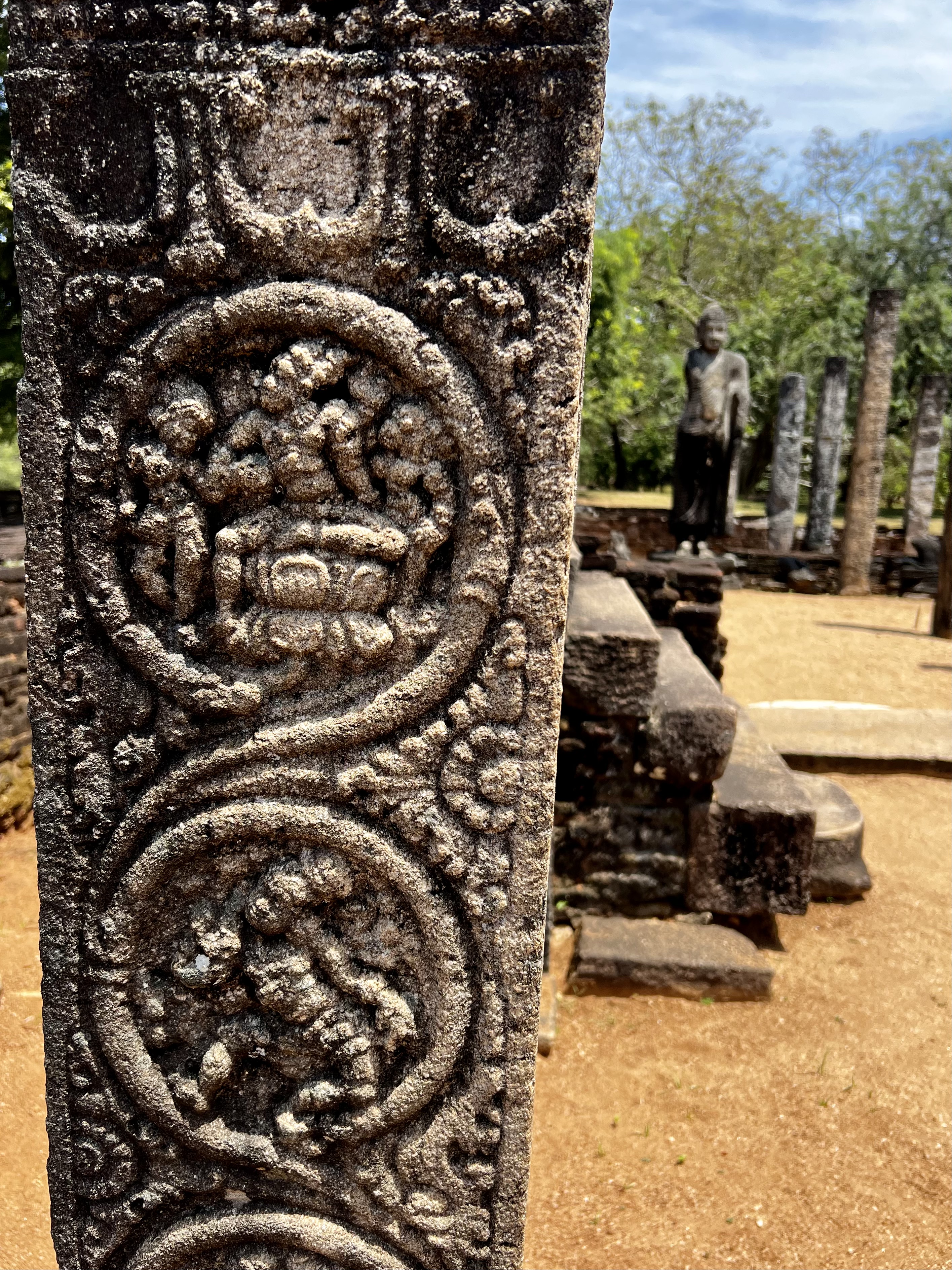
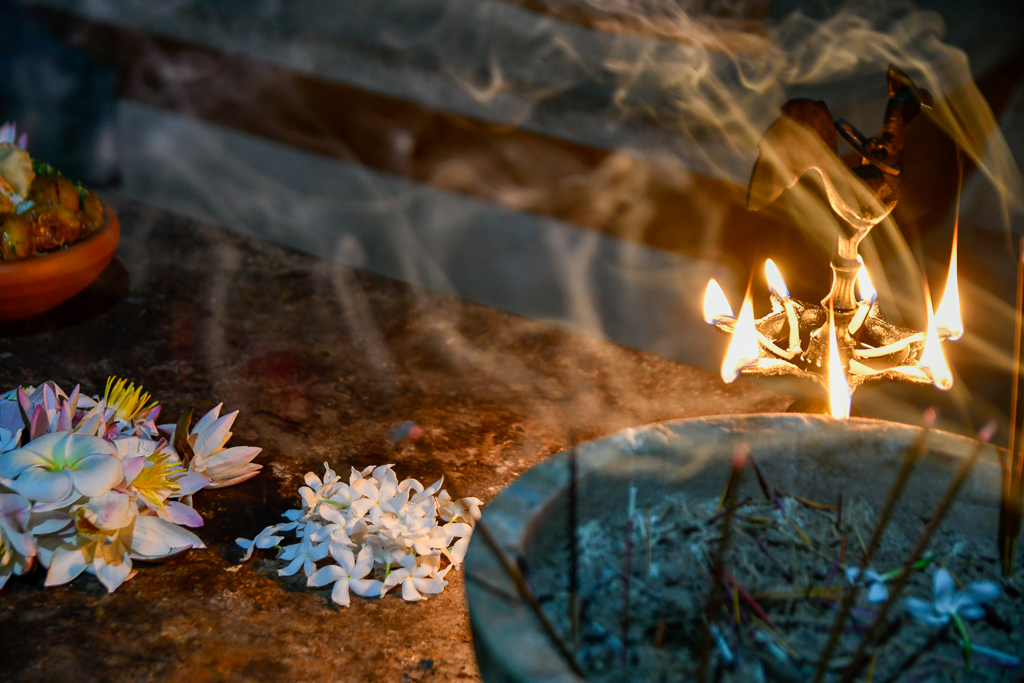
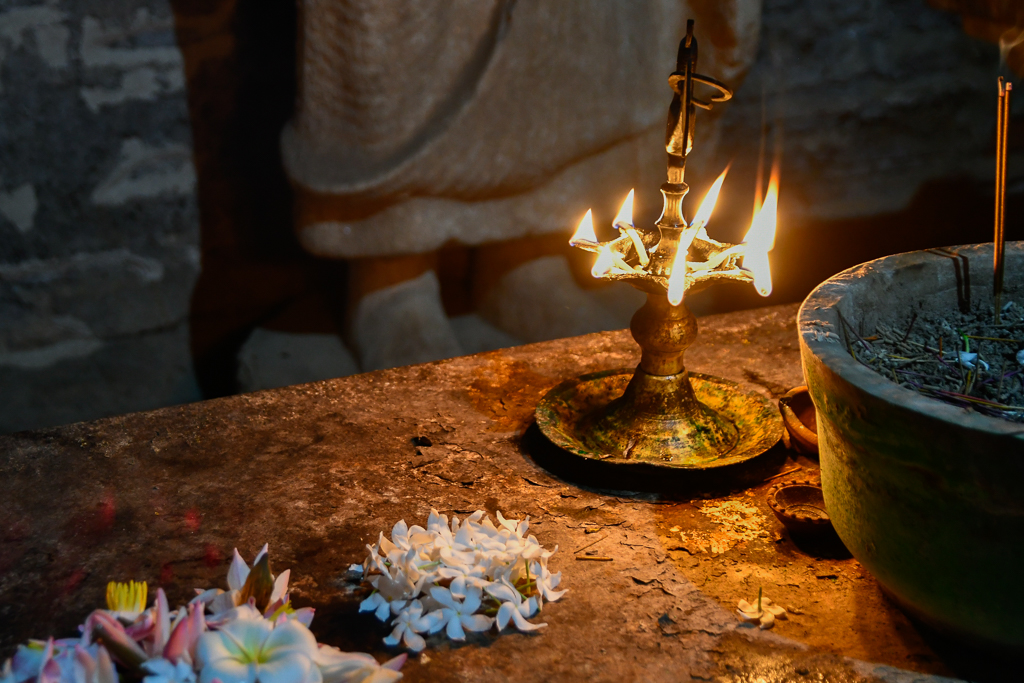
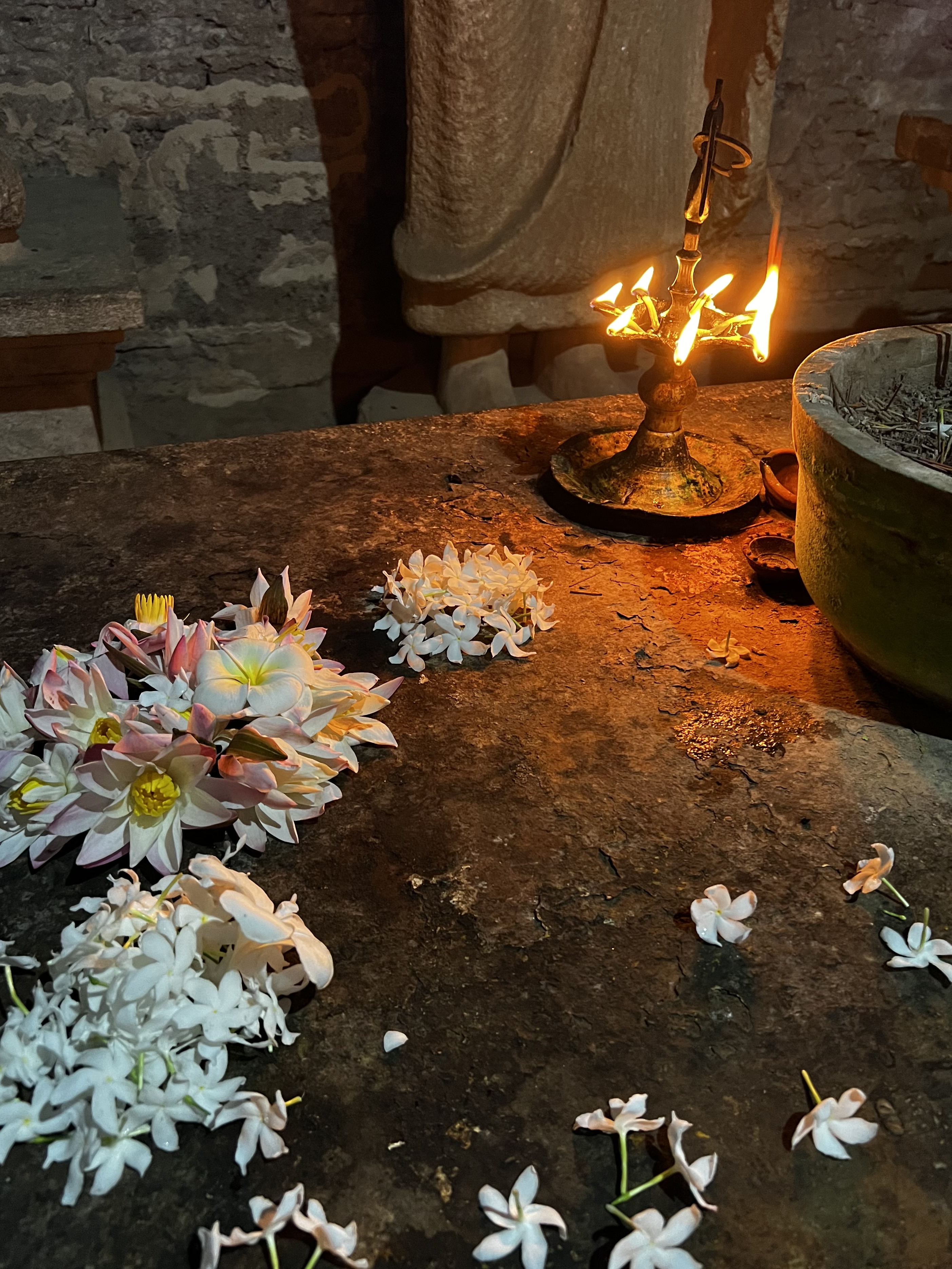
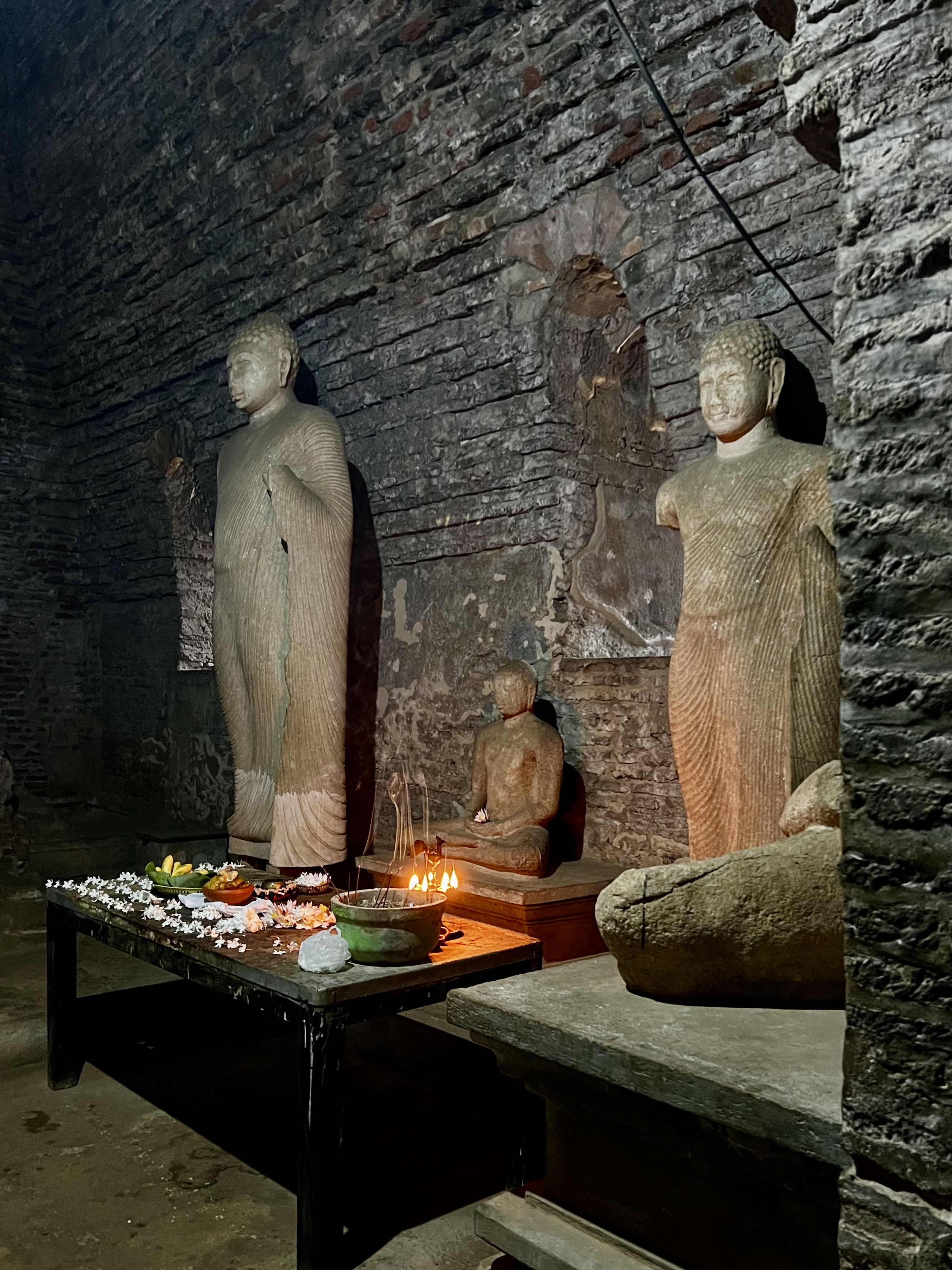
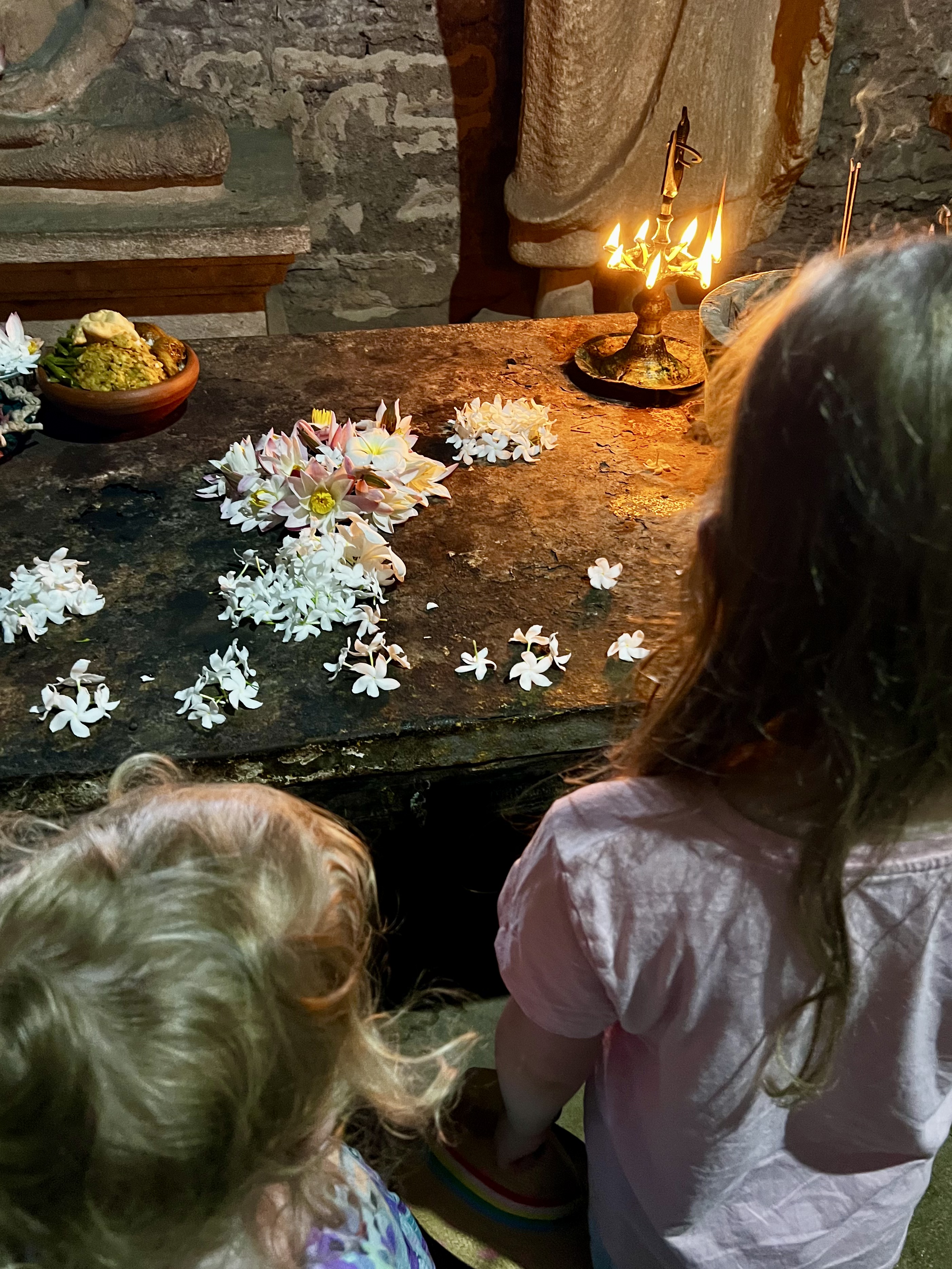
On the day of our visit (intentionally), it was a Full Moon Poya Day – a monthly Buddhist public holiday. It’s a time for spiritual reflection and fasting and many Buddhists will dress in white, visit temples, meditate and bring flower offerings. We entered the Thuparama Gedige temple – a refreshingly cool, dark chamber presided over by stone Buddha statues – and found a family group of all ages gathered together. It was one of those unexpected travel moments that took hold of all our senses, the girls included: the repetitive, melodic chanting in the dim candlelight, the smell of incense wisping up from the offering table, and the cool relief from the intense heat outside. Unforgettable.
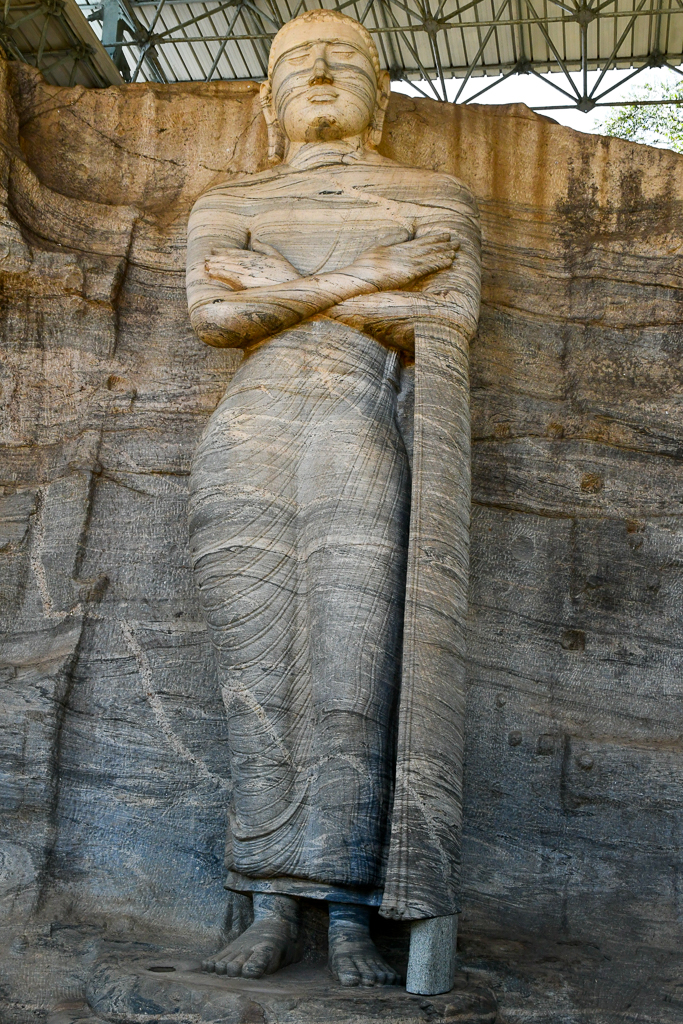
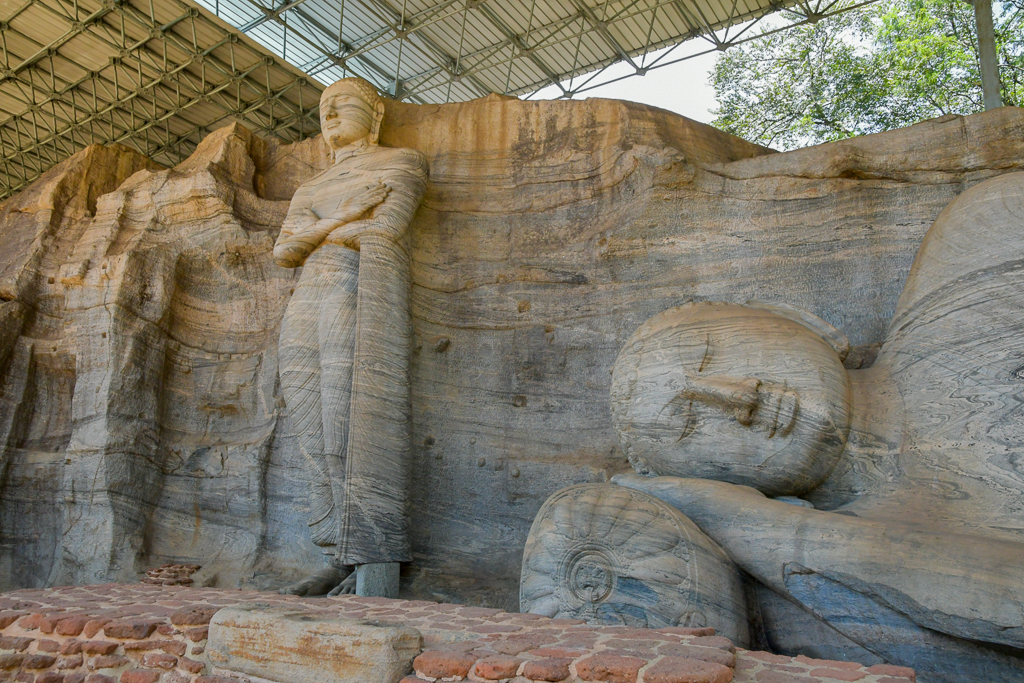
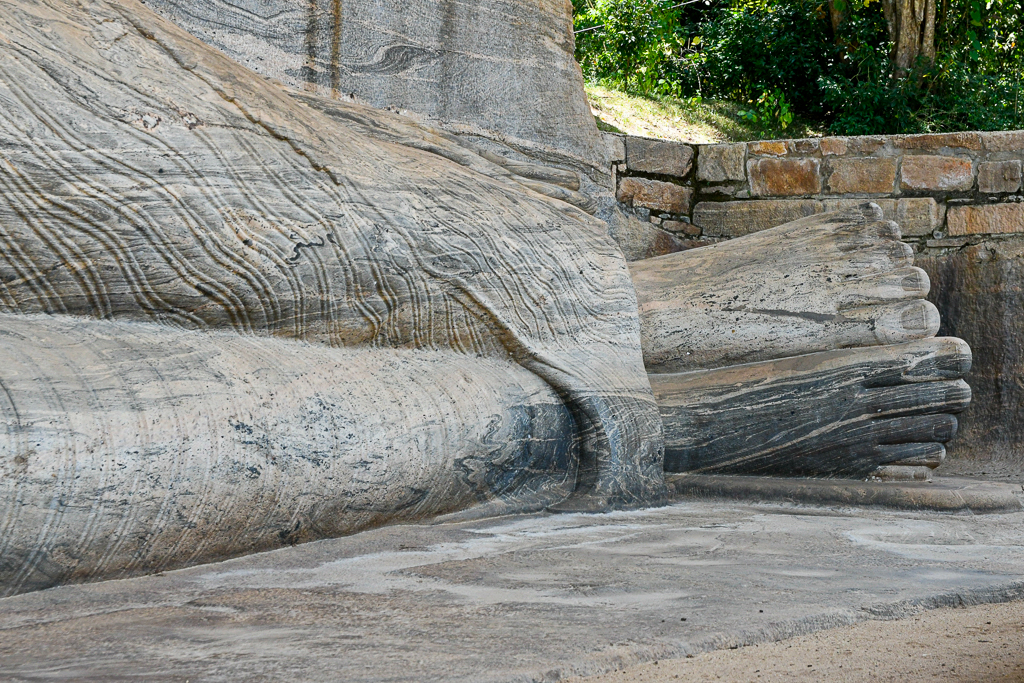
The final part of the day was visiting the four huge well-preserved Buddha statues, hewn into rock, depicting different stages of his life. They were rediscovered during the building of a railway in 1815 after being buried underground to protect them from invaders 600 years earlier. Imagine making that discovery! You have to remove your shoes to enter this area and, as usual, should not turn your back on the Buddha statues so no selfies! There were tufted grey langurs hanging out in this area too.
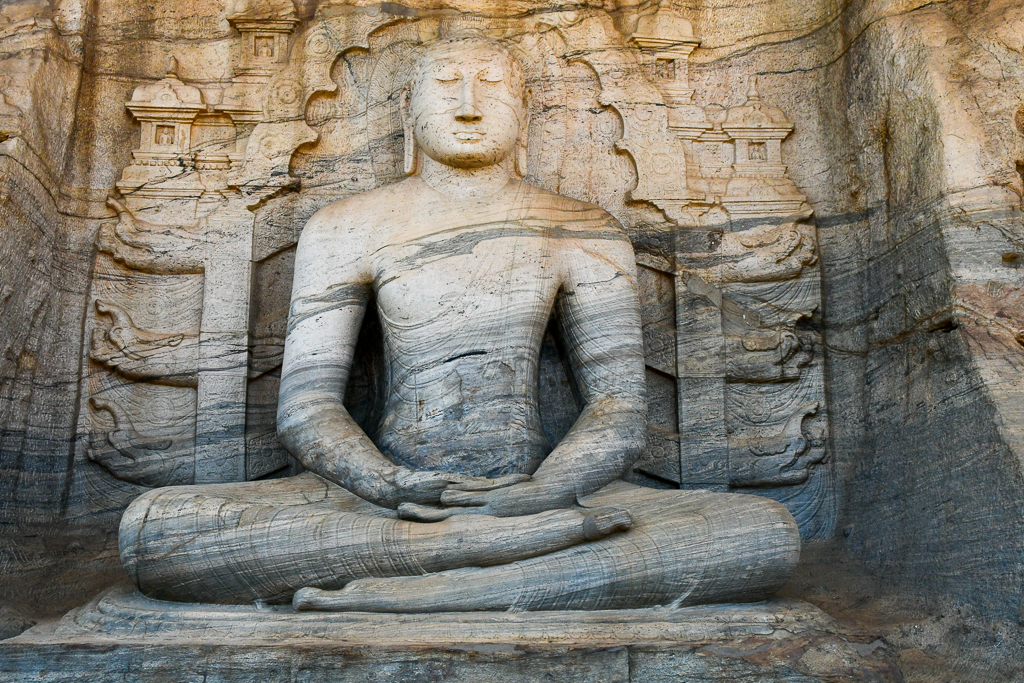
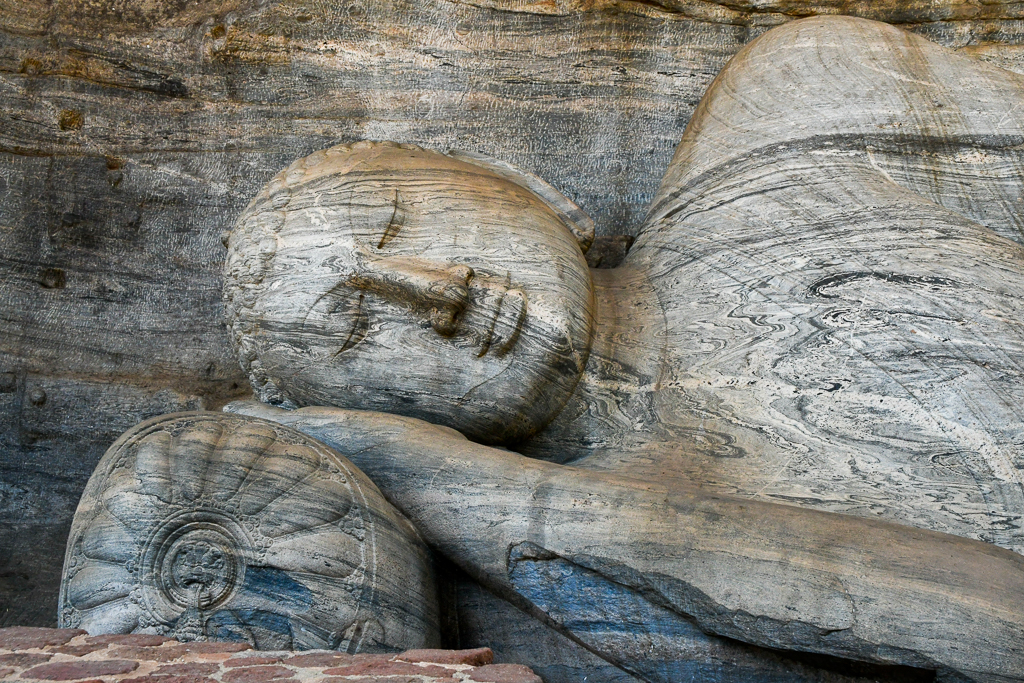
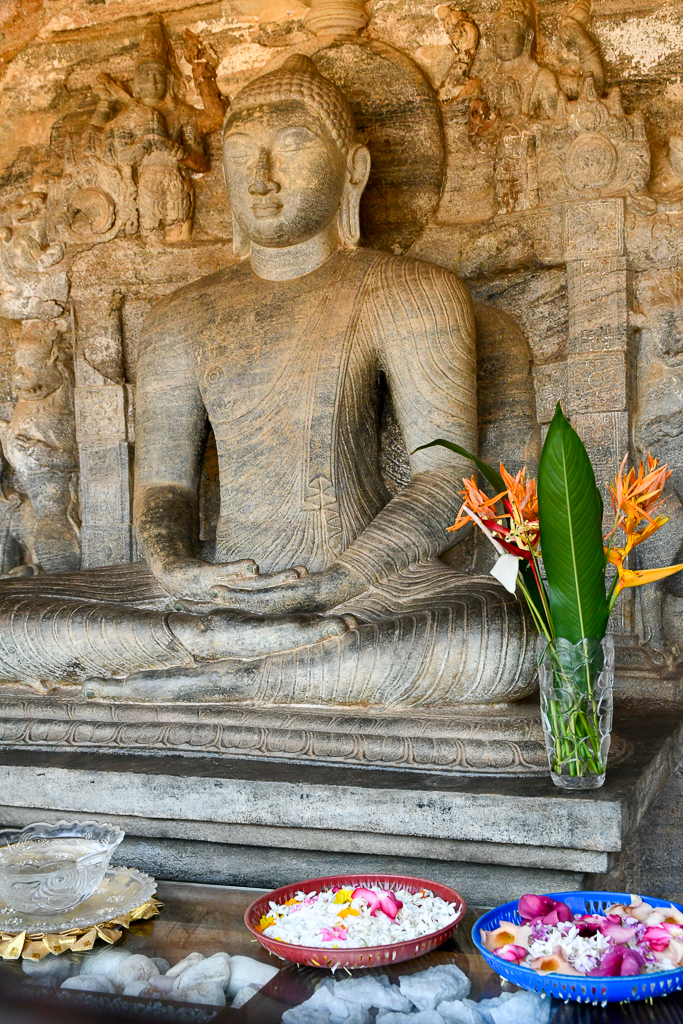
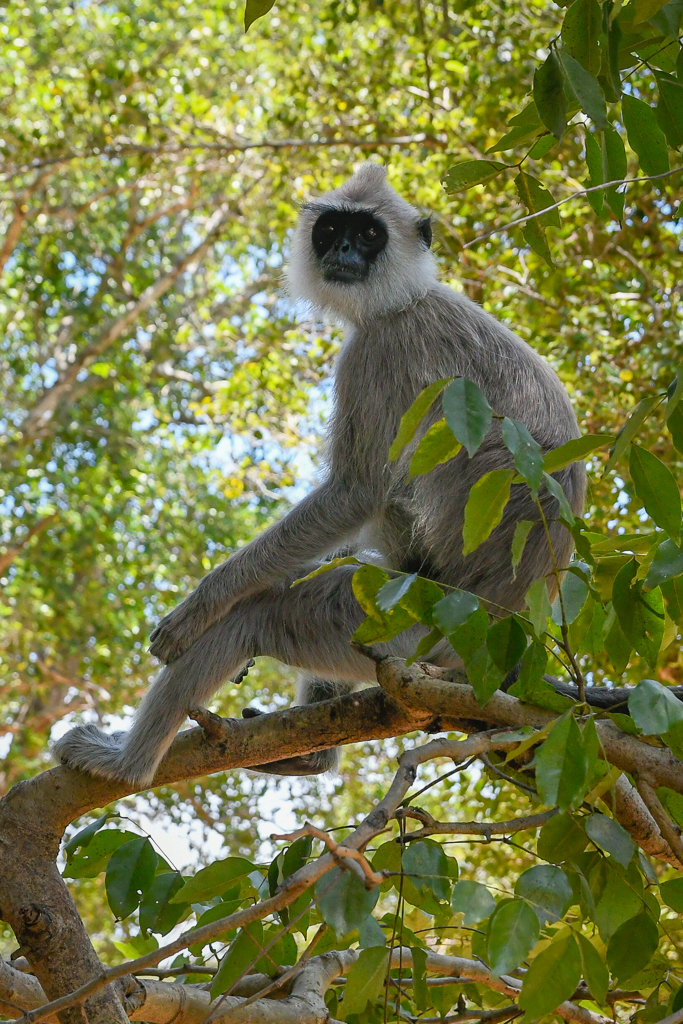
Polonnaruwa was the first place we’ve been where there were persistent souvenir sellers everywhere. As adults, we’re very used to politely declining (or firmly declining if that becomes warranted) so we certainly weren’t prepared for the impact their tenacity would have on the children who were, obviously, tempted by literally anything and everything they were offered! They effectively joined forces with the vendors in constant multipronged attacks! Early on, we realised we needed to let them both choose something small – an ebony elephant for Tiny and a very poorly-made wooden tuktuk for Small – so that we could tell them and the sellers that we had already made our purchases for the day! We did buy some elephant magnets from a man with no legs at the end too because how could we not?!
Day 6 continued – a solo mission to Sigiriya (Lion Rock):
As I mentioned in part one, there was a heatwave during our visit so we needed to be very conscious of overdoing it with the kids. Sigiriya – an ancient rock fortress – is one of Sri Lanka’s most popular tourist destinations and was on our itinerary but we’d decided again it because it involves a lot of steps (around 1200). After the morning spent at Polonnaruwa, Dean decided to go alone to Sigiriya (driven by Kiyas) during the hottest part of the day, whilst the girls and I chilled out, doing our journals and eating snacks until he returned in time for a late afternoon dip in the pool.
The Sigiriya area was first inhabited by monks but, in the 5th century AD, King Kashyapa I built his fortified royal citadel on the top of the rock. Not long after, he was defeated and the royal residence was abandoned. Buddhist monks moved back in, and then, in the 14th century, out again. The jungle reclaimed the area until Major Jonathan Forbes, a British explorer, discovered the ruins in the 19th century.
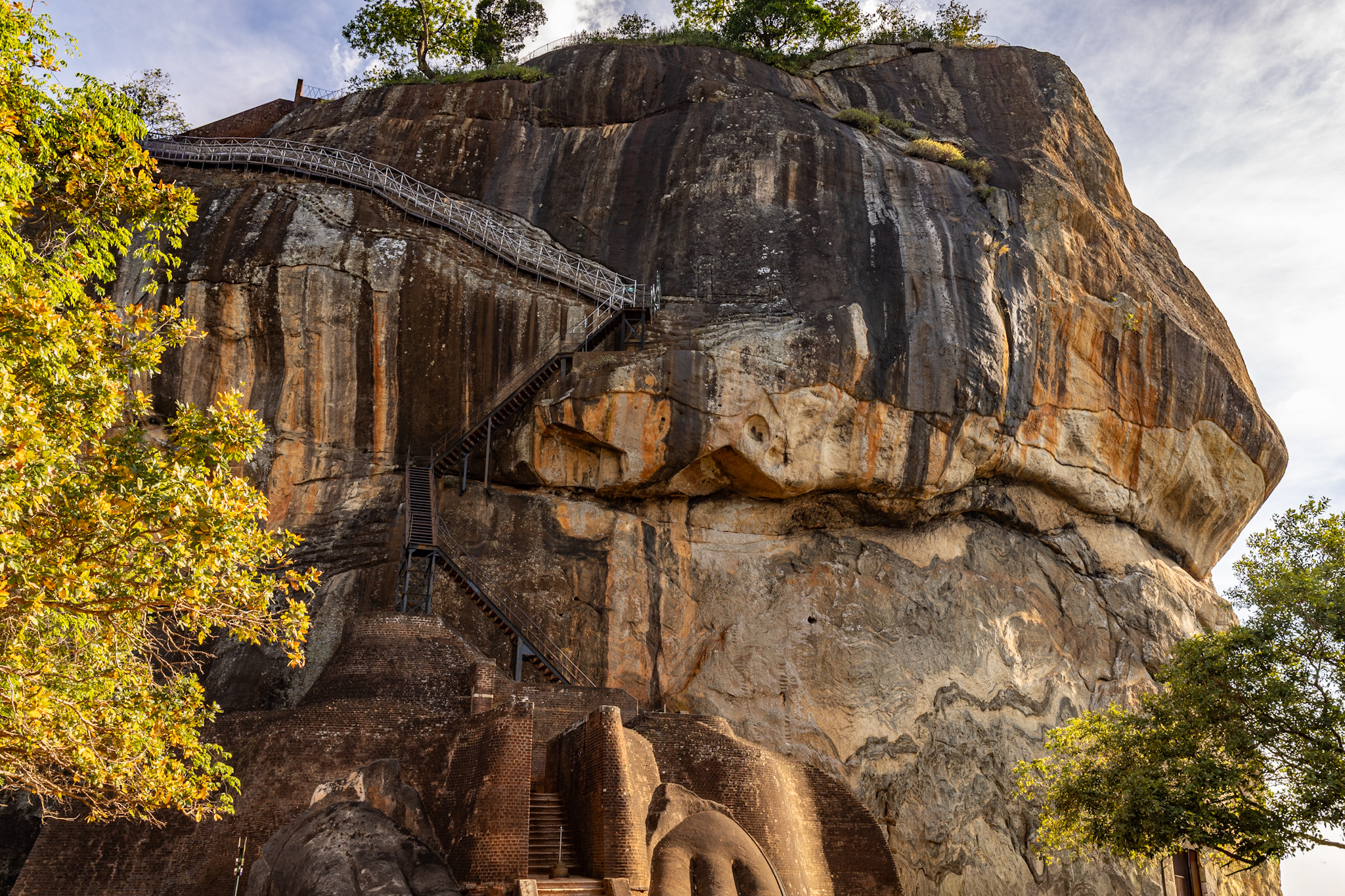
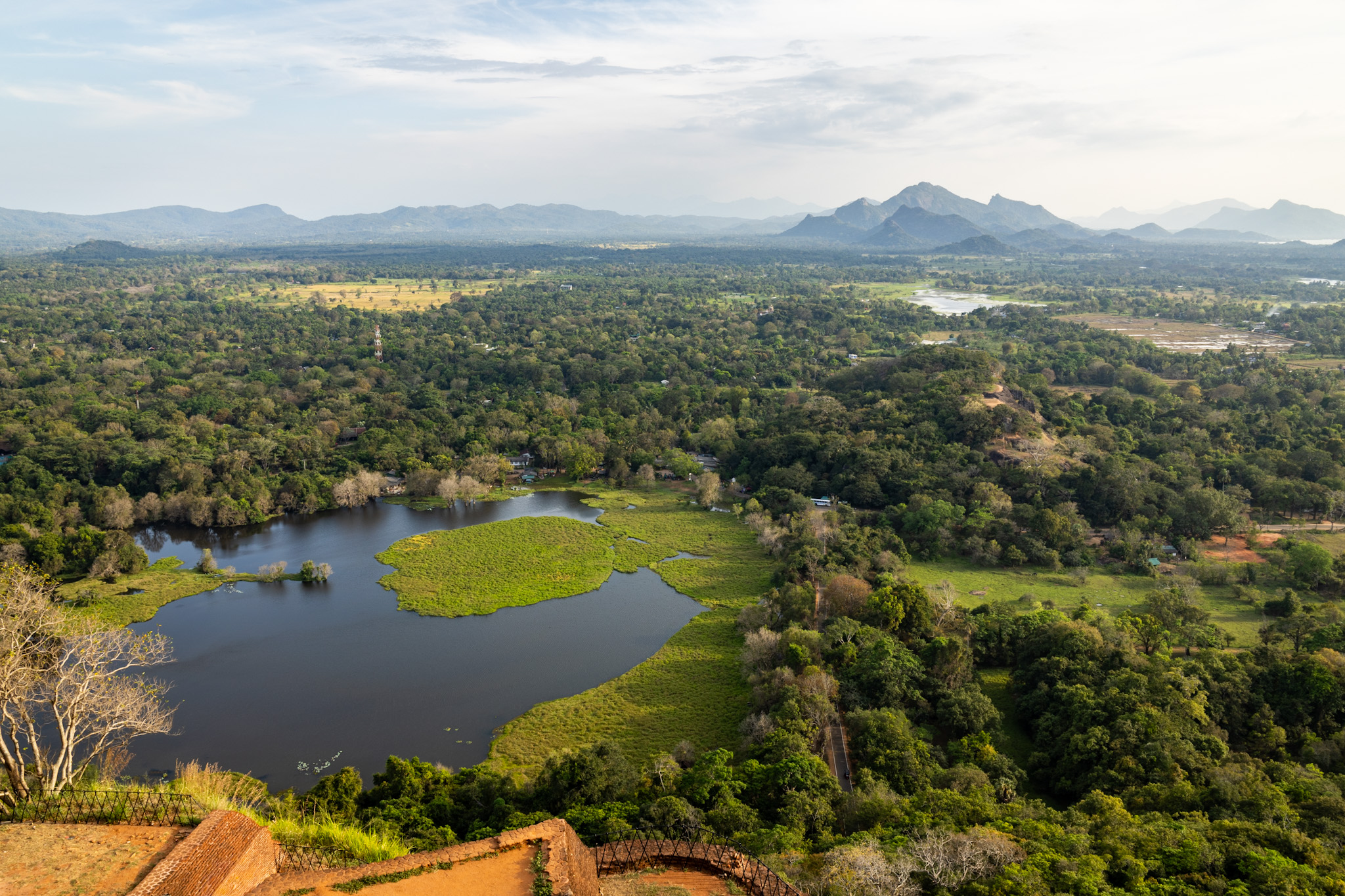
As well as the royal palace perched on top of the monolithic granite and volcanic rock pillar, you can also see the Lion Gate which is basically the huge lion paws which used to be part of a full lion sculpture with an open mouth used as the main entrance to the palace. The surviving frescoes and a mirror wall, complete with ancient graffiti, are fascinating but photos aren’t allowed. And then there are the terraced gardens, the organic boulder gardens, and the impressively elaborate, geometric water gardens featuring a hydraulic system that still brings fountains to life and provide storm drainage today.
Dean had a great time although ran out of phone and camera battery!
Day 7 – Bissa Villa Cooking Class:
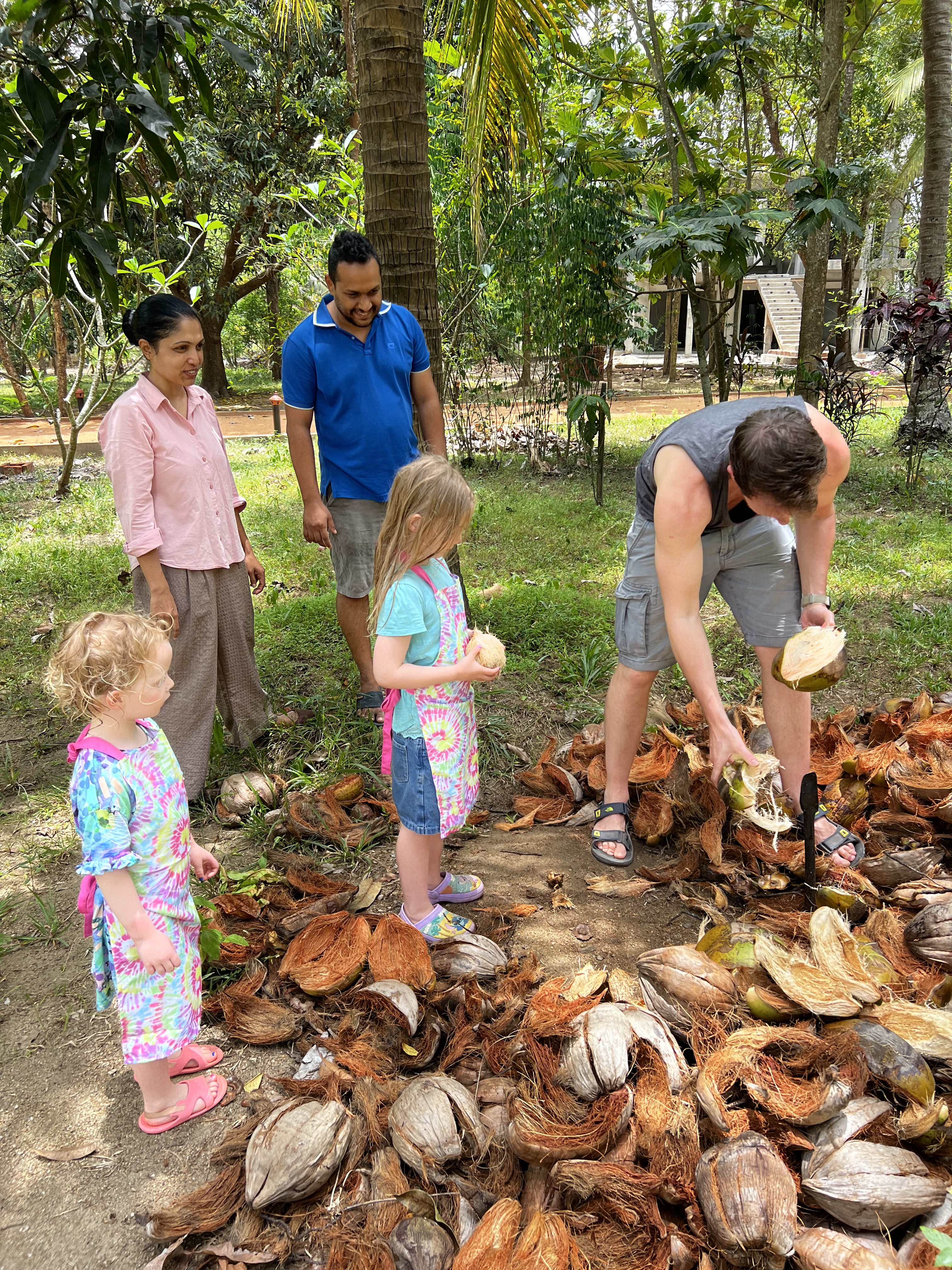
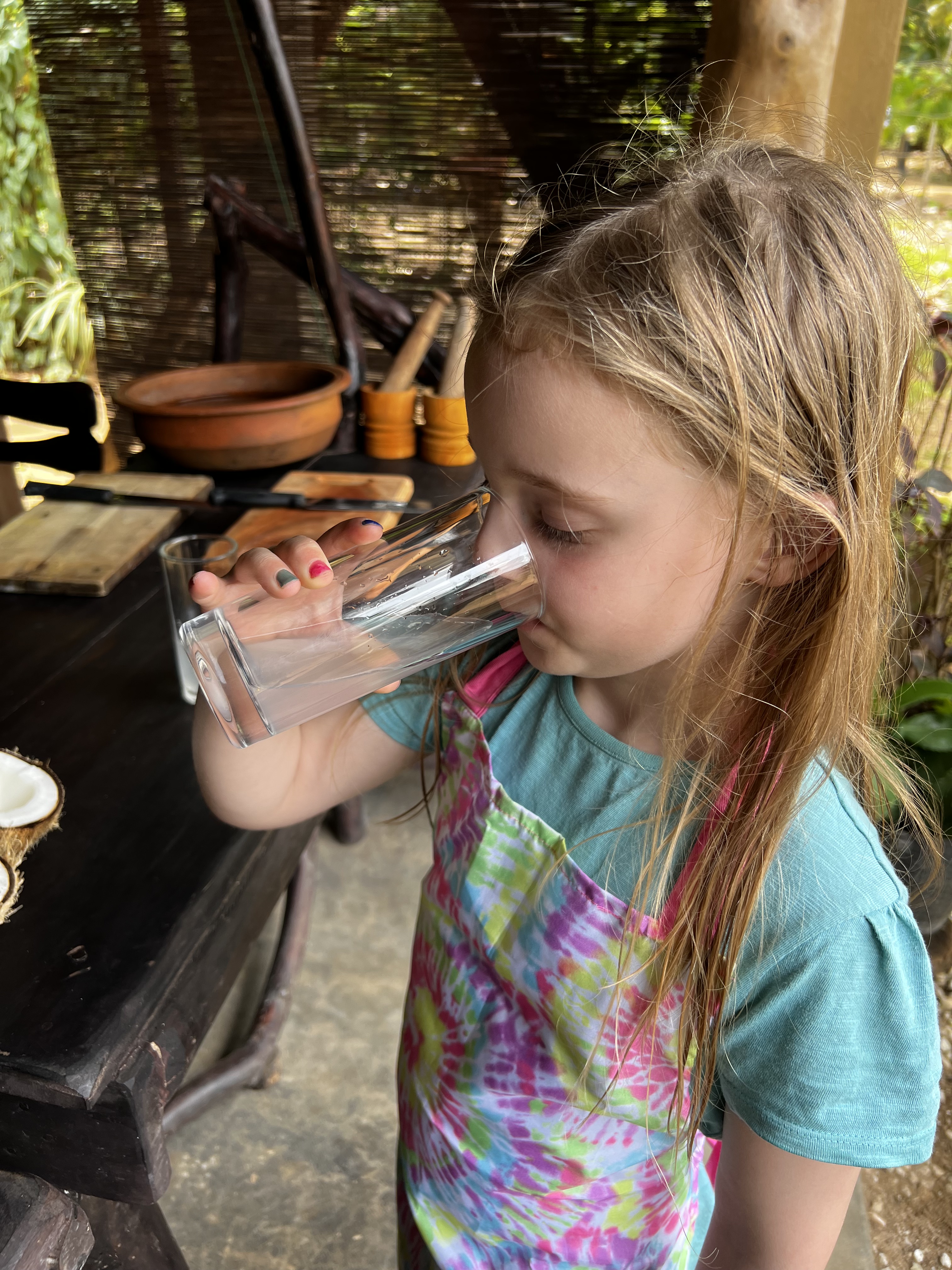
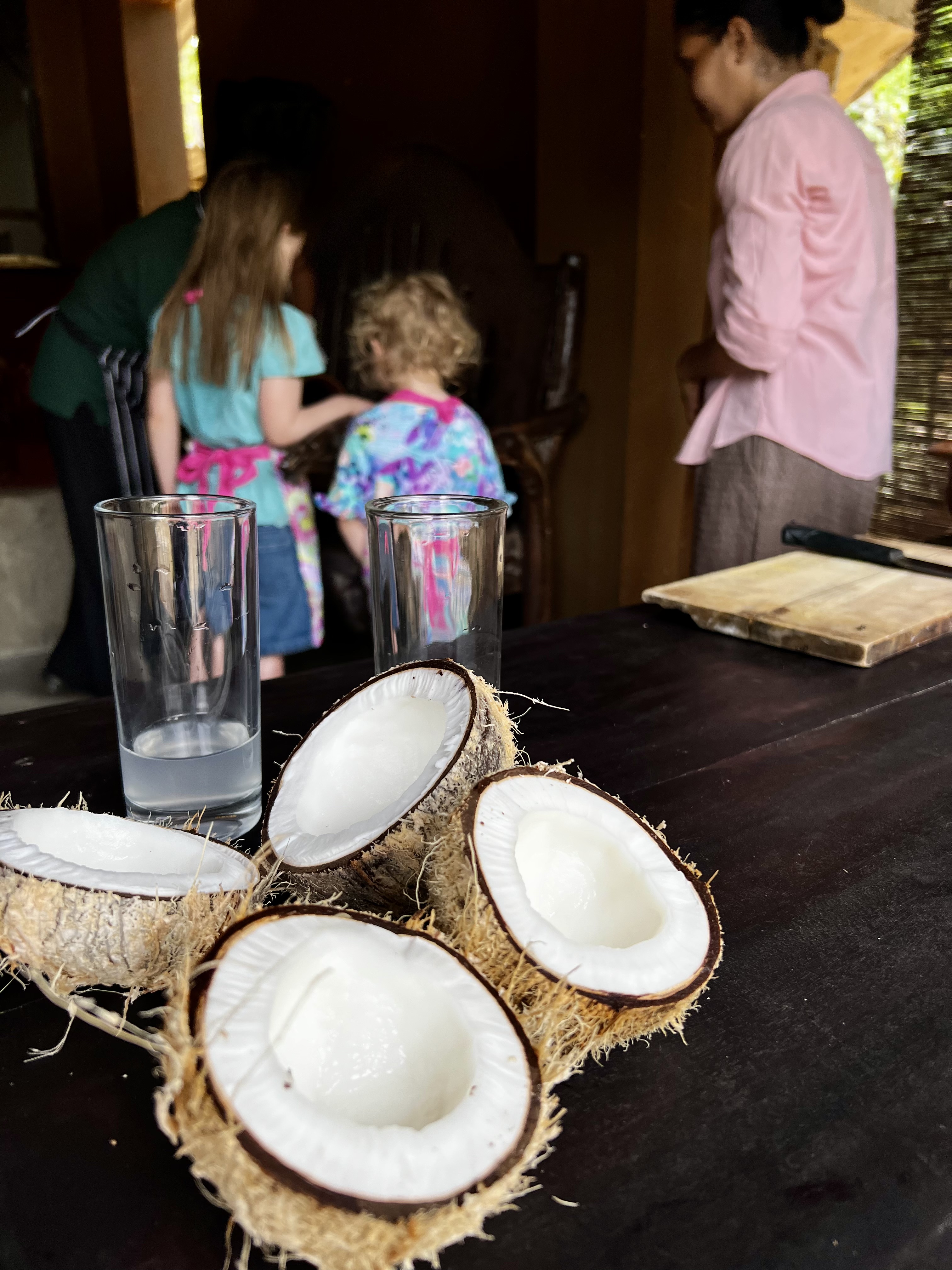
Cancelling our family Sigiriya visit left us with an empty day to fill in Habarana but we weren’t short of ideas. In the morning, Kaushi and her team from the Train Hut ran a fantastic cooking class for the girls. (Part three has lots more information about this brilliant accommodation.) We began by finding two coconuts from one of the few coconut trees that had survived the elephants’ nocturnal visits. Dean was taught to hack off the outer husks using a blade sticking up out of the ground. Taking these to the outdoor kitchen set-up, the girls were given coconut milk to try and then Small had a go at grating the flesh which was tricky!
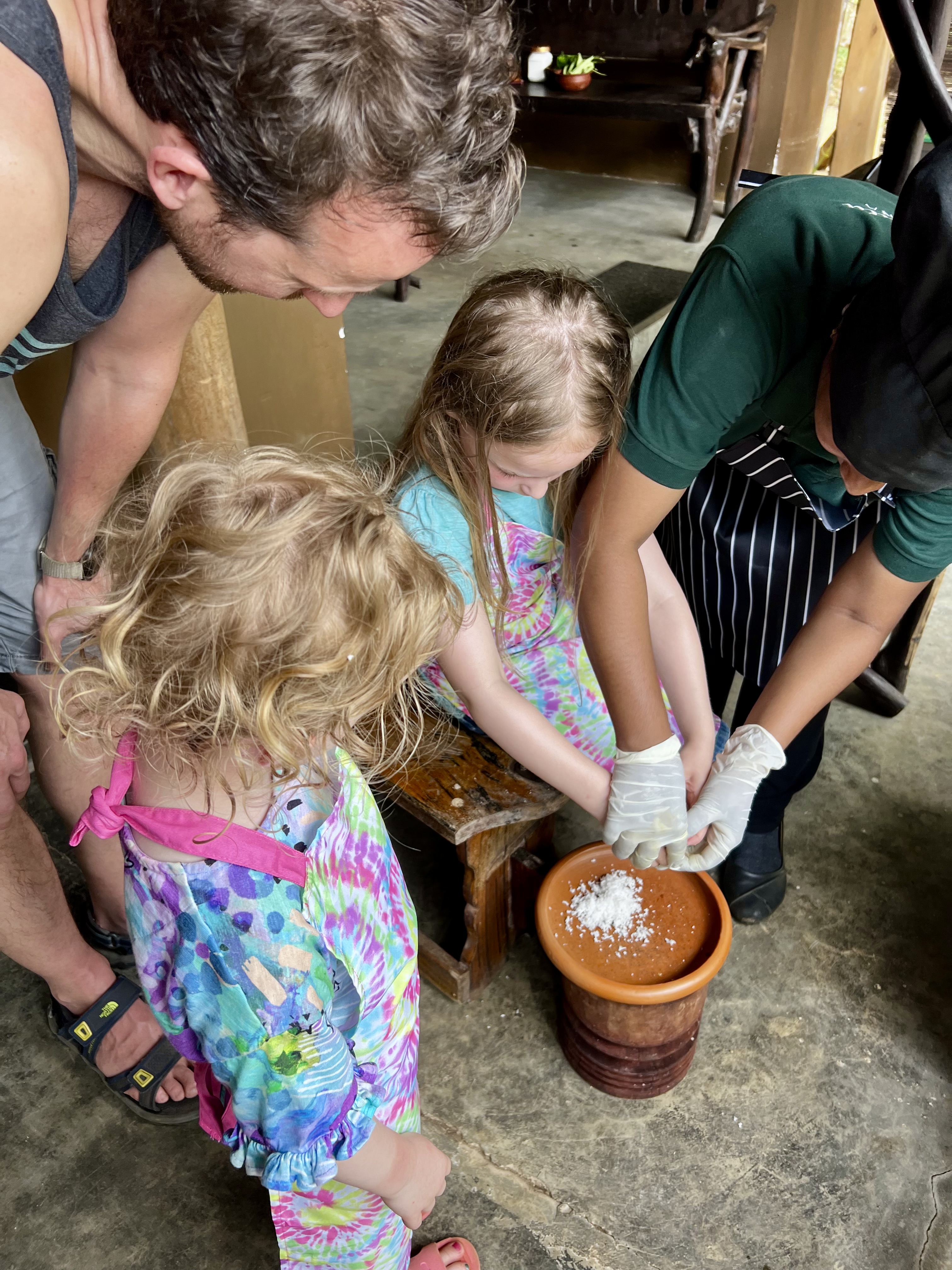
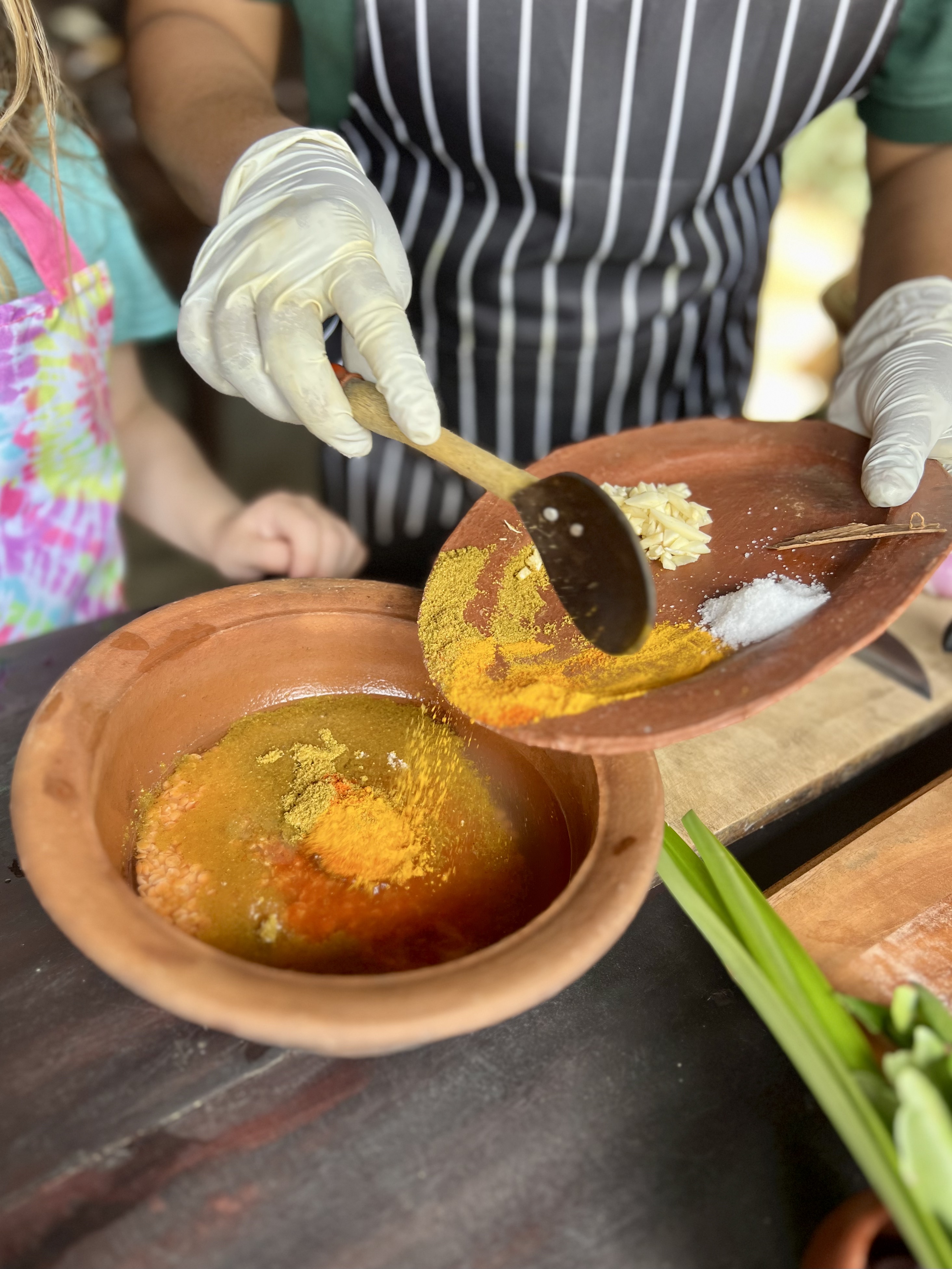
Then they got on with sifting and washing the rice before rinsing the lentils. Pleasingly colourful spices had been portioned out onto a terracotta plate; the girls were on mixing duty whilst the cook ensure the right quantities were added to make the dahl.
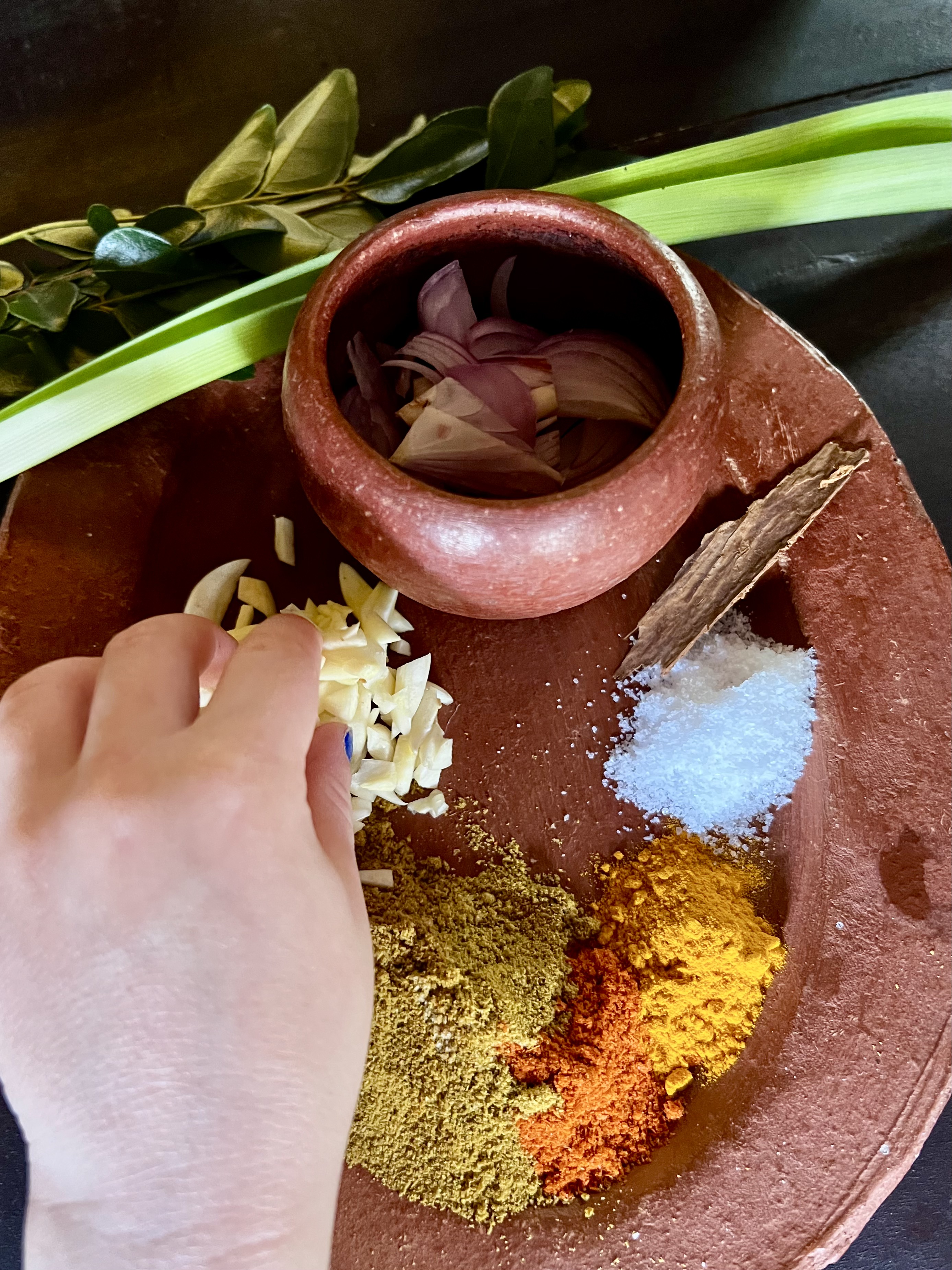
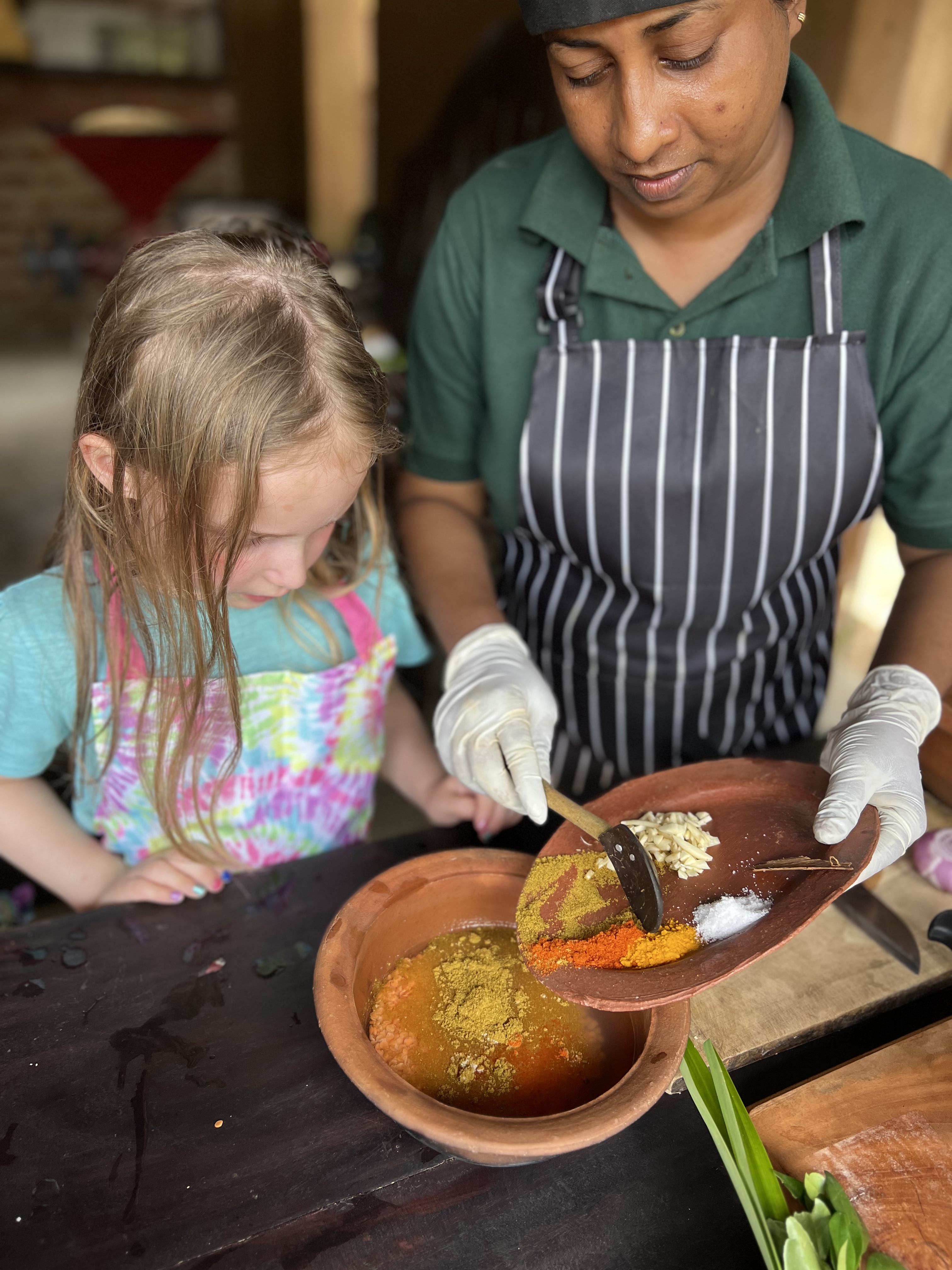
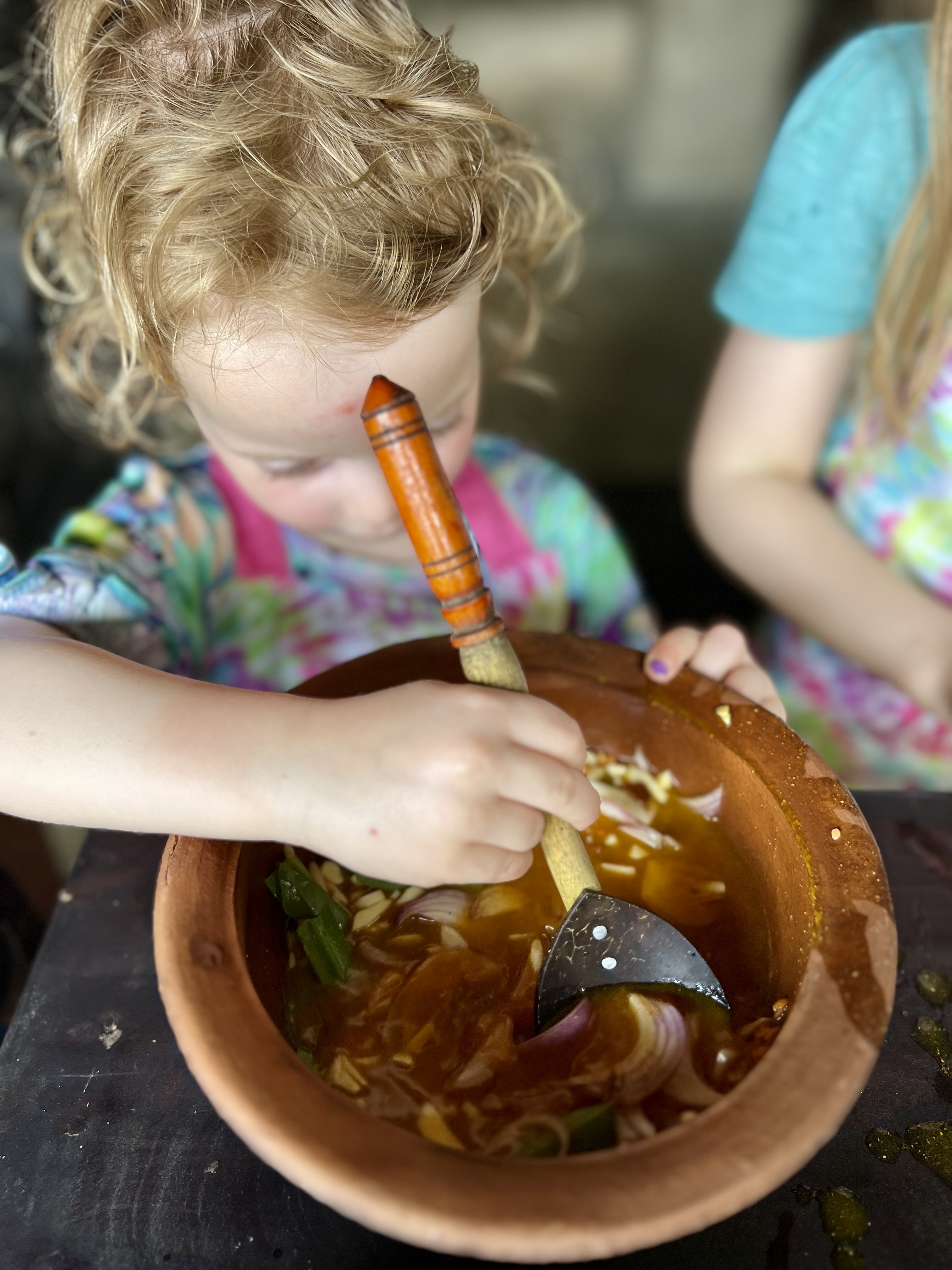
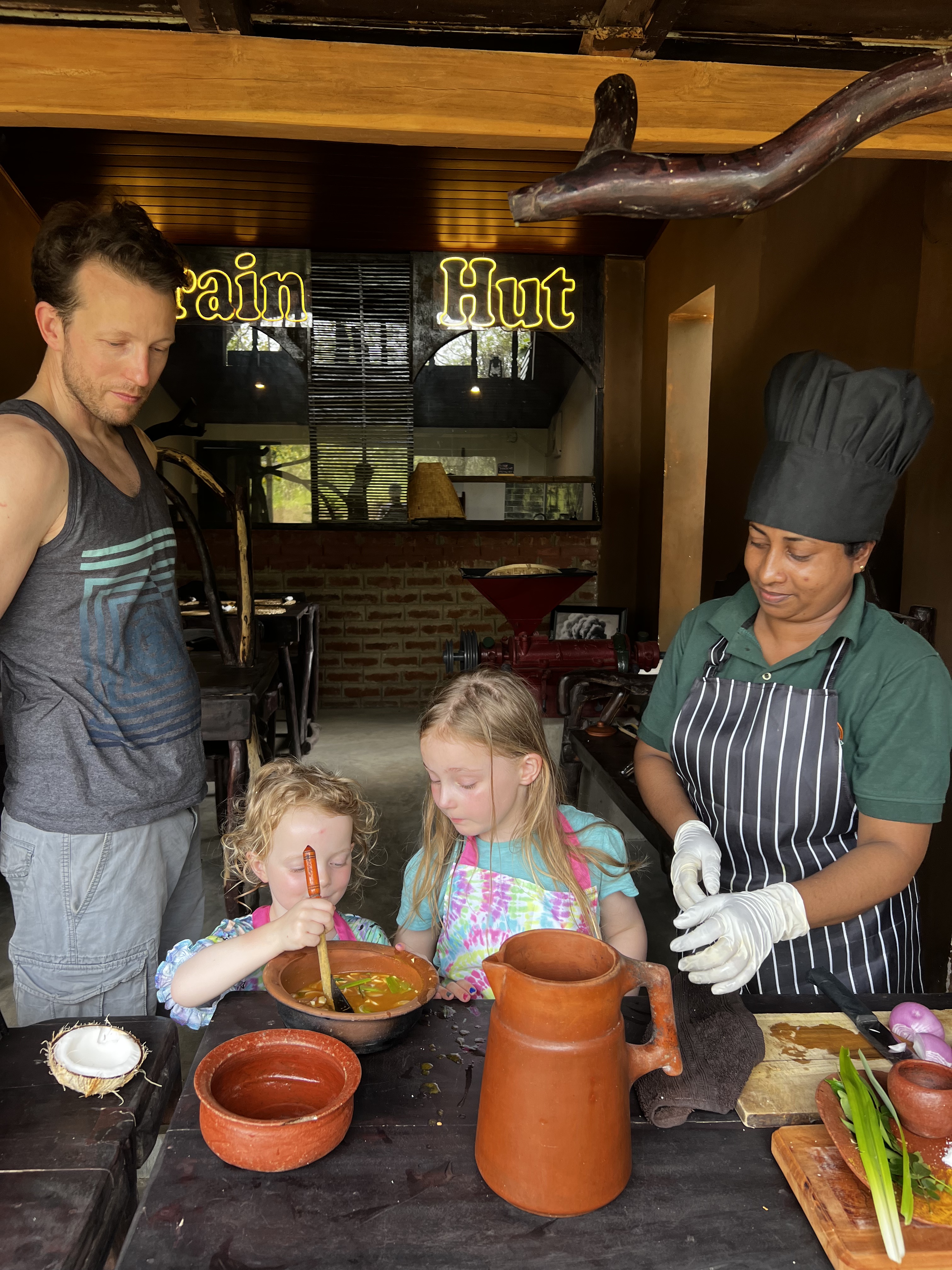
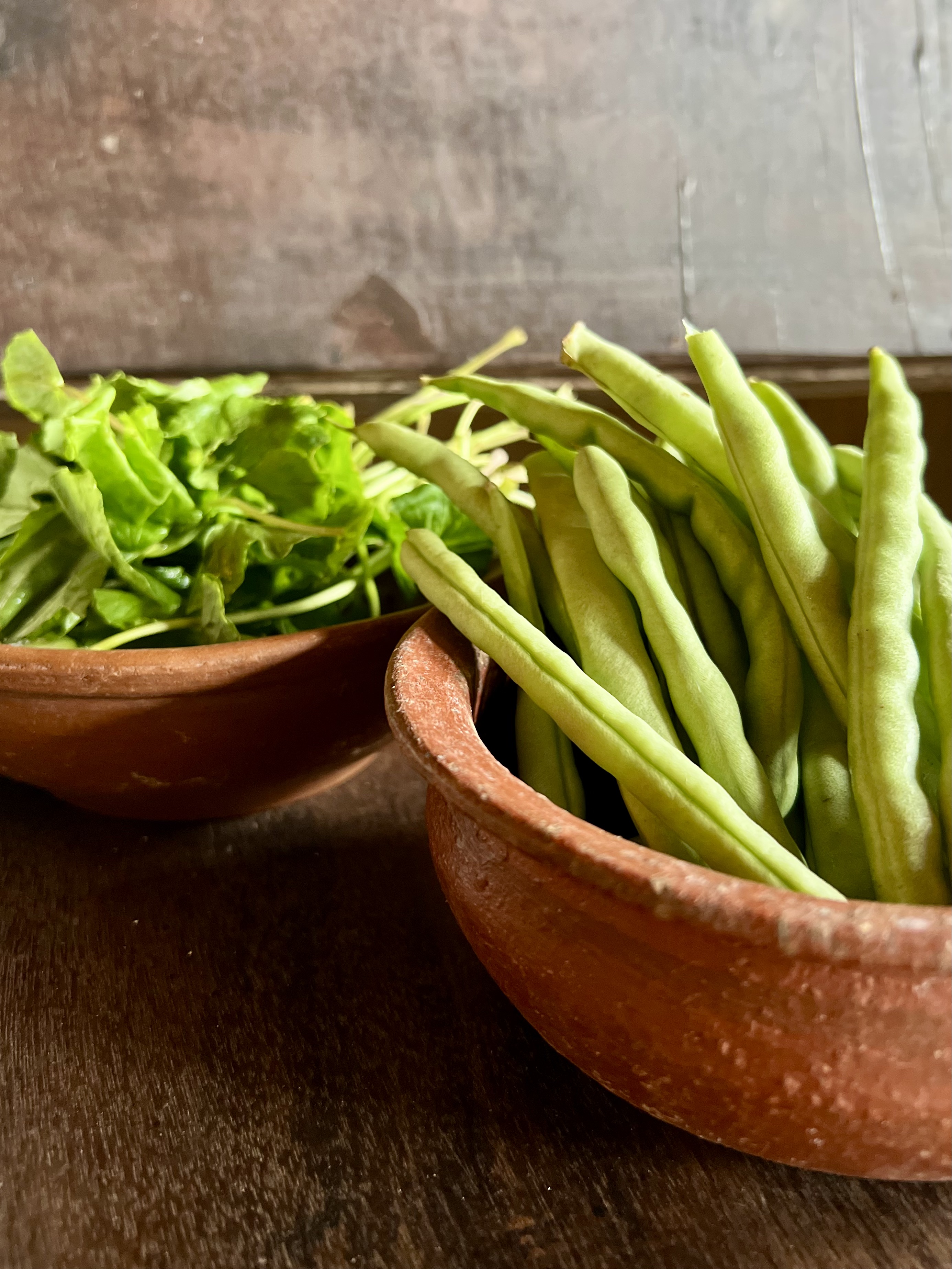
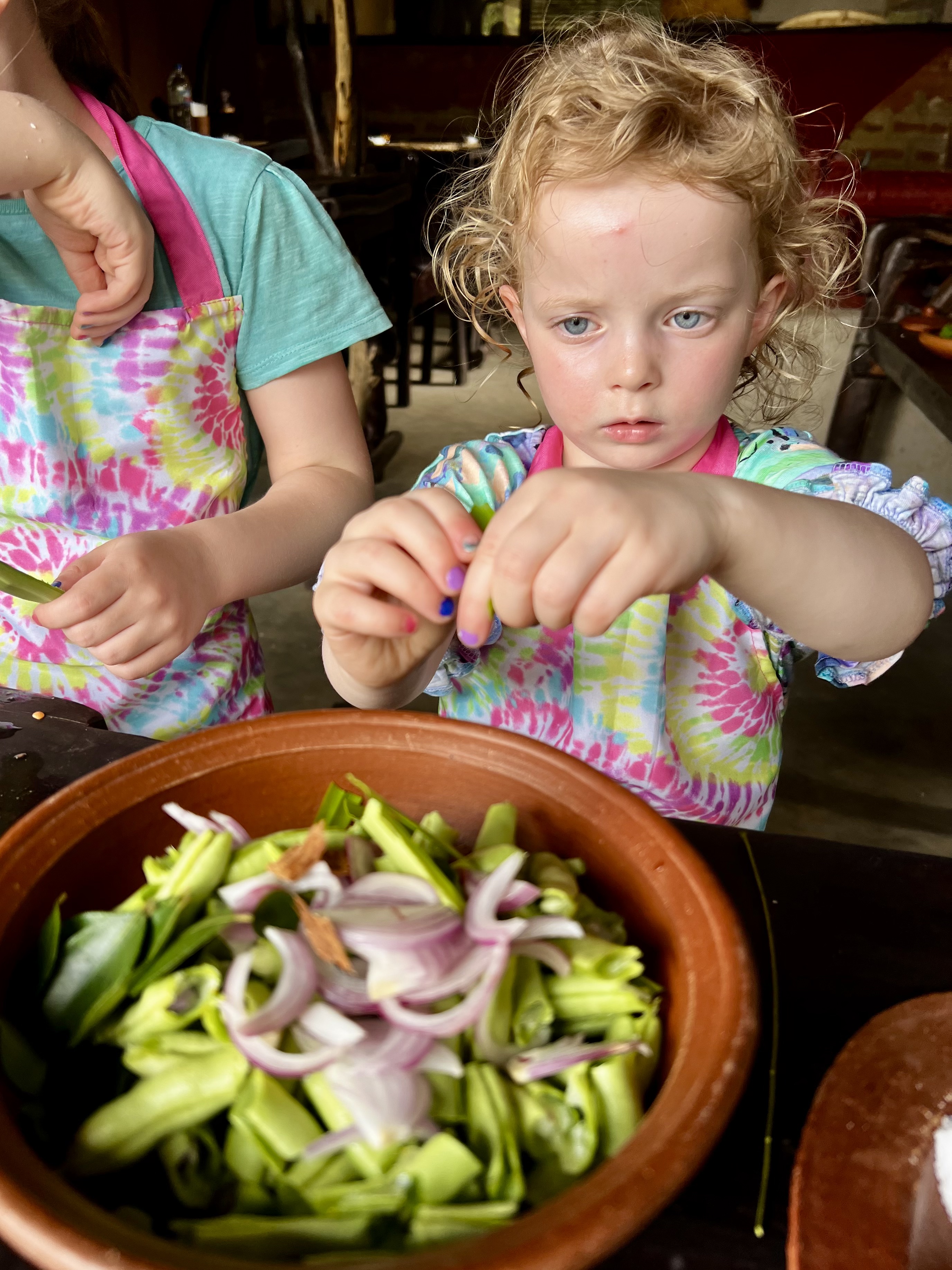
Next it was on to preparing the green beans, to which was added onion, curry leaves, spices and some of the fresh coconut milk for another curry.
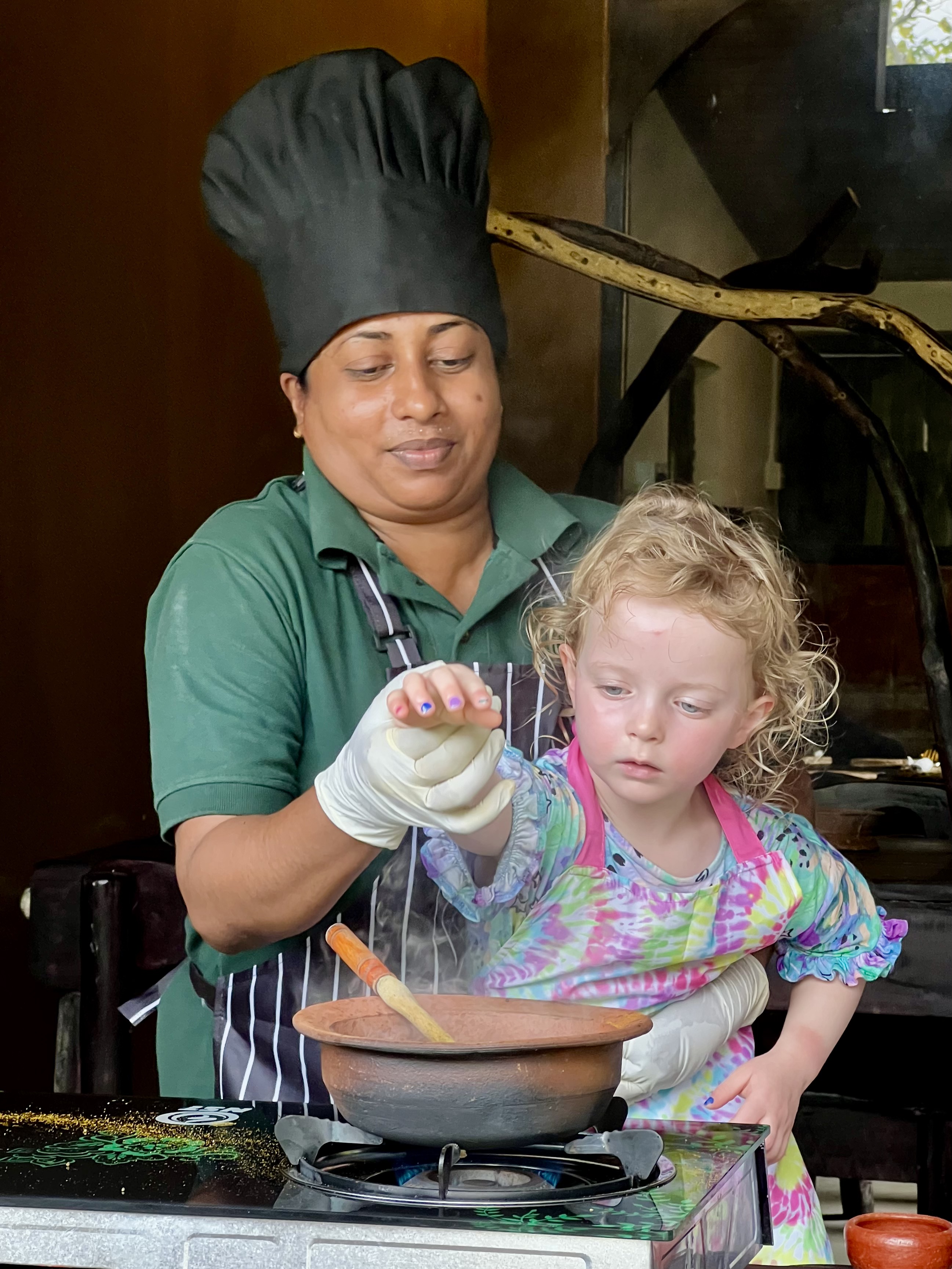
The final curry to make was a chicken one. The smell once they were all bubbling away on the hob was mouthwatering. It was such a hot day that standing nearby was almost unbearable though!
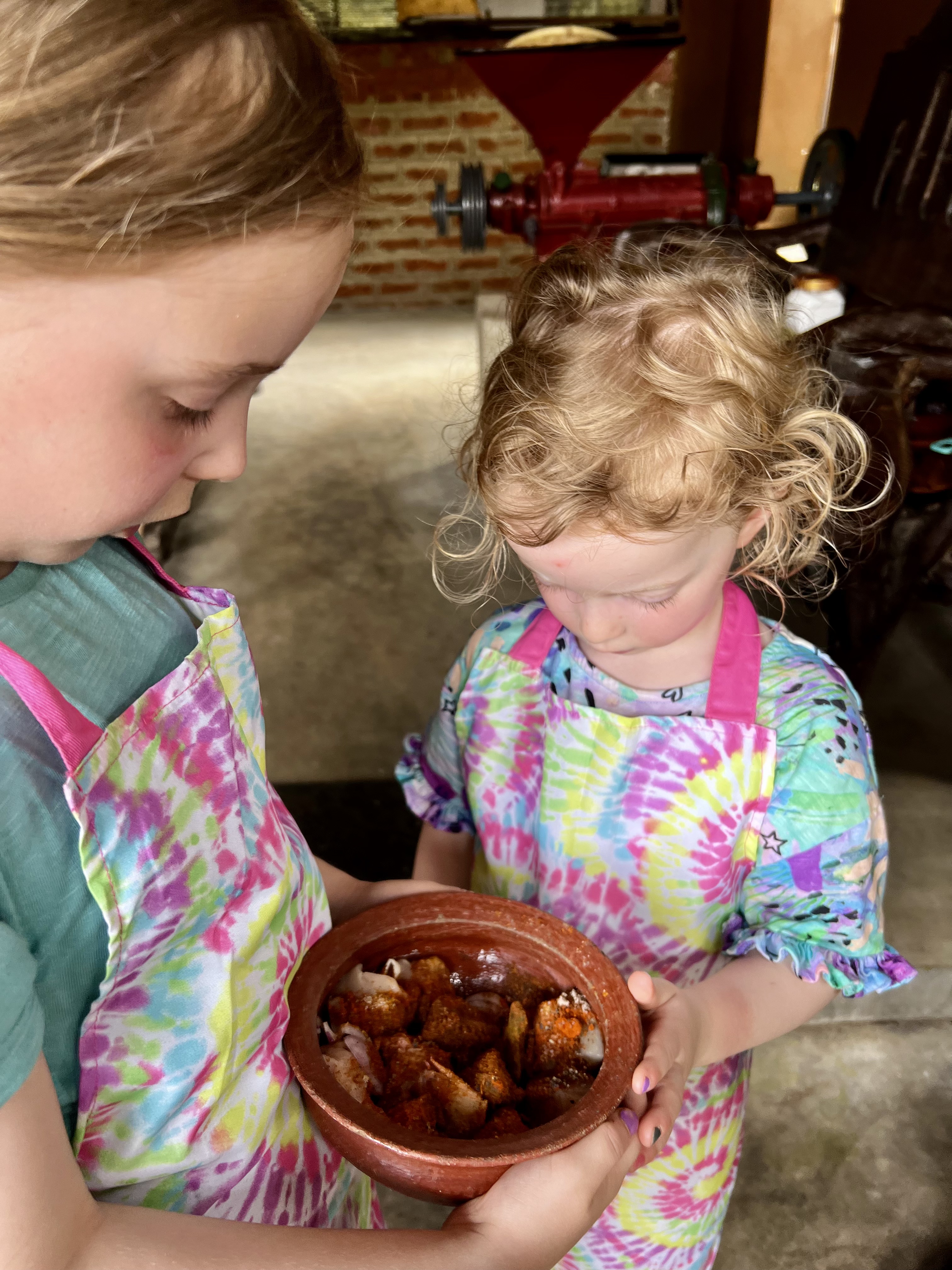
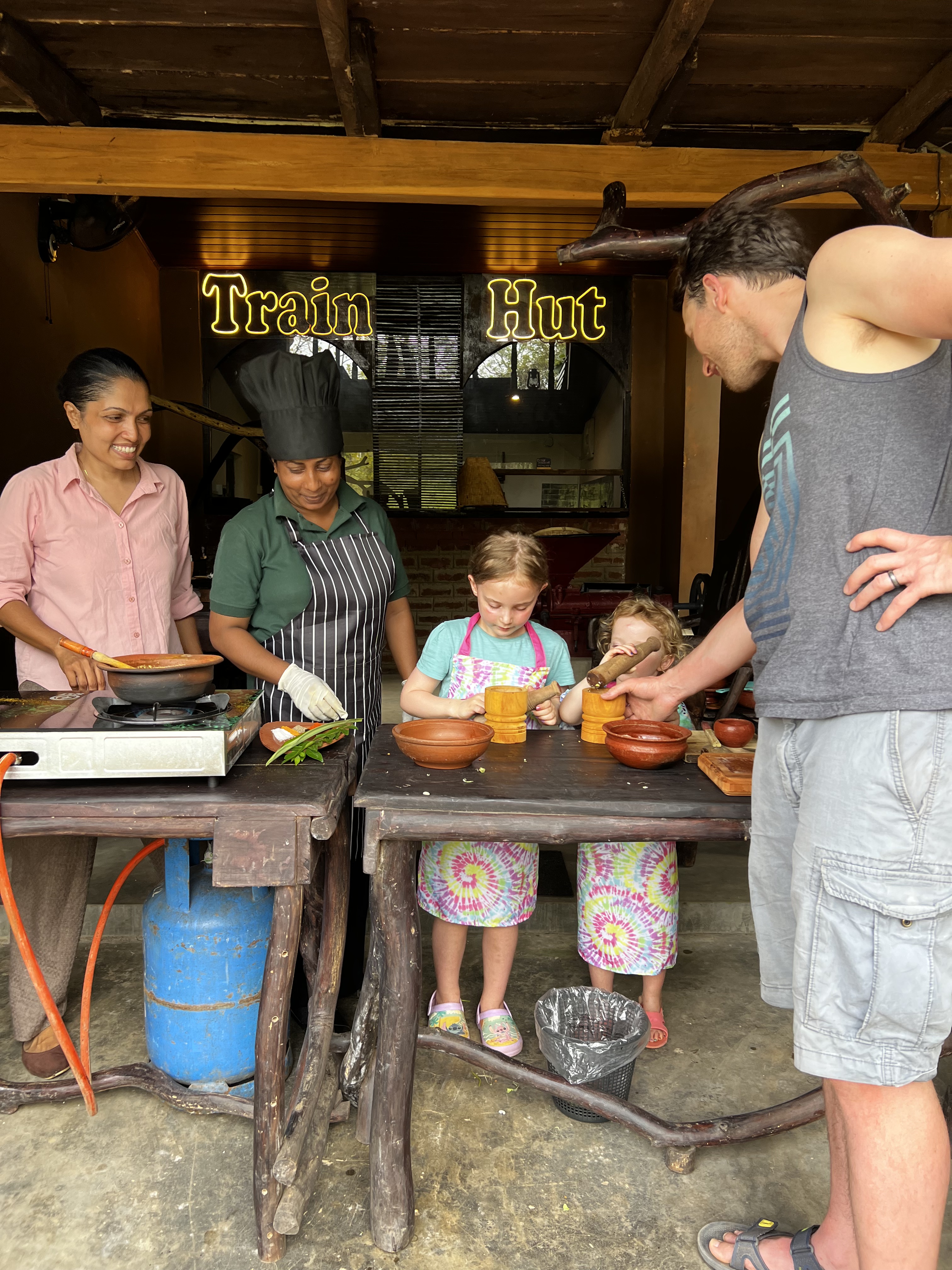
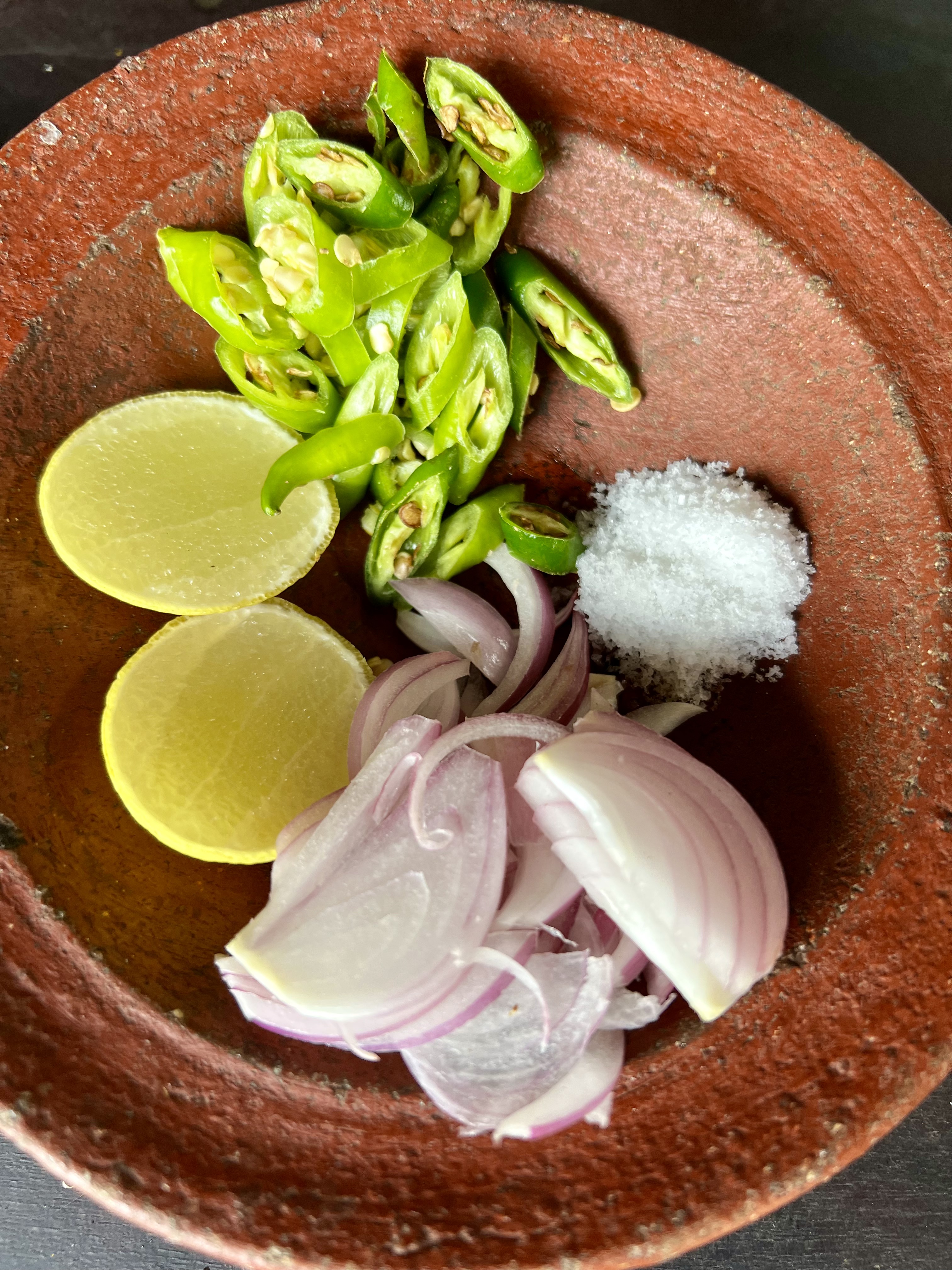
The final feast was absolutely delicious. There were a couple of extra dishes added on and it made for a filling lunch.
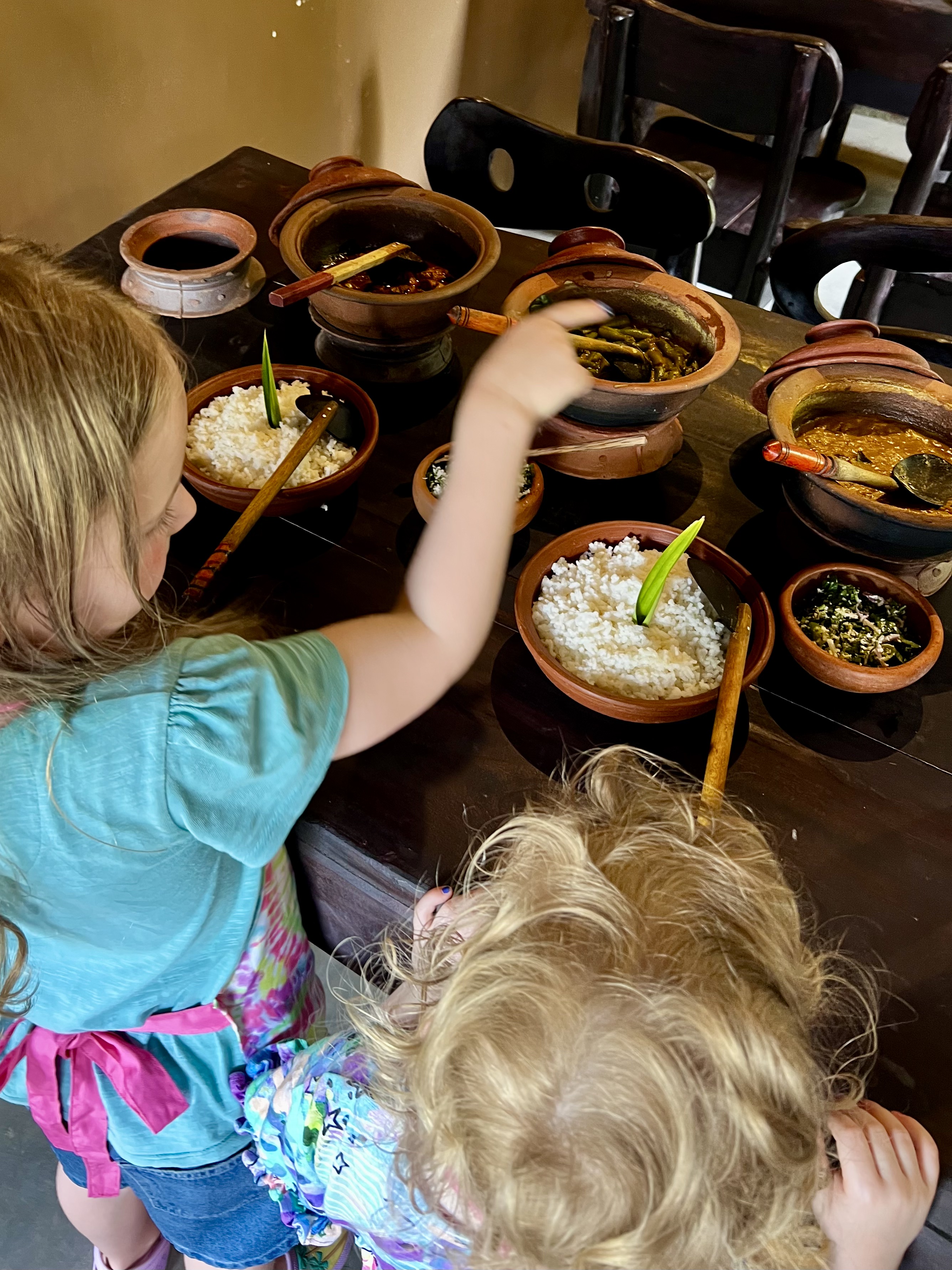
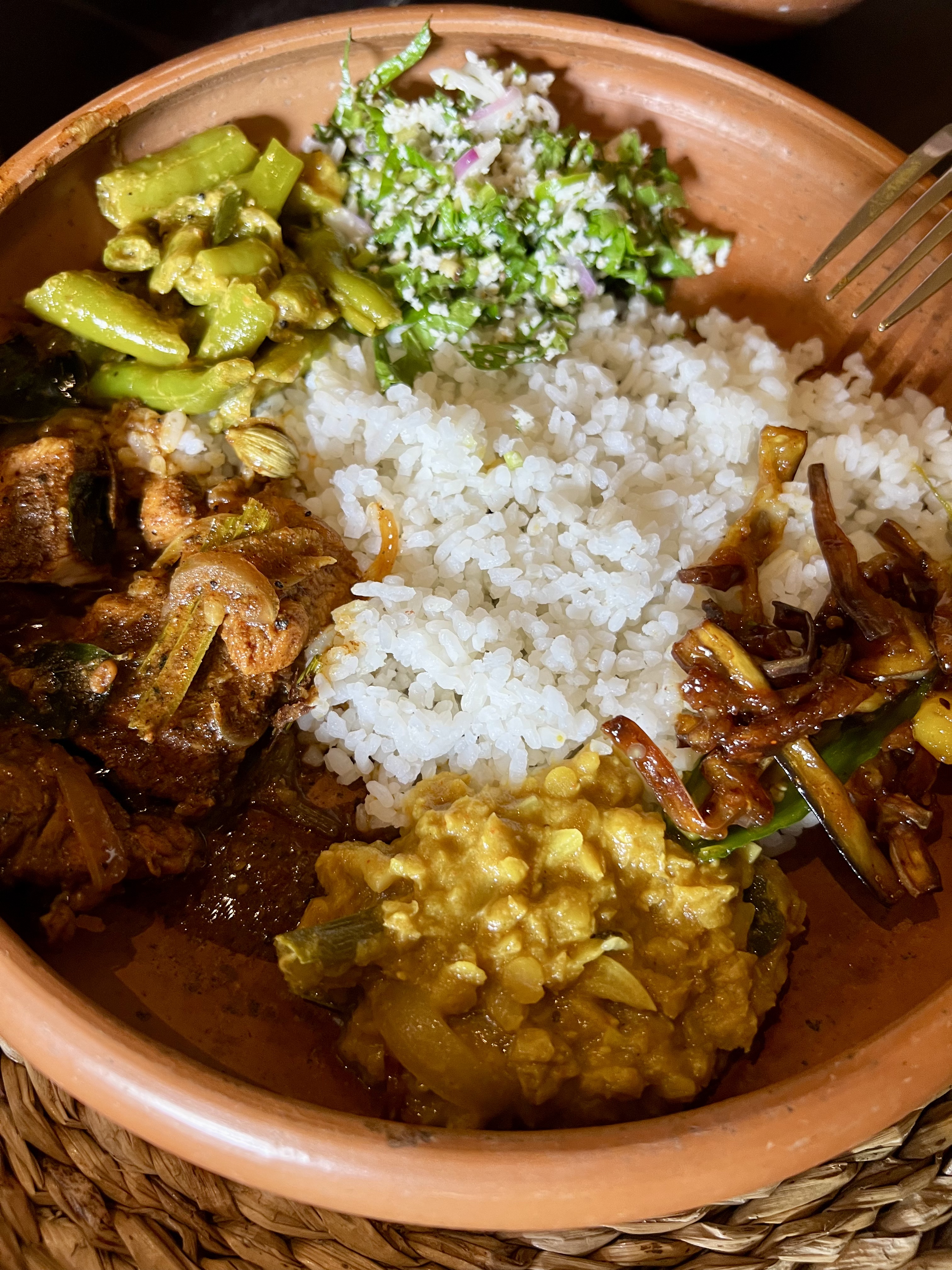
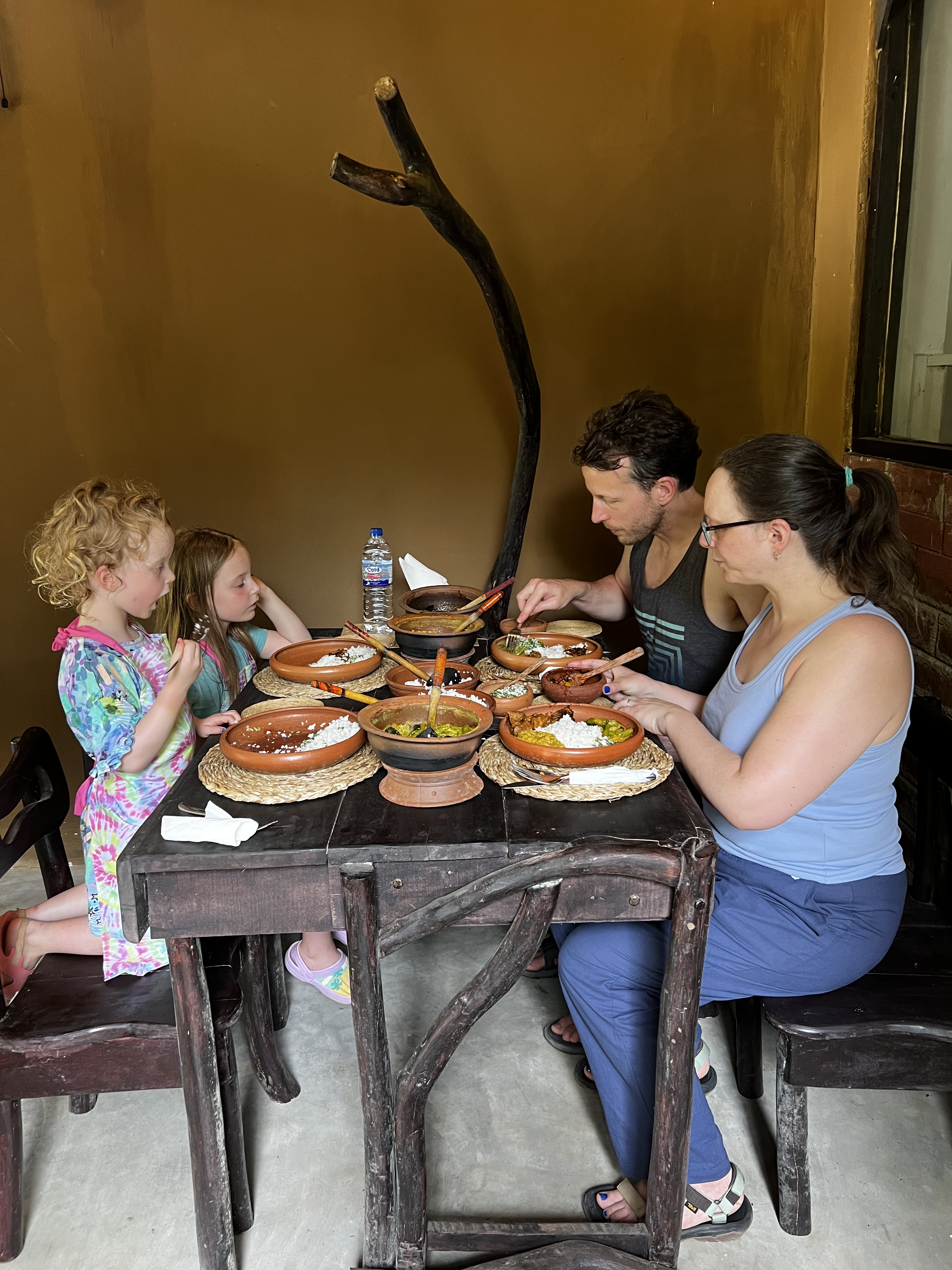
They’d gone to the trouble of making sure every aspect was low enough for the children to reach and that everything was really well thought-out so that they could get involved with as much as possible. They even produced some perfectly-sized aprons for the girls to wear! Although the other staff couldn’t speak English, Kaushi was always on hand to explain what needed to be done. There was so much smiling and laughter along the way and the girls will remember this for a long time to come.
Day 7 continued – Huluru Eco Park
As I mentioned in part three, Habarana is elephant country. Our second, last-minute activity for the day was another safari because riding along with a breeze and a roof is lovely and cool. There are three parks in the area: Minneriya and Kaudulla are the most visited and the elephants tend to migrate between the two depending on water levels and the season, but when they’re not in one of those, they’ll be at Huluru Eco Park.
Guides know where to find them any given day. Today, Huluru was our best bet.
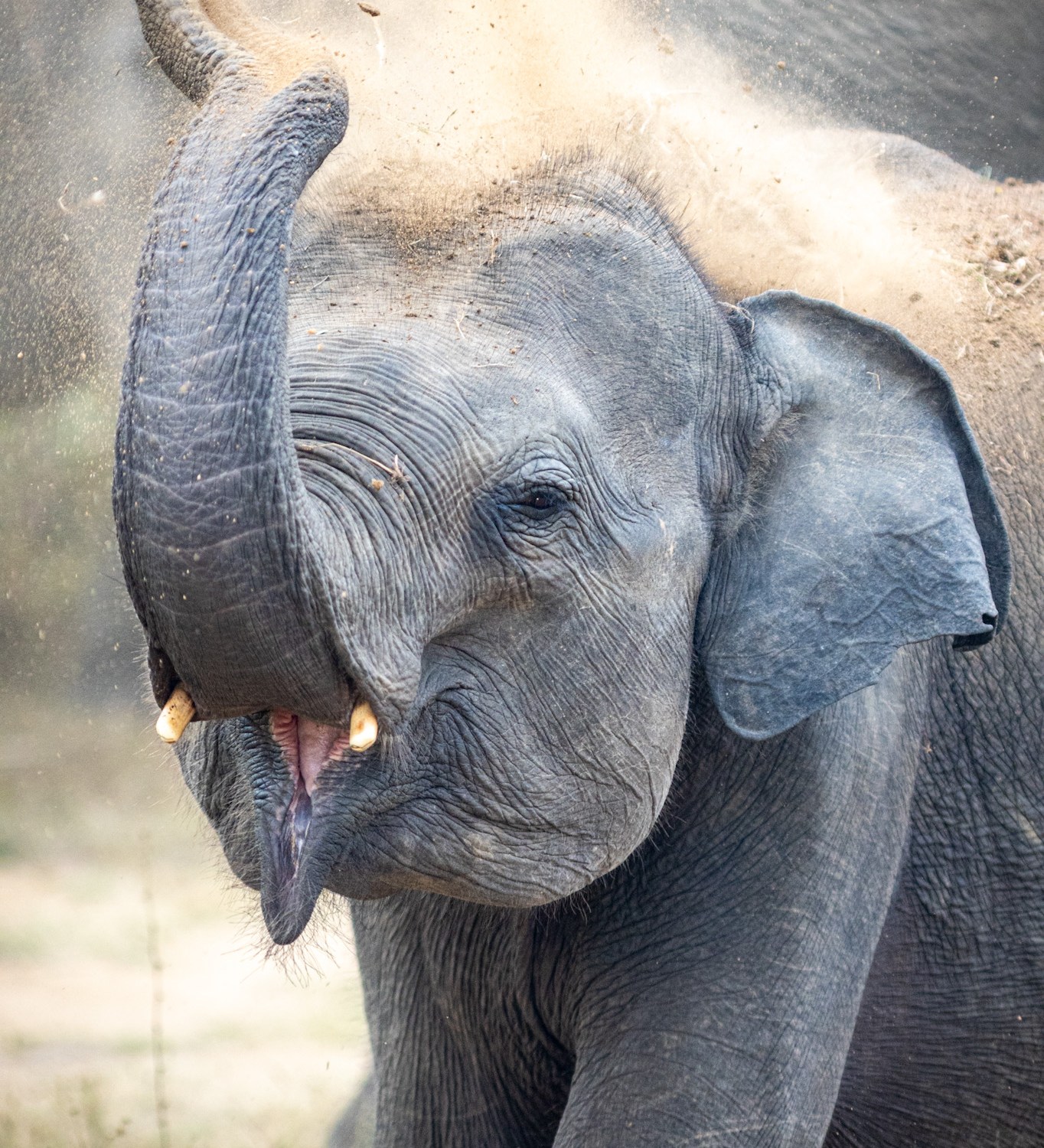
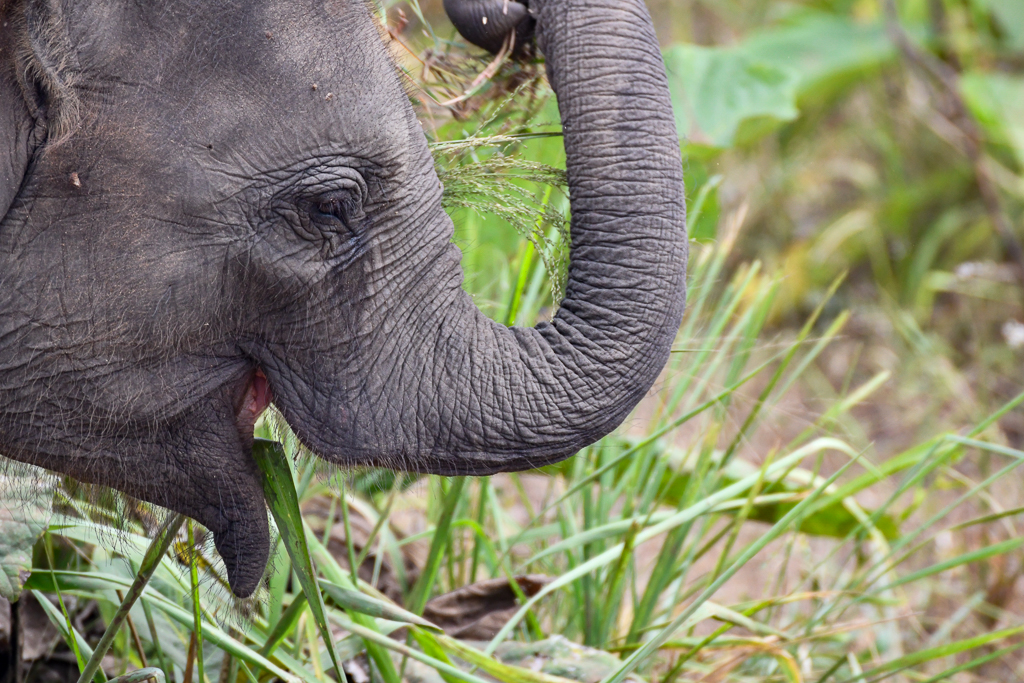
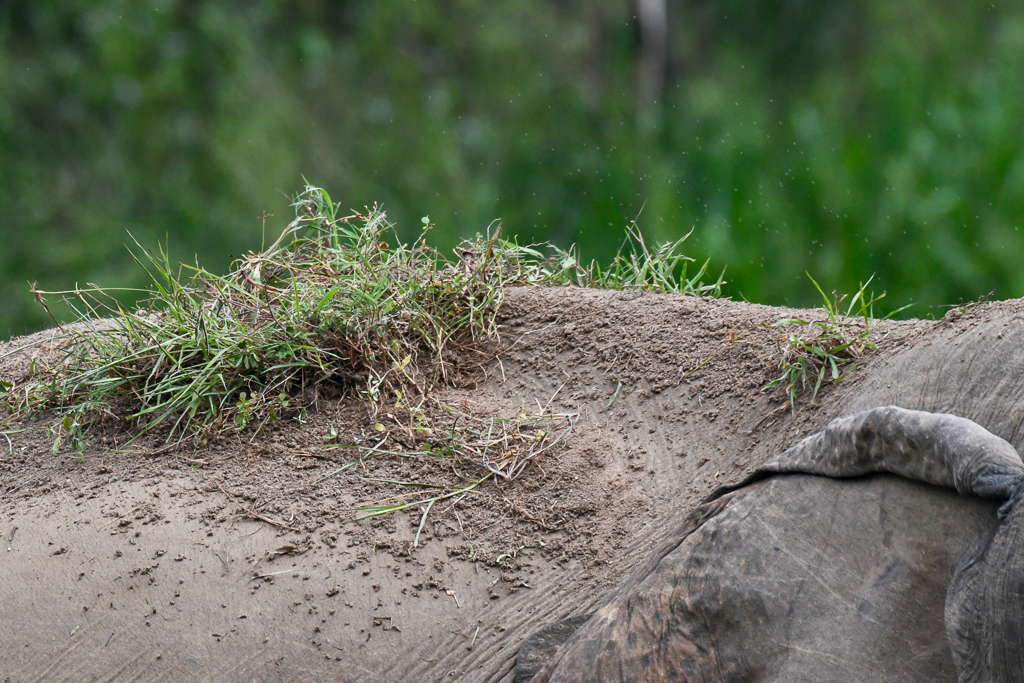
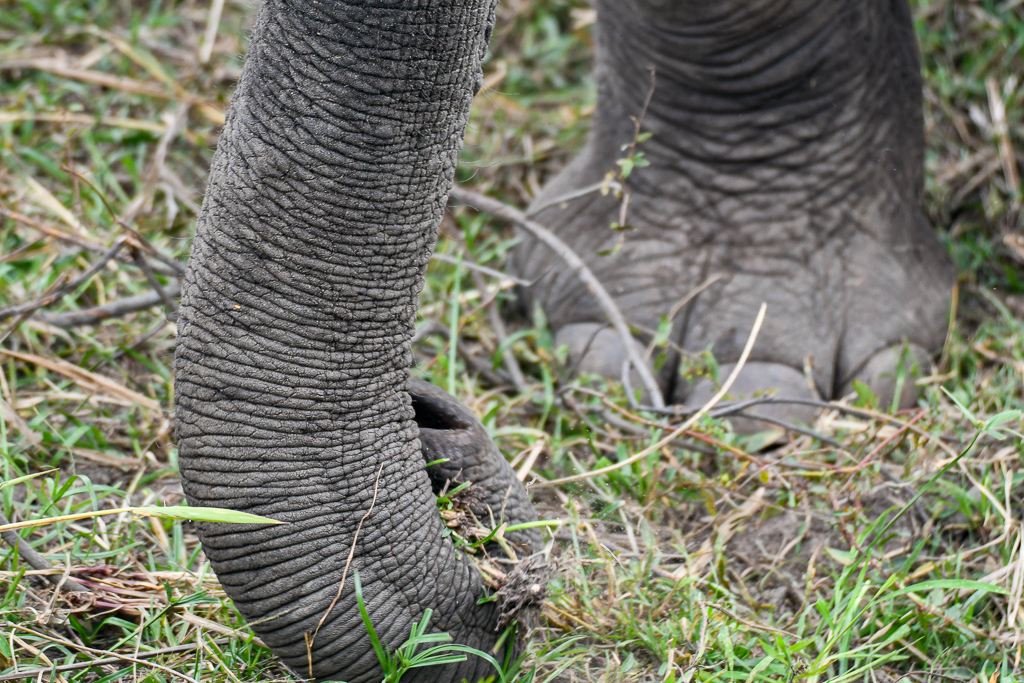
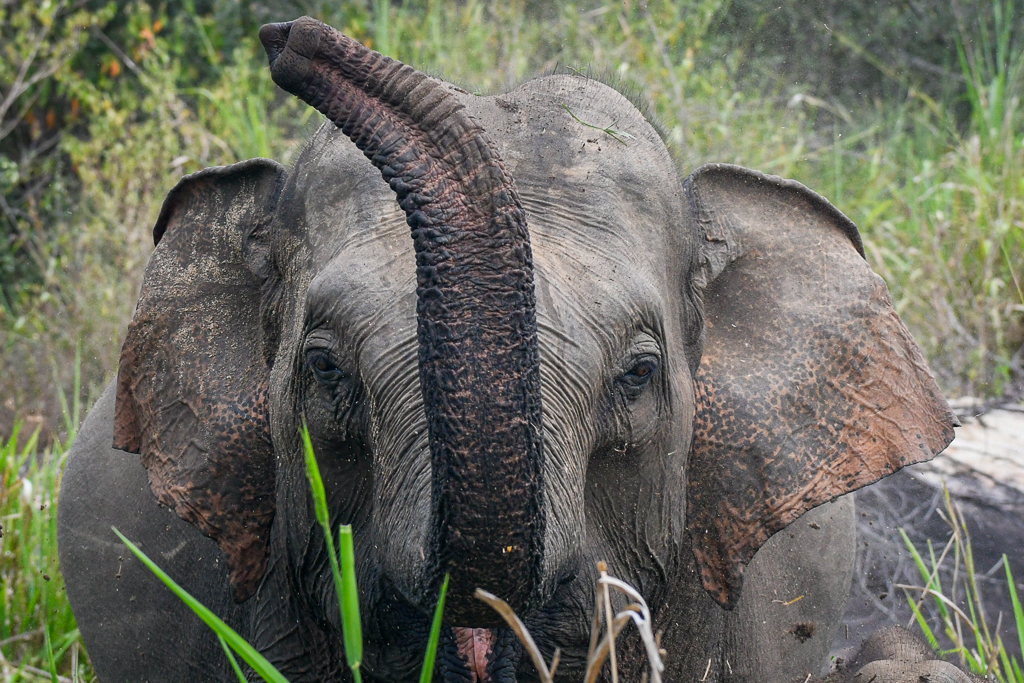
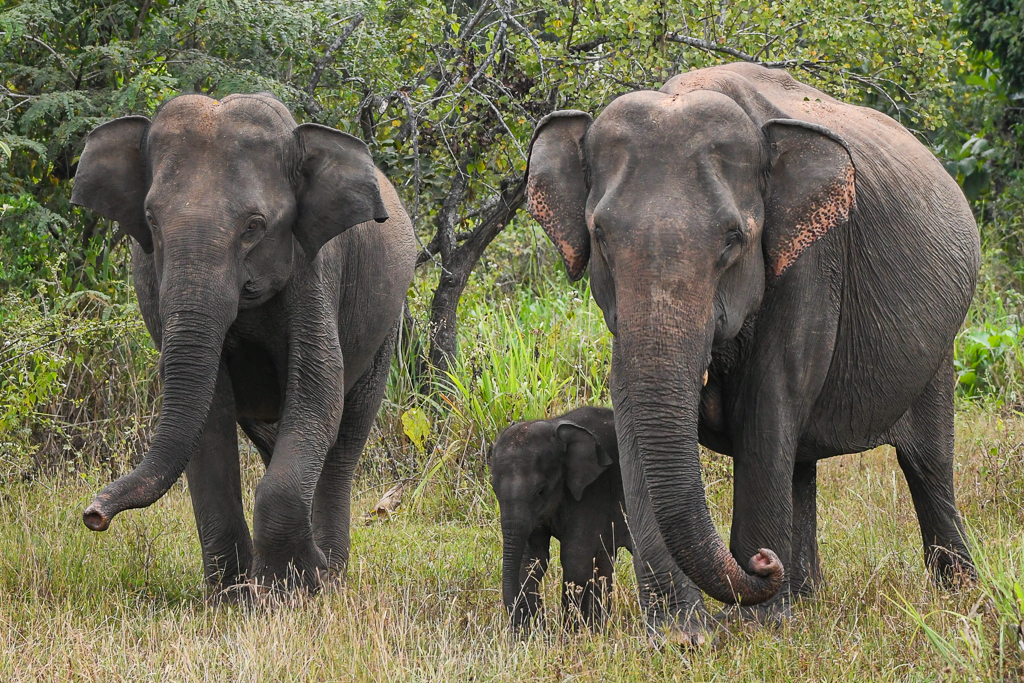
Afternoon isn’t always the best time to watch wildlife but, when there are a lot of elephants, I guess it’s tricky for them to all stay concealed. Truly, the number we saw was mind-blowing! We counted initially and then gave up. Here are a few of Dean’s amazing photos.
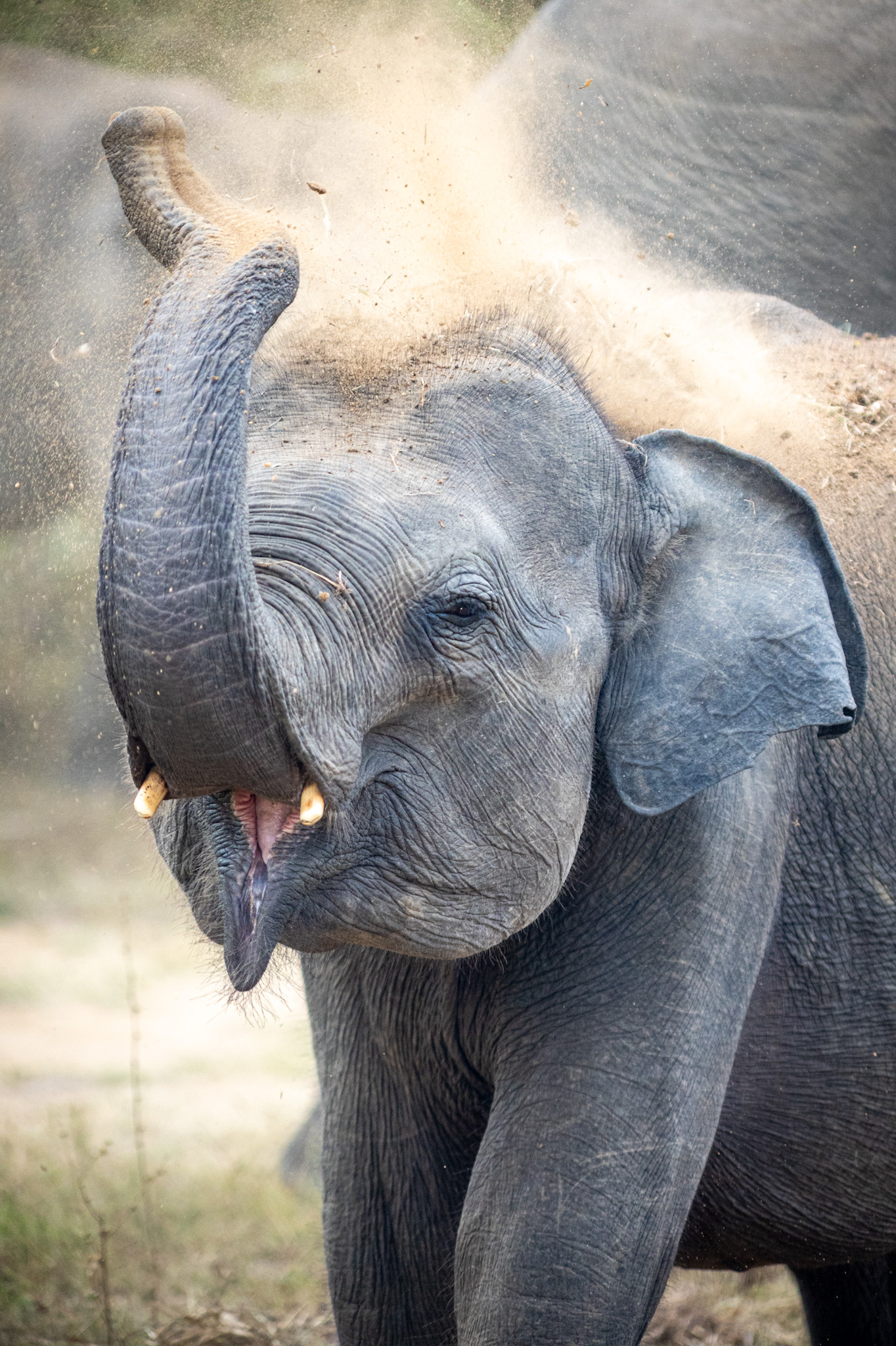
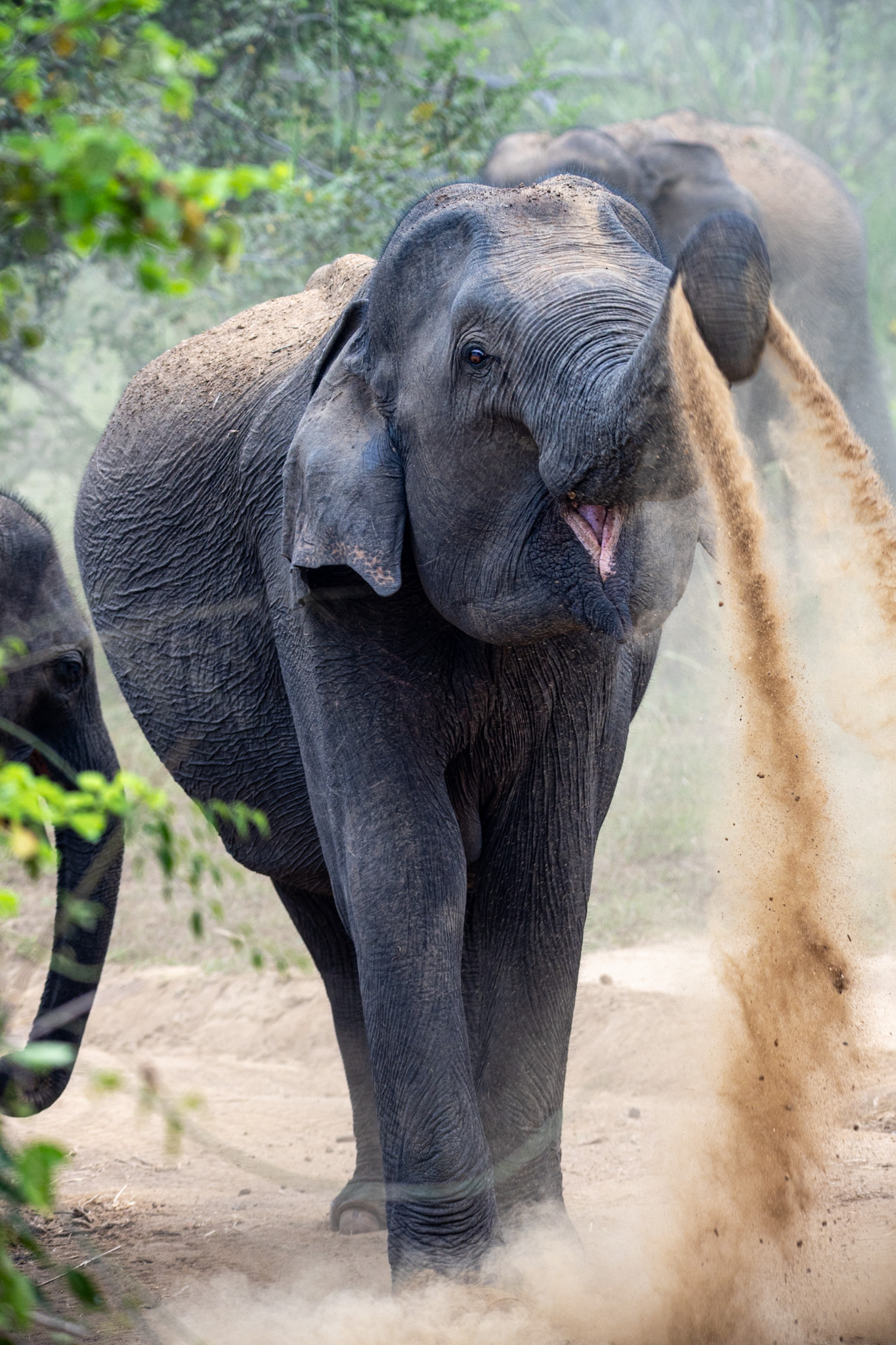
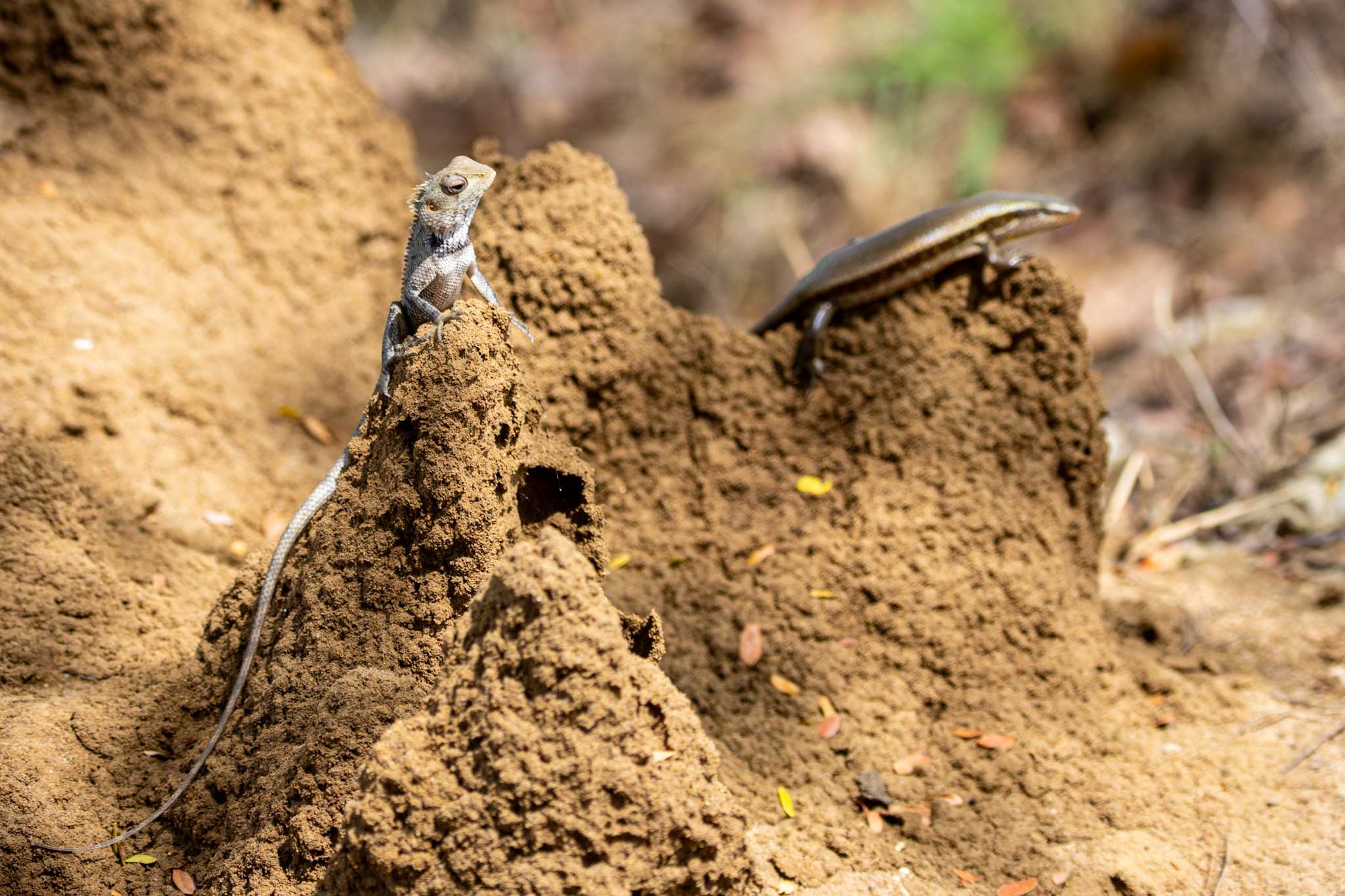
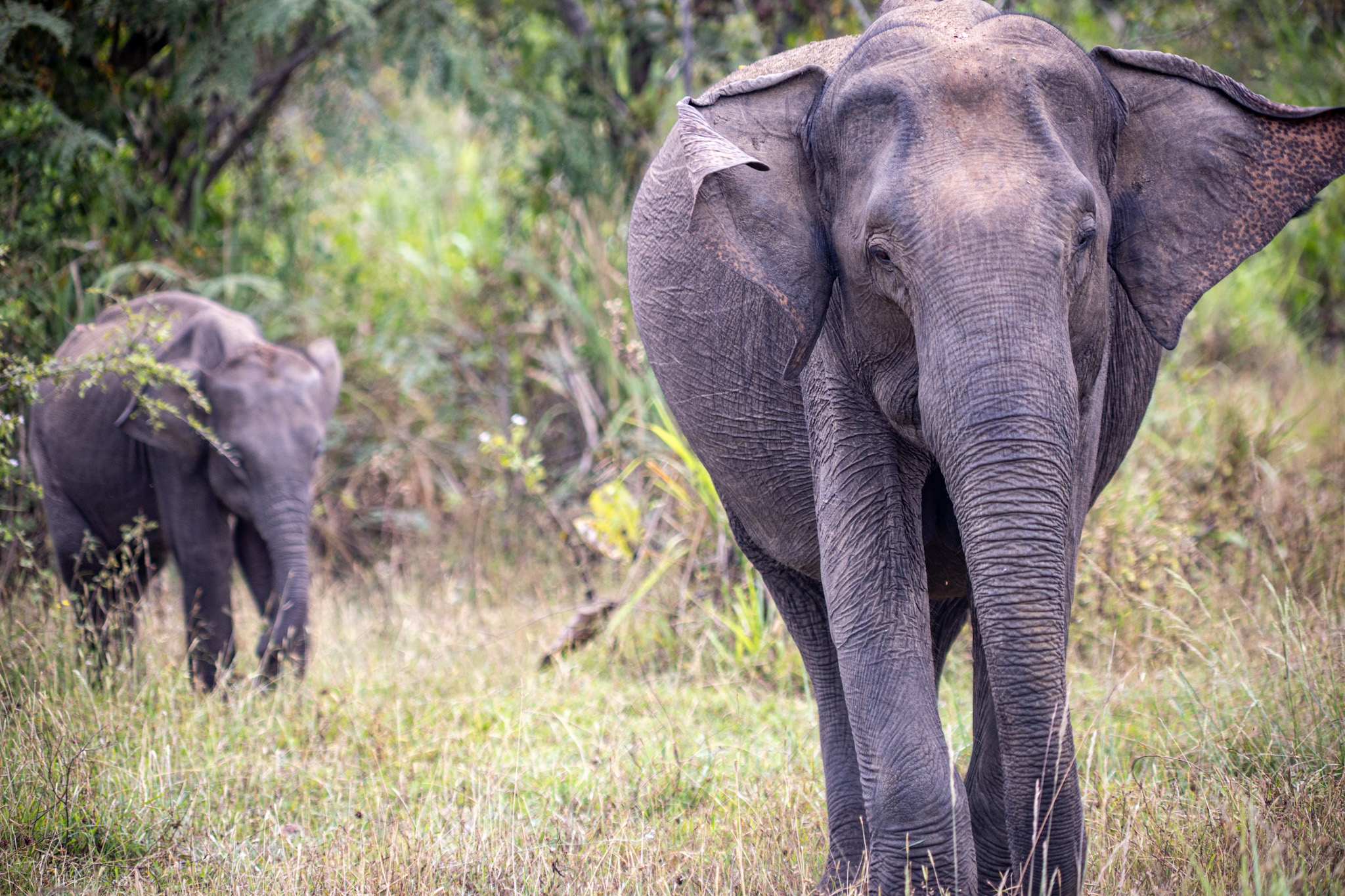
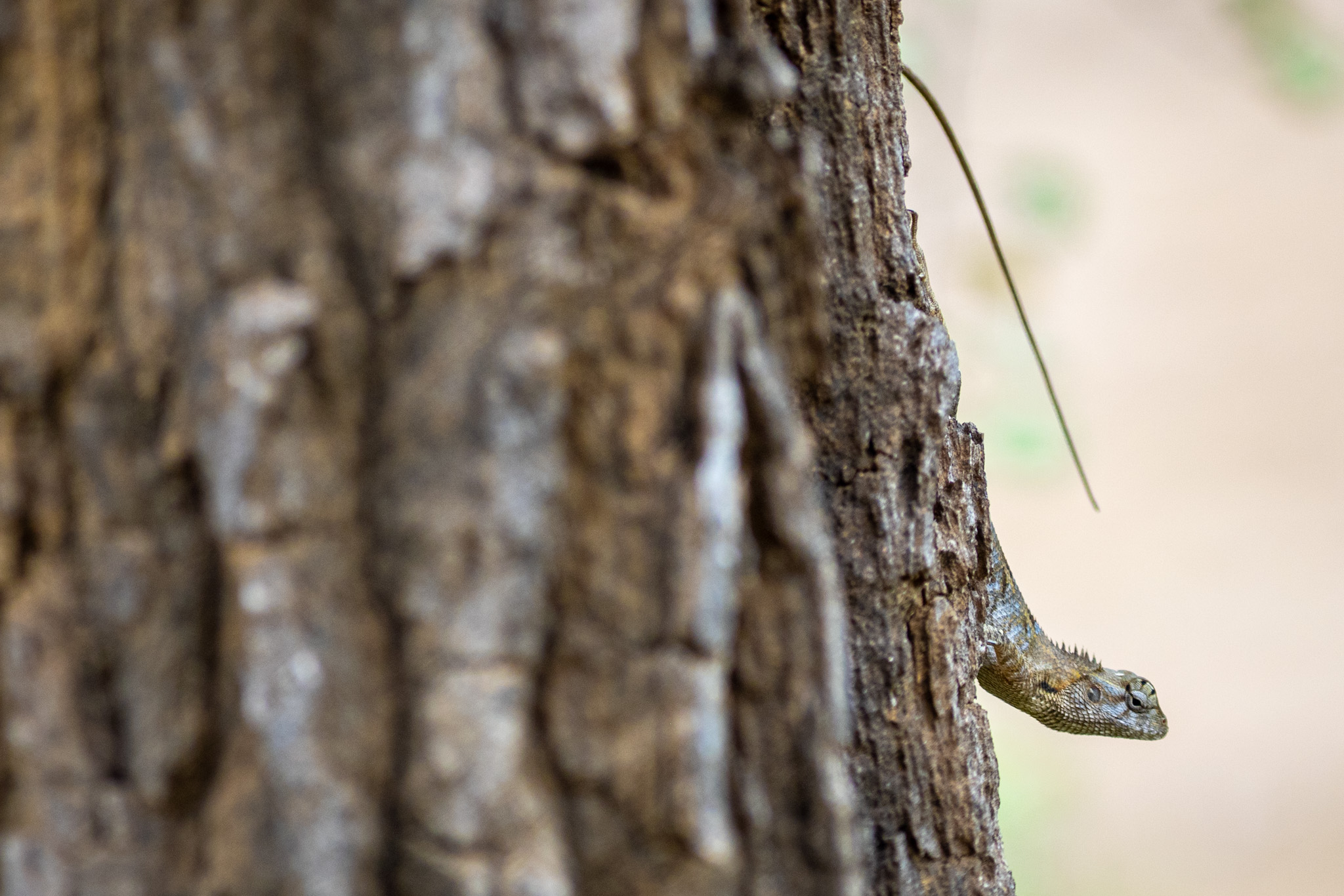
We watched them graze, socialise, throw dust over themselves and trundle from area to area. A highlight was when a baby, who our driver said was two weeks old, just curled up on the ground for a little snooze. There weren’t too many jeeps around so we were able to hang out near them for ages. We were all completely mesmerised. Such a special experience.
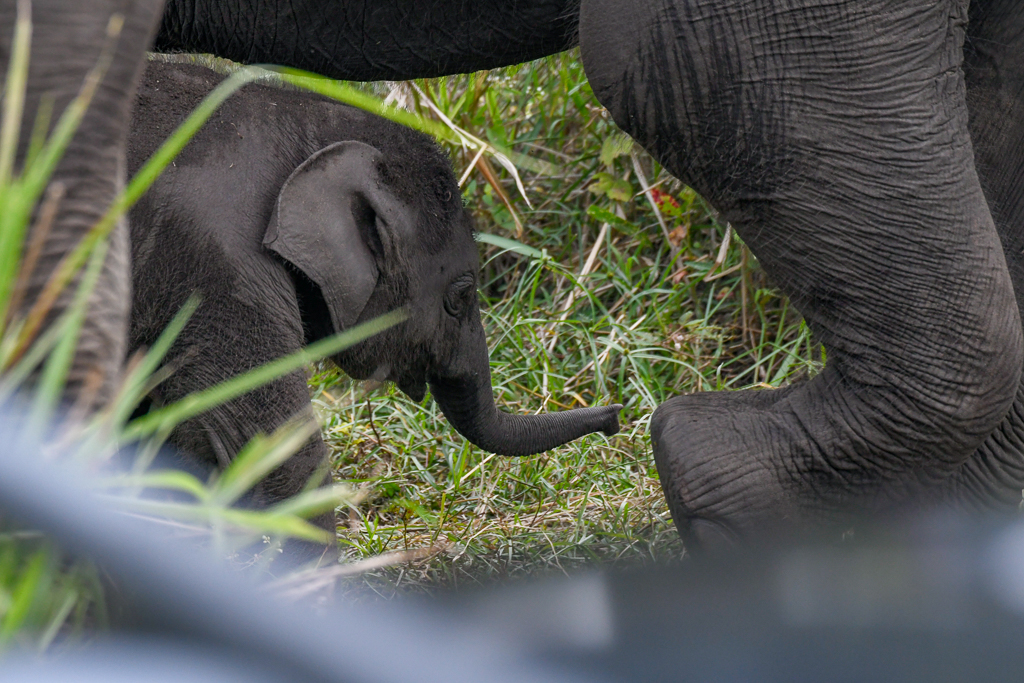
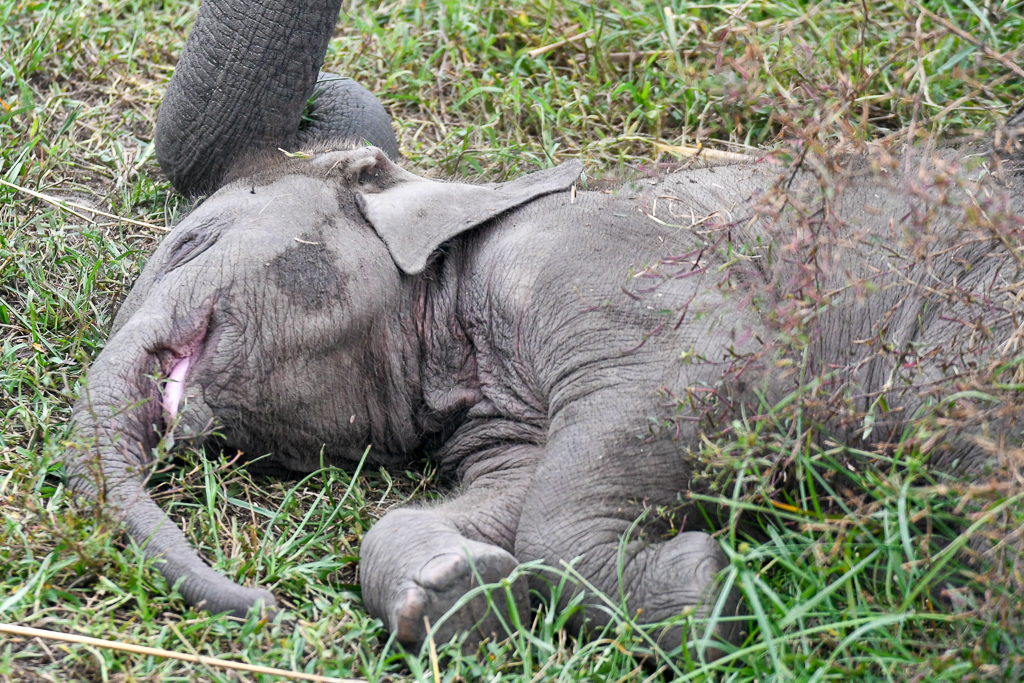
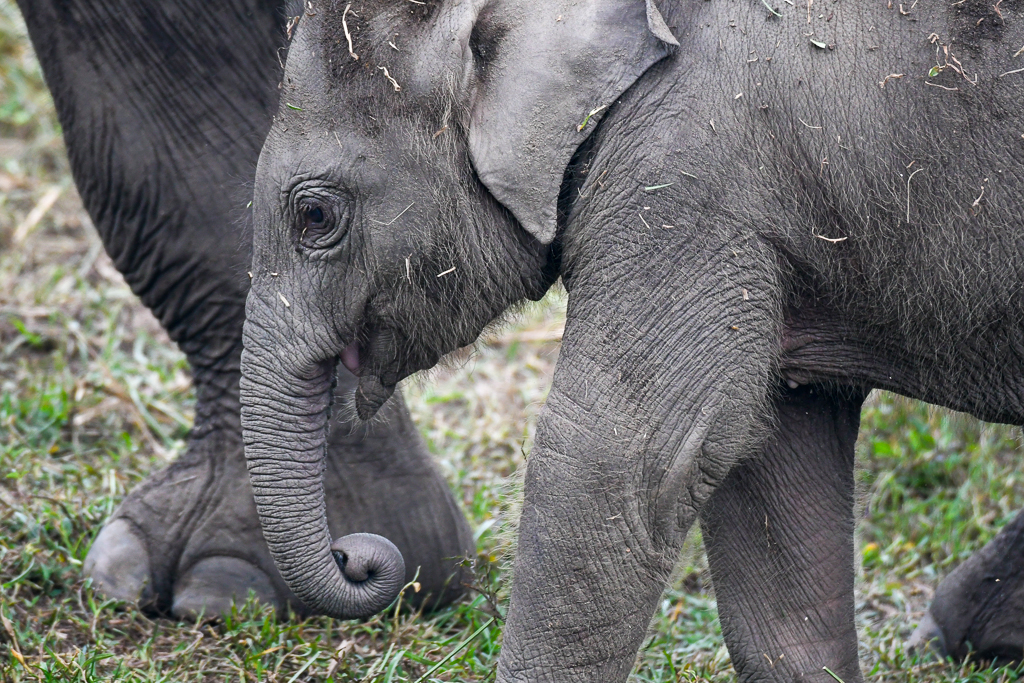
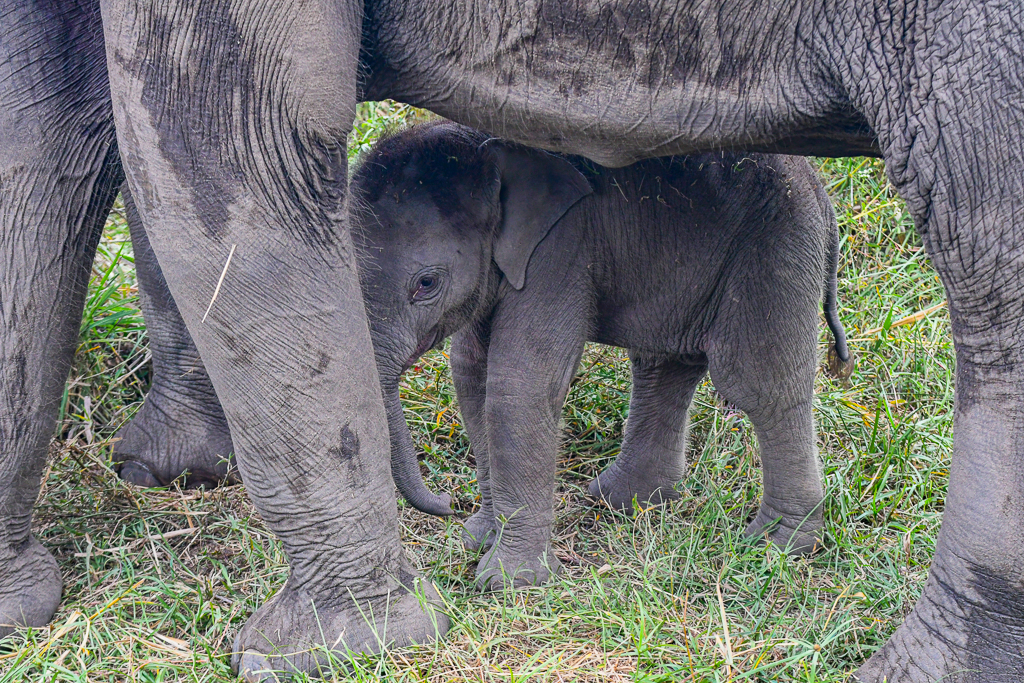
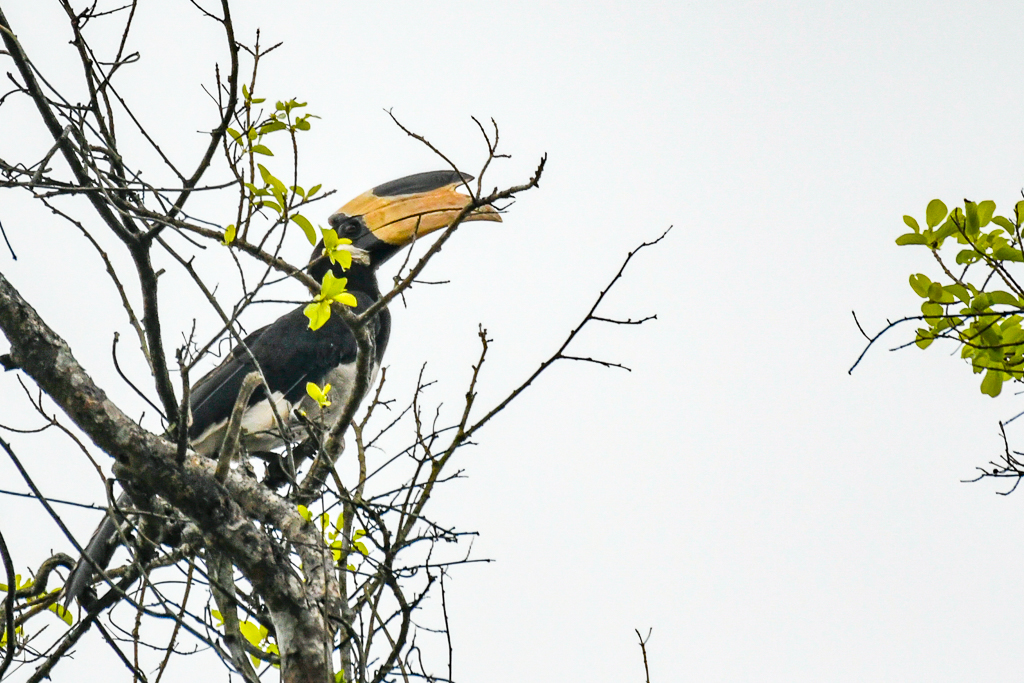
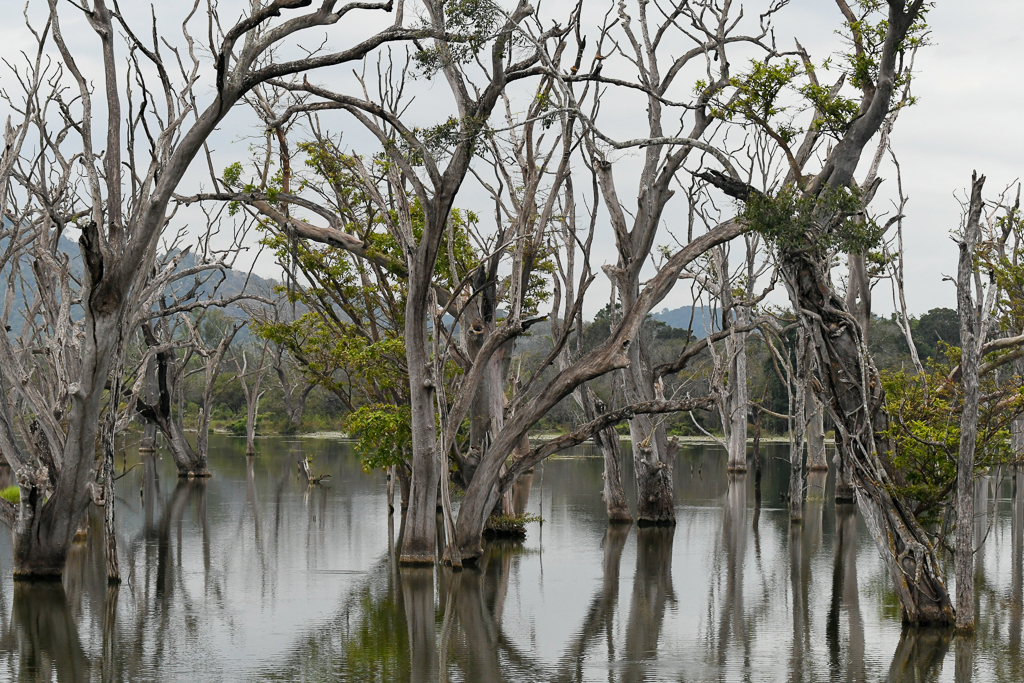
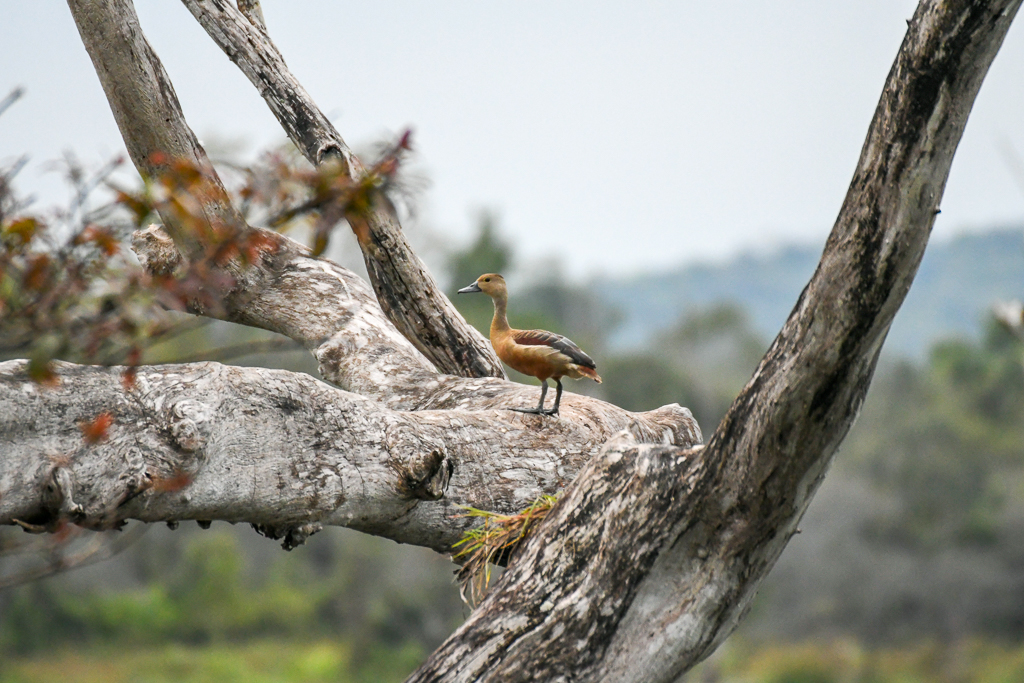
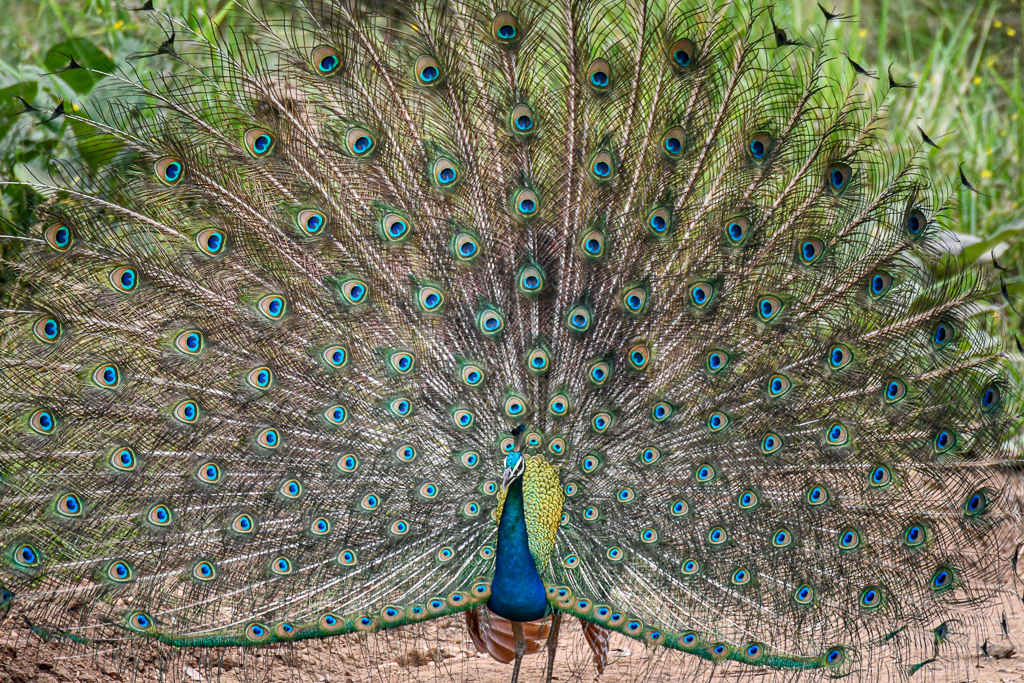
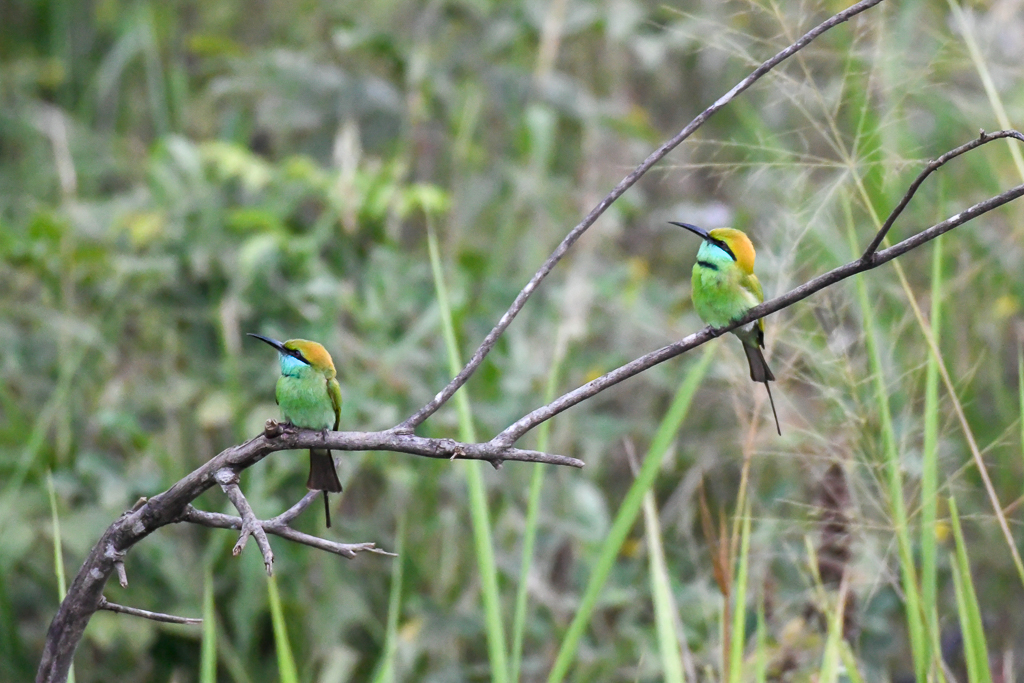
There is a little more to Huluru though: we drove out through the grassland to a wetland spotting plentiful bird life along the way. Peacocks displaying their feathers, green bee-eaters, hornbills and whistling ducks to name a few. There were rumours of leopards but it wasn’t our day for them!
To think this wasn’t even on our original itinerary!
Key Information:
Polonnuwara entry: adults £23/$30, children (6-12) £11.50/$15. Includes museum entrance. Guide was an additional £23/$30.
Sigiriya entry: adults £26/$35, children (6-12) £15/$20. Includes museum entrance.
Huluru Eco Park jeep safari: (unfortunately, I didn’t write down the price or the company name but we booked an afternoon game drive with the company opposite Kombi Coffee Cabin and it was a reasonable price!)
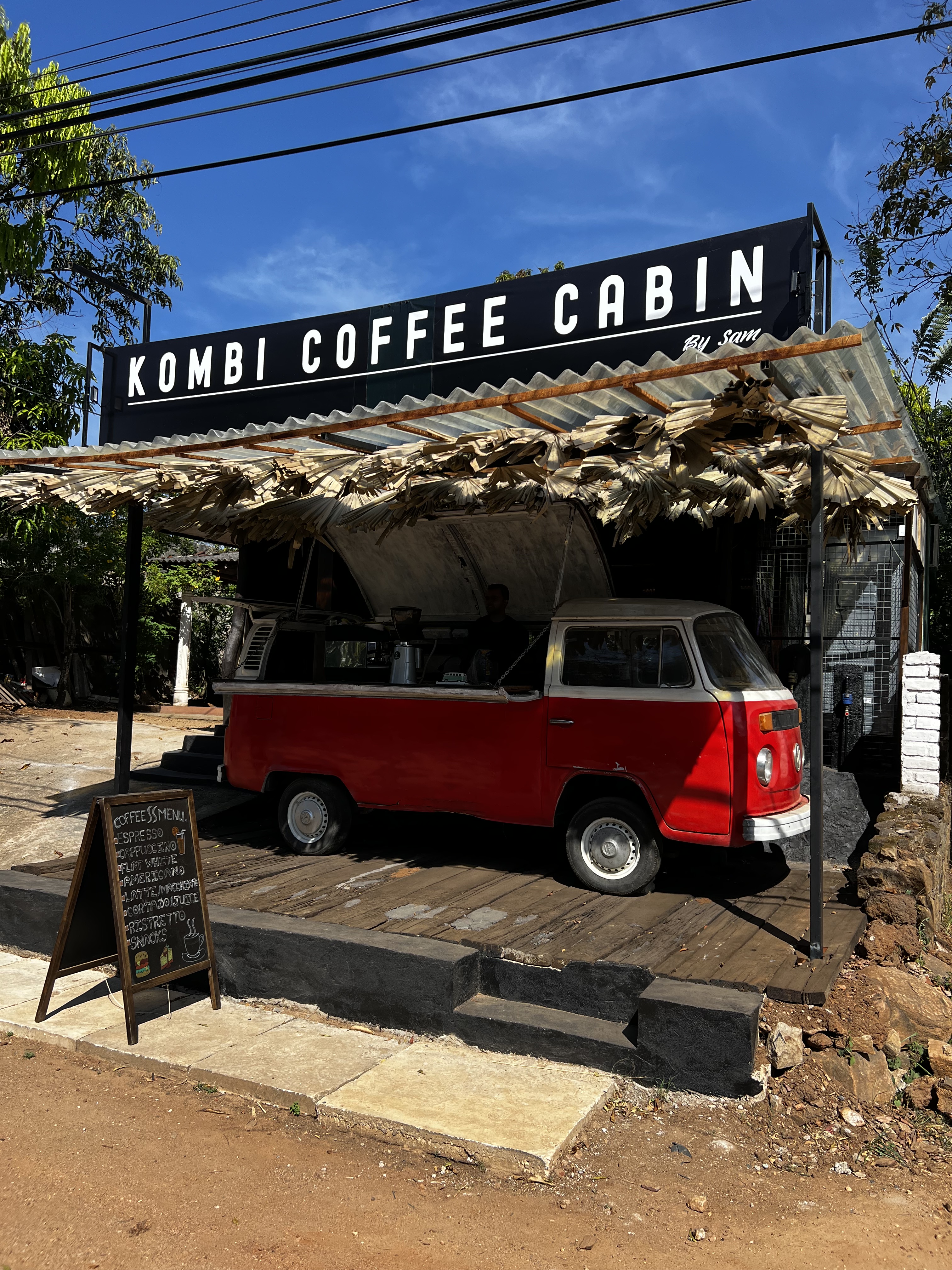
Recommended coffee: Kombi Coffee Cabin run by Sam from a red vintage VW Kombi van on Dambulla Road in Habarana. We got take away but it would be a good spot to sit and watch the world from. This was the only coffee we found in our entire trip that came close to what we’re used to at home!
Check back soon for part five where we visit Dambulla Cave Temples and Wasgamuwa National Park.
Information is correct at the time of posting. For more adventures, follow us on @four_go_exploring.
Here’s our 11-night Sri Lanka itinerary which was part of a 17-day trip that also included travel days and time in the Maldives.
Day 1: fly to Colombo; travel to Kalpitiya via Anawilundawa Wetlands Reserve; evening on the beach.
Day 2: morning dolphin trip; afternoon on the beach
Day 3: morning on the beach; visit Kalpitiya town; travel to Wilpattu
Day 4: morning in Wilpattu National Park; travel to Habarana
Day 5: morning at Ritigala; afternoon by the pool
Day 6: morning at Polonnaruwa; afternoon by the pool/afternoon at Sigiriya
Day 7: morning walk and cooking class; afternoon at Hurulu Eco Park
Day 8: morning at Dambulla Caves; travel to Wasgamuwa
Day 9: morning in Wasgamuwa National Park; afternoon by the pool
Day 10: morning by the pool; travel to Negombo: evening exploring Negombo
Day 11: fly to the Maldives
SRI LANKA: Living with Elephants and Ritigala Forest Monastery with Kids
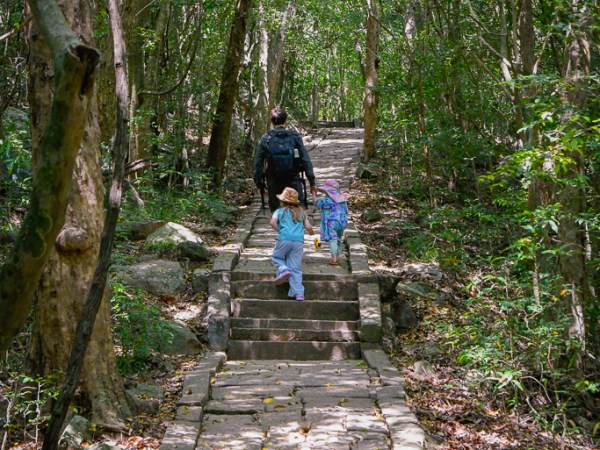
It all started with the most beautiful welcome I think we’ve ever had anywhere. Our time in elephant country began with Bissa Villa’s beating drum and the lighting of a traditional oil lamp. The perfect base for exploring Ritigala Forest Monastery ruins, in the Cultural Triangle.

SRI LANKA: Wilpattu National Park with Kids
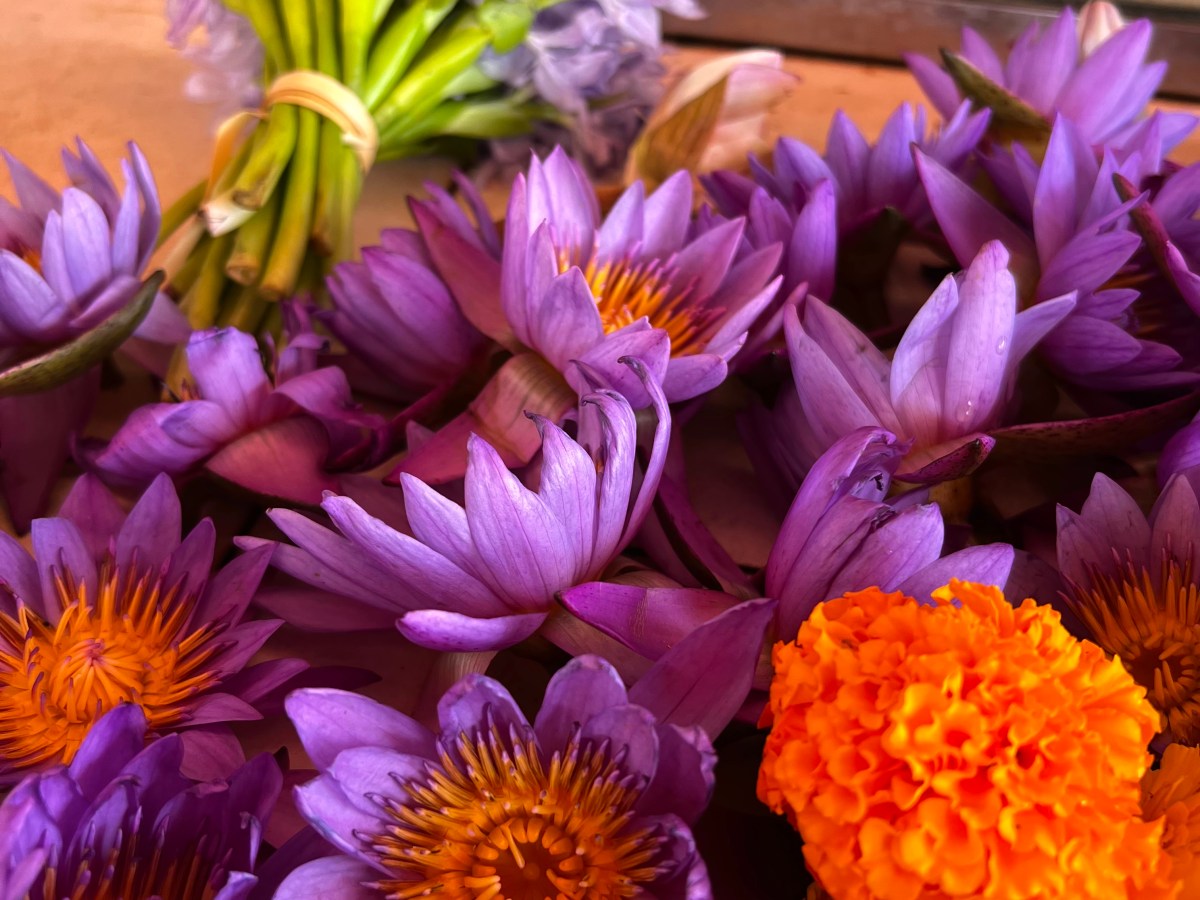
As we journeyed through Sri Lanka, the kids enjoyed their first safari in Wilpattu National Park. They explored Kalpitiya town, stayed at Greenheart Resort, and visited Jaya Sri Maha Bodhi, the sacred fig tree. Highlights included wildlife sightings and a memorable Buddhist shrine experience, making for an enriching adventure.
SRI LANKA: Dolphin-Watching in Kalpitiya with Kids
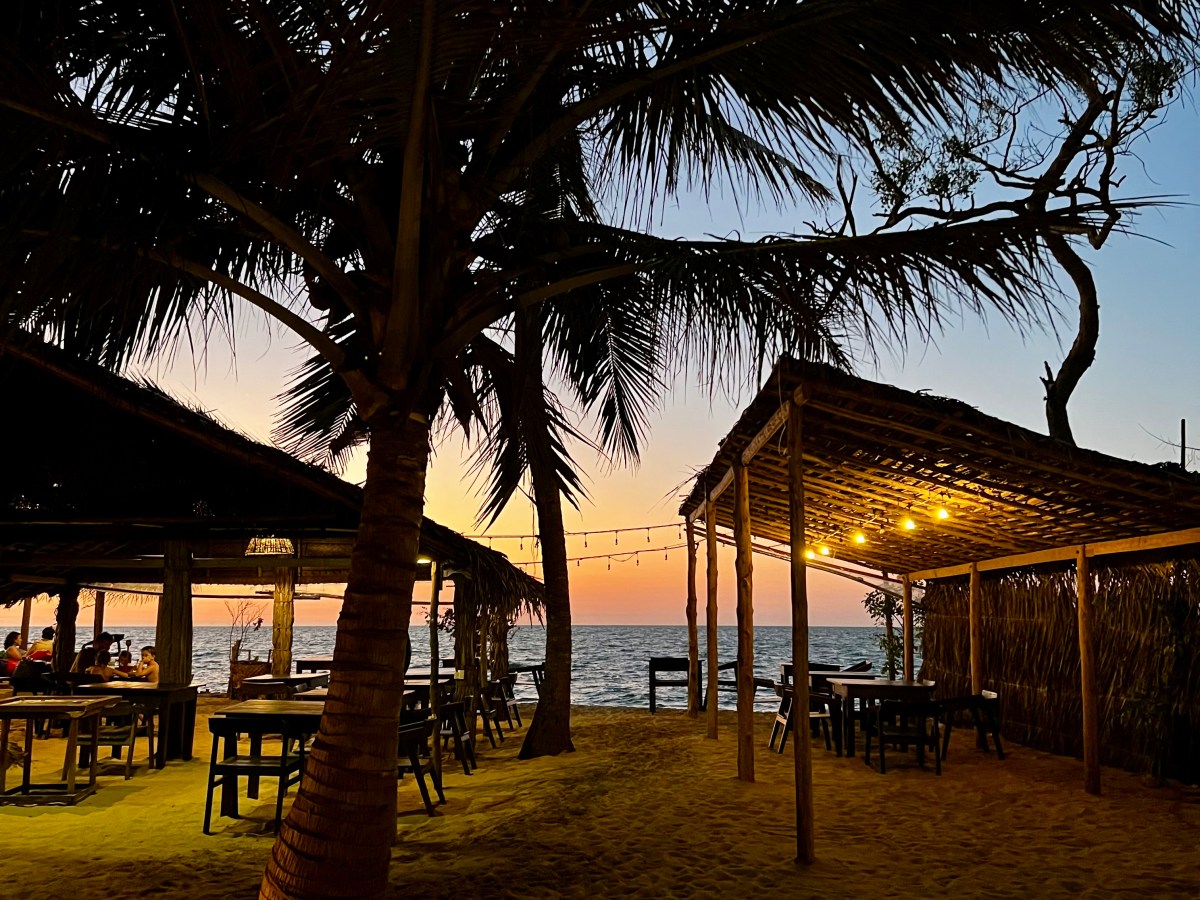
If you’re looking for a family-friendly adventure, full of wildlife, history, friendly locals, delicious food and that – once you’ve got there – is easy on the budget, then Sri Lanka is the place to go. Read our perfect 11-day itinerary, balancing activity and relaxation amid the beautiful scenery.

